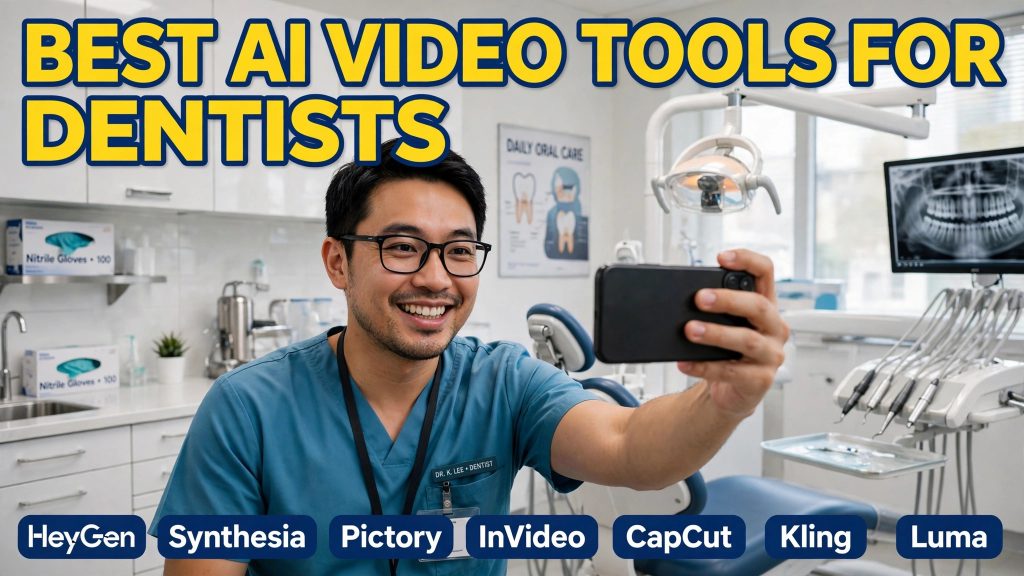
A nervous patient books a dentist after watching a video, not after reading a treatment list. A calm two-minute explainer about a root canal, a friendly welcome from the practice, a short clip showing what happens at a first checkup, a smile tip Reel that answers the question the patient was too shy to ask: these are the videos that fill a dental appointment book. Until recently that meant a film crew in the clinic, or a dentist recording between patients and editing late at night. Now a practice can turn its own written aftercare sheet into a narrated patient video, record one treatment explainer and translate it for every patient community it serves, animate a still photo of the finished reception into a welcoming practice tour, and cut a smile tip Reel on a phone between appointments, all without a film crew. This guide compares 7 of the best AI video tools for dentists, with real prices checked on 19 November 2026, so a practice can build a stack that fits one clinic, one month of posting, and a real monthly budget.
The short verdict: start with Kling AI Standard at $8.80 a month for the practice tour and welcome clips, and CapCut Free for finishing the smile tip Reels on a phone between patients. That starter stack costs $8.80 a month, or about $0.73 per video across a month of 12 videos. Add HeyGen Creator at $24 a month on annual billing when patients need a treatment explainer in more than one language, and Synthesia Starter at $14 a month on annual billing when the practice wants proper patient education videos with a presenter who never gets tired. Buying the cheapest paid plan of all seven tools costs $155.79 a month, or about $12.98 per video across the same 12-video month. The free route costs $0, but watermarked exports, non-commercial licences and hard caps on free credits make it a testing route, not a clinic routine.
One honest warning before the list, and it matters more for dentists than for any other audience in this series: a dental video is health information, and a patient is not a marketing prop. Never put a real patient, a real patient face, a real before-and-after smile, or any identifiable patient detail into an AI tool without that patient’s written consent, and never let an AI-generated smile pretend to be a result your clinic produced. A generated before-and-after is a misleading claim, and dental advertising rules in many countries treat it that way. A dentist must also check every clinical claim in every video, because an AI presenter that explains a root canal wrong is your practice’s reputation on the line, not the tool’s. The rule for this guide is simple: use AI for the presenter, the camera move, the edit and the translation, and use your own patients, with their written permission, for every real result, every testimonial and every before-and-after. Keep patient data out of every tool below, because none of the seven publishes a HIPAA business associate agreement on the pages checked for this guide, and a video is general information, never personal medical advice for one patient.
Quick comparison table
| Tool | Best for | Cheapest paid plan | Free option |
|---|---|---|---|
| HeyGen | Treatment explainers in many languages | $29 a month | Yes, 3 videos a month, watermarked |
| Synthesia | Patient education videos with a presenter | $19 a month | Yes, Basic plan, watermarked |
| Pictory | Turning a blog post or aftercare sheet into video | $29 a month | 14-day free trial, watermarked |
| InVideo AI | Seasonal promos from one sentence | $20 a seat a month | Yes, limits not listed on the pricing page |
| CapCut | Smile tip Reels with captions | $19.99 a month | Yes |
| Kling AI | Animating clinic photos into a practice tour | $8.80 a month | Yes, monthly free credits, watermarked |
| Luma Dream Machine | Natural camera moves through the clinic | $30 a month | No free plan on the current page |
All prices are in US dollars, before tax, and were checked on 19 November 2026. Prices change often, so confirm at checkout. Prices with a caveat are noted under the tool below.
1. HeyGen: best for treatment explainers in many languages
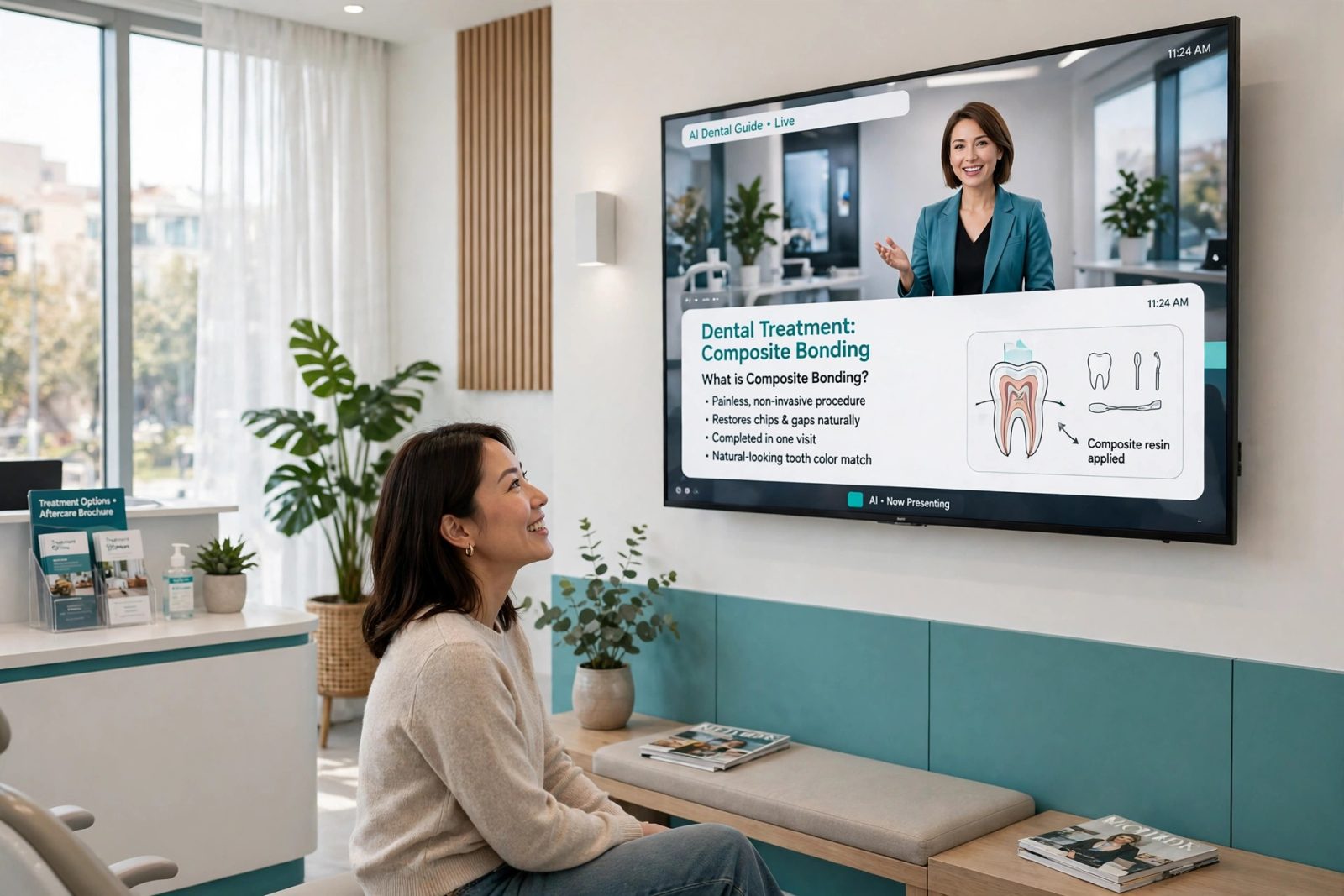
HeyGen puts a realistic presenter on screen, and its strongest dental feature is video translation with lip sync in 175 languages and dialects. Record one treatment explainer, one aftercare message or one new-patient welcome, and HeyGen localises it for every patient community the practice serves, with the presenter’s lips matching the translated words. A clinic with international patients can explain a root canal, an implant or a whitening treatment in each patient’s own language without recording five versions. The Creator plan also includes a custom video avatar and a voice clone, so the presenter can be the dentist themselves, a consistent face for the practice brand, explaining the treatment instead of a stranger reading a script. For a dentist, that consistency matters, because patients trust a face they recognise from the clinic door.
Price: the Creator plan costs $29 a month, or $24 a month billed annually. Creator includes a 30-minute maximum per video, up to 1080p export, more than 700 stock avatars, 175 languages and dialects, 1 custom video avatar and 1 voice clone. The Pro plan starts at $49 a month, with tiers from 1,000 credits a month at $49 up to 100,000 credits a month at $4,300. All Pro tiers share the same features, only the credit allocation changes. The Business plan costs $149 a month plus $20 a seat a month, with 3 or more seats, a 60-minute maximum per video and 4K export. The free plan costs $0, with up to 3 videos a month, a 1-minute maximum per video, more than 500 stock avatars, 30 or more languages, and a watermark.
Caveat: no annual Pro price is stated on the official page, so this guide quotes only the $49 a month starting figure for Pro. The Creator annual figure of $24 a month is stated in HeyGen’s own FAQ. Monthly subscribers’ unused credits roll over for one more month, and annual subscribers’ credits accumulate until renewal.
Best for: a practice with international patients that needs one treatment explainer, one aftercare message and one welcome video translated into every patient language, presented by a consistent face. Limit: an AI presenter is not the dentist, so an explainer should introduce the treatment, not pretend the avatar performed it, and the free plan’s 3 videos a month with a 1-minute cap is a trial, not a routine.
2. Synthesia: best for patient education videos with a presenter
Synthesia is the patient education specialist in this list. Its Studio turns a written script, the aftercare sheet the practice already hands out, into a video with a realistic AI presenter, in more than 140 languages, with no camera and no filming. For a dentist, the job is clear: one short, general video per treatment, implant aftercare, a root canal, gum disease treatment, crowns, braces, whitening, made from the handout the practice already gives out, checked by a dentist for accuracy, then sent to the patient by text, embedded on the practice website, or looped on the waiting room screen. Its new Syren agent builds a video from a plain description, and its 1-click translation turns the same explainer into every patient language. The Starter plan includes 125 or more AI avatars, survey tools for checking patient understanding, and no watermark.
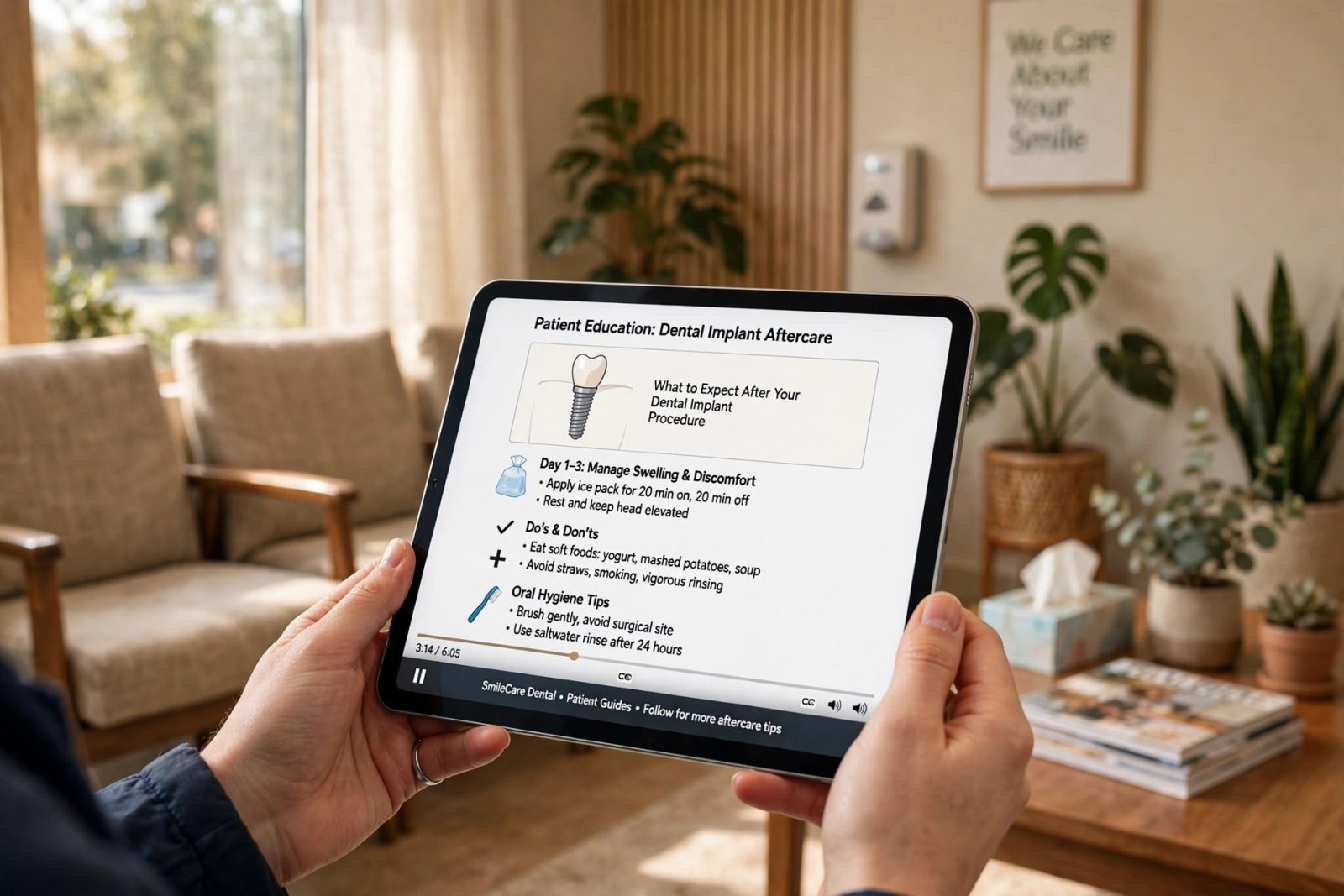
Price: the Starter plan costs $19 a month on monthly billing, or $14 a month billed annually at $168 a year. Starter includes 1,250 credits a month, about 12 extra minutes of Studio video a month on top of the free allowance, 125 or more AI avatars, 3 guests, and no 3-minute cap on Syren videos. The Pro plan costs $89 a month on monthly billing, or $59 a month billed annually at $708 a year, with 6,000 credits a month, about 60 extra minutes of video a month, 180 or more avatars, 5 personal avatars and priority support. The Basic plan costs $0, with 500 credits a month, 10 minutes of Studio video creation or dubbing a month, 1 Syren video with a 3-minute cap, 9 AI avatars, and a Synthesia watermark.
Caveat: the first month is discounted, $9 for Starter and $49 for Pro, so the figures above are the regular renewal prices after month one. Synthesia’s pricing is now credit based, so a minute of video uses credits, and the exact video minutes per plan are estimates on the official page, not guarantees. The official page lists no HIPAA business associate agreement, so keep patient data out and use Synthesia only for general education videos, never for a named patient’s case.
Best for: a practice that wants proper patient education videos, one per treatment, made from its own aftercare sheets, with a presenter and in every patient language, without filming anyone. Limit: it is the most formal tool here, so a quick smile tip Reel is faster in CapCut, and the credit maths mean a month of long explainers needs the Pro plan.
3. Pictory: best for turning a blog post or aftercare sheet into video
Pictory turns words into video, and its dental job is the practice’s own writing. A clinic writes up every treatment, a whitening guide, an implant aftercare page, a blog post about gum disease, a braces FAQ, and Pictory builds a captioned video from that text, matching stock footage to the script, adding an ElevenLabs voiceover in several languages, and offering Veo 3.1 generated clips inside the same project. For a dentist, that means the aftercare sheet they already wrote becomes a video a patient will actually watch, instead of a page they will skim. It also handles the formats a practice needs, 16:9 for the website, 9:16 for Reels and Shorts, and automatic subtitles for viewers who watch on mute. A PowerPoint of a treatment plan can become a video too, which suits a practice that already presents treatment options on slides.
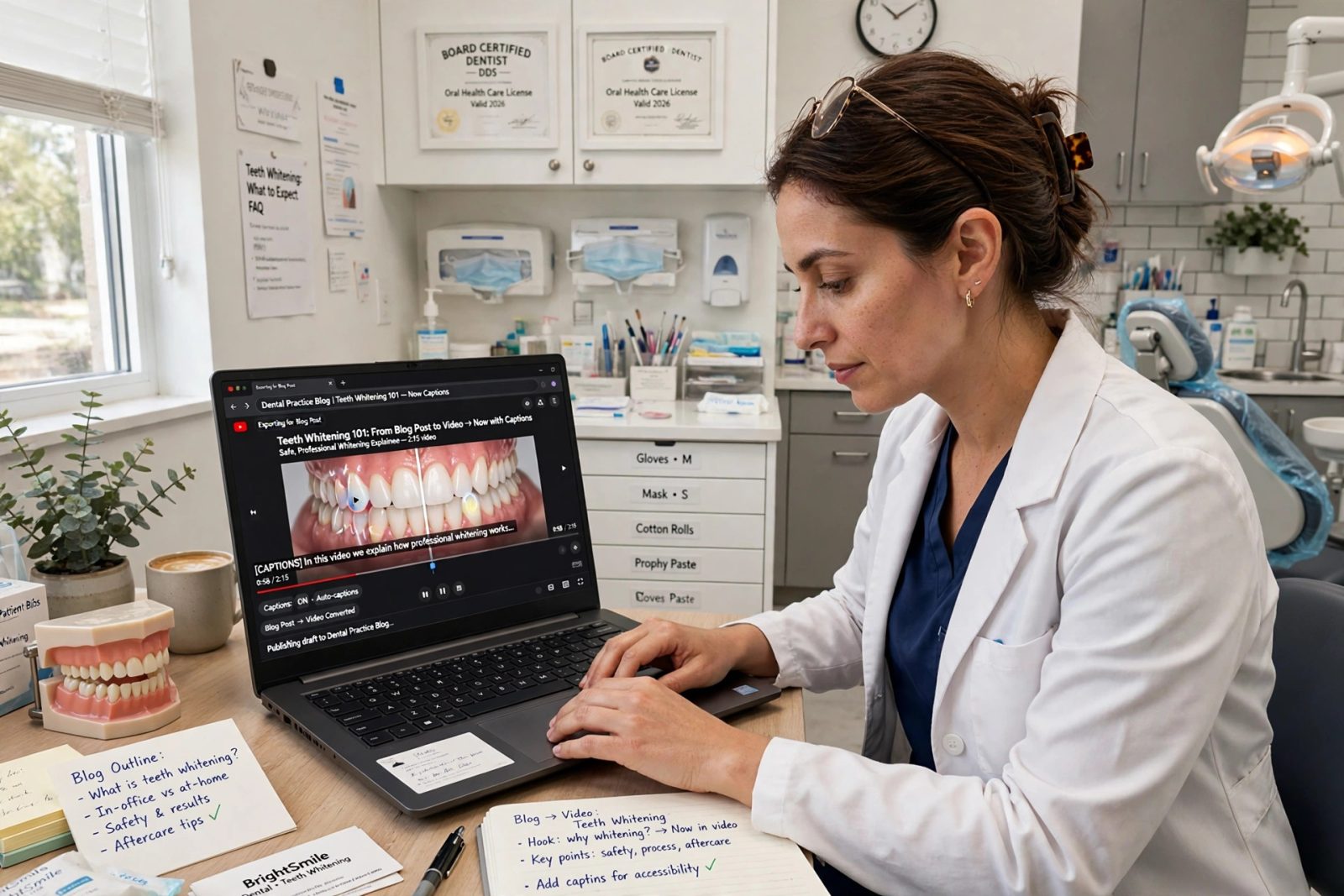
Price: the Starter plan costs $29 a month billed monthly. A Black Friday offer of $14.50 a month on monthly billing, or $12.50 a month billed annually, was live on 19 November 2026, and the regular annual rate is $25 a month. Starter includes 24,000 credits, up to 360 minutes a year, unlimited videos, 1080p export, 1 brand kit, unlimited access to more than 5 million royalty-free videos from Getty Images and Storyblocks, multilingual ElevenLabs voices, and stock avatars. The Professional plan costs $59 a month billed monthly, with a Black Friday offer of $29.50 a month monthly or $17.50 a month annual live on 19 November 2026, and adds cloned avatars, voice clones, 5 brand kits and 72,000 credits. The Teams plan costs $199 a month billed monthly, with a Black Friday offer of $99.50 a month monthly or $59.50 a month annual live on 19 November 2026, and adds 3 or more users and 216,000 credits. The free trial lasts 14 days, with 300 credits, up to 10 minutes, 3 videos, and a Pictory watermark.
Caveat: the Black Friday prices above are temporary offers, so this guide quotes the regular $29 a month Starter price as the headline figure and notes the offer separately. The annual regular rate of $25 a month comes from the page header and today’s text read, since the page today also shows the offer price for annual billing.
Best for: a practice that already writes up every treatment and wants that description turned into a captioned video with a voiceover, without filming or opening a timeline. Limit: it builds from stock footage and generated clips, so it cannot show your actual clinic or your actual work unless you upload your own photos into the project, and the credit pool is shared across every AI feature, so heavy generation drains it fast.
4. InVideo AI: best for seasonal promos from one sentence
InVideo AI is template-first: type a prompt such as a 30-second promo for a whitening package before wedding season, and it returns a draft video with stock footage, text and music, ready to edit. For a dentist, that means a seasonal promo, a back-to-school checkup offer, a new treatment launch or a practice anniversary announcement without opening a timeline. Its Agent Two builds the video from a prompt, and the Plus plan adds all Seedance models, so the footage can be AI-generated instead of stock. When a practice launches a new service or refreshes a seasonal offer, the promo writes itself from one sentence, and the same prompt pattern works for every service on the price list.

Price: the Starter plan costs $10 a seat a month when billed annually at $120 a year, or $20 a seat a month on monthly billing. Starter includes 400 credits a seat a month, about 15 Seedance 2.0 Fast videos, 200 GB of storage, and Agent Two Lite only. The Plus plan costs $24 a seat a month on annual billing, with 2,000 credits a month and all Seedance models. The Max plan costs $75 a seat a month on annual billing, with 5,000 credits a month and 2,000 GB of storage. Unused credits do not roll over. The pricing page says accounts downgrade to a Free plan after cancellation, but it does not list the free plan’s limits, so this guide does not quote them. The timeline editor itself is free, and the page says 40 hours of editing costs nothing.
Caveat: the Plus annual price changed from $30 a seat a month on 18 November 2026 to $24 a seat a month on 19 November 2026, with a Black Friday sale now live on the page, so confirm the current figure at checkout. The monthly prices for Plus and Max were not directly shown in today’s read, so confirm them at checkout too. Annual plans are currently advertised at up to 75 percent off, pay for 12 months and get 24.
Best for: a practice that launches a new service or refreshes a seasonal offer every month and wants a promo, a launch video or a checkup reminder from a sentence, such as a whitening promo before wedding season, a back-to-school checkup offer, or a new Invisalign package announcement, without filming or editing. Limit: Starter cannot use the full Seedance range, so AI-generated footage really starts at Plus at $24 a month on annual billing, and Starter’s stock-first videos will not show your actual clinic, so the promo is a mood piece, not a record of your work.
5. CapCut: best for smile tip Reels with captions
CapCut is the editor most clinics already have on a phone, and it is built for short vertical video: trending templates, auto captions, effects and sounds that match what is performing on Reels and TikTok right now. For a dentist, its two most useful features are auto captions in more than 20 languages, including bilingual captions and translation, because a Reel filmed in one country is often watched in another, and auto beat sync, which cuts clips to the music automatically. The Pro plan adds 1,200 AI credits a month, all premium templates, 1 TB of storage and Seedance video generation, and one Pro account unlocks Pro on phone, desktop and web. A 7-day free trial of Pro needs no credit card, and the free plan exports with no watermark, so a smile tip Reel can be cut at the chair and posted before the patient leaves the clinic.
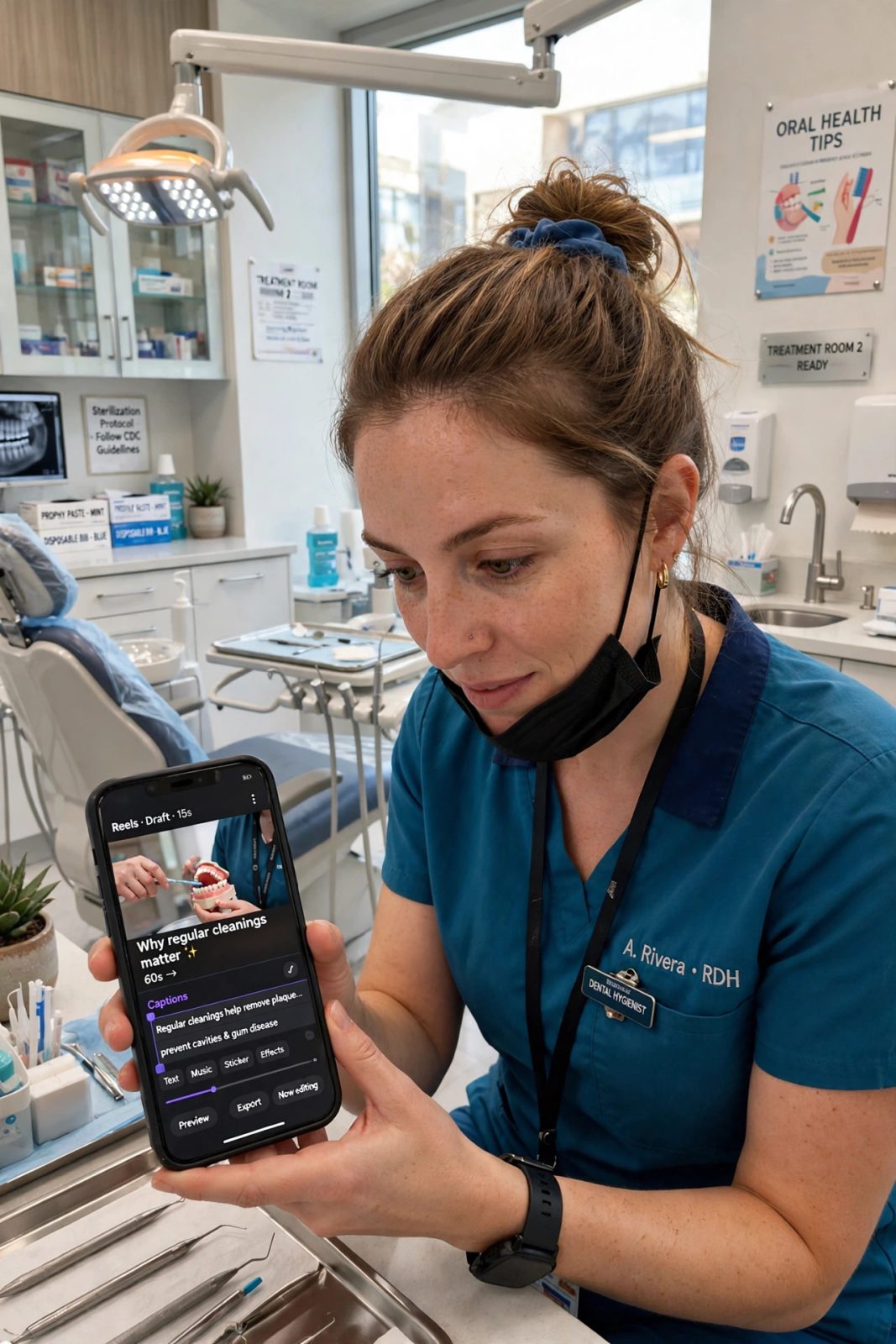
Price: the Pro plan costs $19.99 a month as shown on the official pricing page. Pro includes 1,200 monthly AI credits, 1 TB of cloud storage, all premium templates and Pro features, AI video generation, and 4K export at 60 frames per second. The annual price is $179.99 a year, about $15 a month. The Teams plan costs $12.49 a month per seat and adds a Brand Kit plus Pro features for every seat. The Ultra plan costs $79 a month with 8,645 AI credits for heavy AI generation work. The free plan costs $0 and covers basic editing tools and free templates, and a video cut from your own footage can export with no watermark on Free.
Caveat: CapCut’s own page warns that displayed prices are for reference only and the final price appears after sign-in, and prices can vary by region, device and current promotions. A cheaper $9.99 a month Standard tier exists in the mobile app only and is not sold on the website, so this guide does not quote it as a web price.
Best for: a practice that films at the chair, edits the same day, and needs finished vertical smile tip Reels with captions and beat-synced cuts for Reels, TikTok and Shorts before the patient leaves. Limit: it is a single-account editor, not a video generator, so it cannot create the clinic footage itself, only edit what you already filmed or generated elsewhere, and the AI credits are a monthly pool that runs out if you generate a lot of video.
6. Kling AI: best for animating clinic photos into a practice tour
Kling AI is the motion specialist in this list, and it is the cheapest paid plan here. Its image-to-video keeps the clinic and the room in your photo intact and moves what should move: a plant swaying in the reception, sunlight shifting across the waiting room, a slow drift past the treatment chairs. That matters for a dental practice tour because a clinic is mostly still, and the wrong kind of motion, a chair that bends or a doorway that shifts, breaks the trust at once. Kling also offers first and last frame control, so you can set the opening photo and the closing photo and let the model fill the move between them, which keeps the clinic’s geometry honest and makes it the best tool here for the welcome moment in a new-patient video.

Price: the Standard plan costs $6.99 for the first month, then $8.80 a month, with 660 credits a month. Billed yearly it costs $79.20 a year, or $6.60 a month. The Pro plan costs $25.99 for the first month, then $32.56 a month, with 3,000 credits a month. The Premier plan runs from $80.96 to $376.99 a month depending on how many credits you pick, and the Ultra+ plan costs $544.99 a month with 57,000 credits. The free Basic plan costs $0, with monthly free credits claimed on login, a watermark, 720p export, and no commercial use.
Caveat: Kling’s official pricing page, read on 19 November 2026, renders its marketing page with no prices in the fetched text, so the figures above come from multiple independent checks of Kling’s official membership page in October and November 2026, most recently 12 to 15 November 2026, and all of them agree. Confirm the price at checkout before buying. Credits are spent per second of video and monthly credits expire 31 days after they are issued, so Standard’s 660 credits buy a few short tour clips a month, not a library. Watermark removal and commercial use are paid-plan only, so the free plan is a test, not a clinic workflow.
Best for: a practice that wants believable movement inside its own real clinic, a plant, sunlight, a slow drift past the chairs, with the clinic itself unchanged, at the lowest paid price in this list. Limit: the credit pool is small, so a month of daily clinic clips needs a higher plan, and the first-month discount hides the renewal price, so read the renewal figure before subscribing.
7. Luma Dream Machine: best for natural camera moves through the clinic
Luma Dream Machine is the spatial specialist in this list. Its Ray 3.14 model understands depth and perspective better than most generators, so a slow camera drift through a finished clinic respects the chairs, the lights and the doorways instead of warping them. For a dentist, that is the difference between a practice tour that looks filmed and one that looks generated: the camera glides past the reception desk, the doorway stays where it is, and the room keeps its proportions. It also hosts third-party models, including Kling and Veo, inside the same credit pool, so one subscription can generate the tour clip in Ray and a detail shot in another model without opening a second tool.
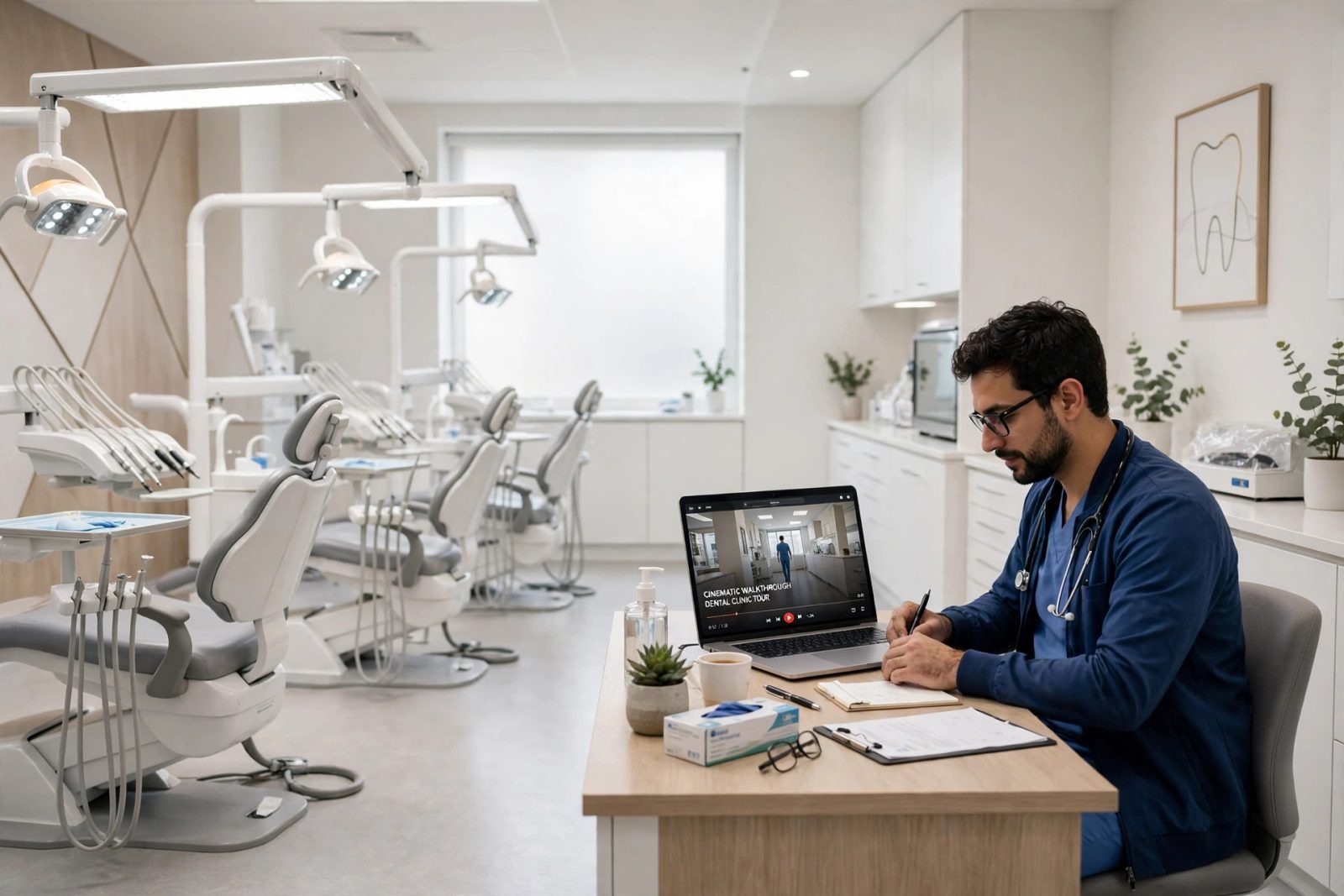
Price: the Plus plan costs $30 a month, or $25 a month billed annually at $300 a year. Plus includes 10,000 credits a month, commercial use, no watermark, and access to Luma and third-party image and video models. The Pro plan costs $90 a month, or $75 a month billed annually, with 40,000 credits a month. The Ultra plan costs $300 a month, or $250 a month billed annually, with 150,000 credits a month. A 5-second image-to-video clip in Ray 3.14 costs 100 credits at 720p or 400 credits at 1080p, so Plus buys about 100 five-second clips at 720p or 25 at 1080p each month.
Caveat: the official pricing page, read on 19 November 2026, shows the credit amounts above but renders the dollar prices in JavaScript, so the dollar figures were not visible in today’s text read. They match the credit amounts exactly and were verified against the same official page on 16 November 2026, but confirm them at checkout. There is no free plan on the current pricing page, only free trial credits. A legacy Lite tier at $9.99 a month still appears in the mobile app and the help centre, but it is watermarked and non-commercial, so it is not a working plan for clinic videos.
Best for: a practice that wants the most natural camera moves through its clinic, with the geometry held steady, and that posts enough tours to use a 10,000-credit month. Limit: it is the most expensive entry plan in this list at $30 a month, and the credit maths punish 1080p, so most months will be shot at 720p unless the clip is a hero piece.
A worked example: one dental practice, 12 videos
Take a dental practice with one clinic that posts 12 videos a month: 4 patient education explainers, 3 smile tip Reels, 2 practice tour and welcome clips, 1 seasonal promo, 1 new-patient welcome video, and 1 testimonial video. Here is how the month runs on the starter stack and on the full stack.
On the starter stack, Kling AI Standard at $8.80 a month makes the practice tour and welcome clips from the clinic’s own finished photos, a slow drift past the reception desk and the treatment chairs, and CapCut Free finishes the 3 smile tip Reels with captions at the chair and exports them with no watermark. Total: $8.80 a month, about $0.73 per video. The patient education explainers are recorded as talking-head clips, the seasonal promo is a simple slideshow, and the testimonial is filmed on a phone, which is slower but costs nothing.
On the full stack, Kling Standard makes the 2 practice tour clips, HeyGen Creator narrates the 4 patient education explainers and translates them for international patients, Synthesia Starter turns the written aftercare sheets into 2 more education videos with a presenter, Pictory Starter turns the written treatment pages into the new-patient welcome video, InVideo Starter writes the seasonal promo and the testimonial video from one sentence each, Luma Plus supplies the natural drift shots through the finished clinic, and CapCut Pro finishes the 3 smile tip Reels with captions and beat-synced cuts. The cost builds up like this: $8.80 for Kling, $37.80 after adding HeyGen, $56.80 after adding Synthesia, $85.80 after adding Pictory, $105.80 after adding InVideo, $135.80 after adding Luma, and $155.79 after adding CapCut. Total: $155.79 a month, about $12.98 per video across the 12-video month.
On annual billing, the same seven cheapest plans cost $119.60 a month: Kling $6.60, HeyGen $24, Synthesia $14, Pictory $25, InVideo $10, Luma $25 and CapCut about $15. That is about $9.97 per video across the same 12-video month. Pictory’s annual figure is the regular rate of $25 a month, not the temporary Black Friday offer of $12.50.
Which of the best AI video tools for dentists is right for your practice
A practice with one clinic should start with the starter stack: Kling AI Standard plus CapCut Free, $8.80 a month. Make the tour and welcome clips from your own finished photos, film the smile tip Reels yourself, and let CapCut finish them at the chair. Add HeyGen Creator at $29 a month when patients need a treatment explainer in more than one language, because one explainer that every patient understands is the video that pays for itself fastest. Add Synthesia Starter next when the practice wants proper patient education videos from its own aftercare sheets, with a presenter who never gets tired. Pictory comes next when the treatment pages on the website deserve a video, and Luma and InVideo come last, when the tours need the most natural camera work and the monthly posting volume justifies a prompt-to-video tool.
Frequently asked questions
Can a dentist use AI video tools without filming anything?
Yes, for explainers, promos and tours, but not for patient results. HeyGen, Synthesia, Pictory and InVideo can build a video from text alone, and Kling and Luma can make a finished clip from your own photo, which covers treatment explainers, seasonal promos, practice tours and welcome videos. A testimonial or a before-and-after has to show your actual patient and your actual work, so film that yourself, with the patient’s written permission, and use CapCut to finish it. A patient who books on an AI-generated smile will complain on their first visit.
Do AI-generated dental videos break advertising rules?
They can, if they mislead. A video that shows a result, a treatment outcome or a smile transformation your clinic did not produce is a misleading claim in many countries, and a patient who books on it will feel cheated. A slow camera move across your own finished clinic is honest. A video that shows a smile, a tooth or a treatment result that is not your patient’s work is a refund request waiting to happen. Use AI for the presenter, the camera move and the edit, and your own patients, with their written permission, for the results, the finishes and the testimonials. Our separate guide to the best AI video tools for beauty salons covers a similar honesty rule for transformation videos in a neighbouring local business.
Is patient data safe in AI video tools?
Not automatically. None of the seven tools in this guide publishes a HIPAA business associate agreement on the pages checked for this guide, so treat every tool as unsuitable for patient data. Never upload a patient’s name, photo, X-ray, treatment record or identifiable detail into any of them. Make only general education videos, implant aftercare in general, what a root canal involves in general, and keep every named patient’s case out of the tools entirely. Add a line to every video that it is general information and not a substitute for professional advice.
What does a dental video stack cost per month?
The starter stack in this guide is $8.80 a month, about $0.73 per video across 12 videos. The full stack of all seven cheapest paid plans is $155.79 a month on monthly billing, or $119.60 a month on annual billing. Start with the starter stack and add one tool at a time as the videos earn their keep.
Conclusion
A dental practice does not need a film crew. It needs 12 honest videos a month: patient education explainers that calm a nervous patient before they arrive, smile tip Reels that answer the question the patient was too shy to ask, a practice tour that shows a clean and welcoming clinic, and a welcome video that puts a face to the practice. The best AI video tools for dentists in this guide cover those jobs for $8.80 a month to start, or $155.79 a month for the full stack, with real prices checked on 19 November 2026. Start with Kling and CapCut, add HeyGen when your patients speak more than one language, and add Synthesia when your aftercare sheets deserve a presenter. Film your own patients, let AI move the camera, and never let a generated clip pretend to be a result your clinic did not produce.