A tattoo studio runs on its camera roll. The fresh tattoo on the arm, the healed result six weeks later, the flash sheet on the wall, the stencil going on, the line work, the shading. Every one of those moments is a video waiting to happen, and the studios that post them regularly are the ones whose books stay full.
The problem is time. A tattoo artist spends the day tattooing, not editing. A 20 minute process video needs cutting, captions, music and a vertical crop before it can go on Reels, and that work usually happens after the last client leaves. That is where the best AI video tools for tattoo artists earn their place. They cut the long session into short clips, add captions, turn a script into a presenter video, or turn a flash sheet into a promo, without a filming crew.
This guide compares seven tools on one job: 12 short videos a month for a small tattoo studio. Four process and healing timelapses, four flash promos and booking clips, and four aftercare explainers. Every price below was checked on the official pricing page on 23 November 2026. Prices are in US dollars. Where a Black Friday offer is live, both the list price and the sale price are shown, because a sale price is not the price you will pay at renewal unless the page says so.
How we compared the tools
One job, one price, one checklist. Each tool was judged on what a tattoo artist actually needs: editing real footage from the studio chair, cutting long sessions into vertical Reels, captions that work with the sound off, a presenter option for aftercare videos when the artist does not want to be on camera, and a price that fits a small studio.
The 12 videos a month in this guide are the volume a busy one or two artist studio can sustain: one Reel every two or three days. If you post less, the free plans below will stretch further. If you post daily, you will need a paid plan and you should watch the credit limits, because every tool here meters its AI work in credits or minutes.
A note on honesty before the tools. A generated clip must never be presented as a real tattoo or a real healed result. If you did not tattoo it, do not post it as your work. A generated before and after of a tattoo you never did is a deceptive claim, and it will cost you more than any tool saves you. The tools below are for editing your real work and for presenter videos, not for faking tattoos.
The 7 tools at a glance
| Tool | Best for a tattoo studio | Free plan | Paid from (monthly billing) |
|---|---|---|---|
| CapCut | Fast phone edits and timelapses | Yes | $19.99/mo Pro |
| Opus Clip | Cutting long sessions into Reels | Yes, 60 credits/mo | $15/mo Starter |
| Descript | Editing by transcript, clean captions | Yes, 60 media minutes/mo | $24/mo Hobbyist |
| HeyGen | Avatar presenter for aftercare videos | Yes, 3 videos/mo | $29/mo Creator |
| Synthesia | Polished presenter explainers | Yes, Basic | $19/mo Starter |
| Pictory | Flash promos from text or a script | 14-day trial | $29/mo Starter, $14.50 on Black Friday sale |
| InVideo | Fast promo clips from a prompt | Yes | $20/seat/mo Starter |
1. CapCut: best for fast phone edits and timelapses
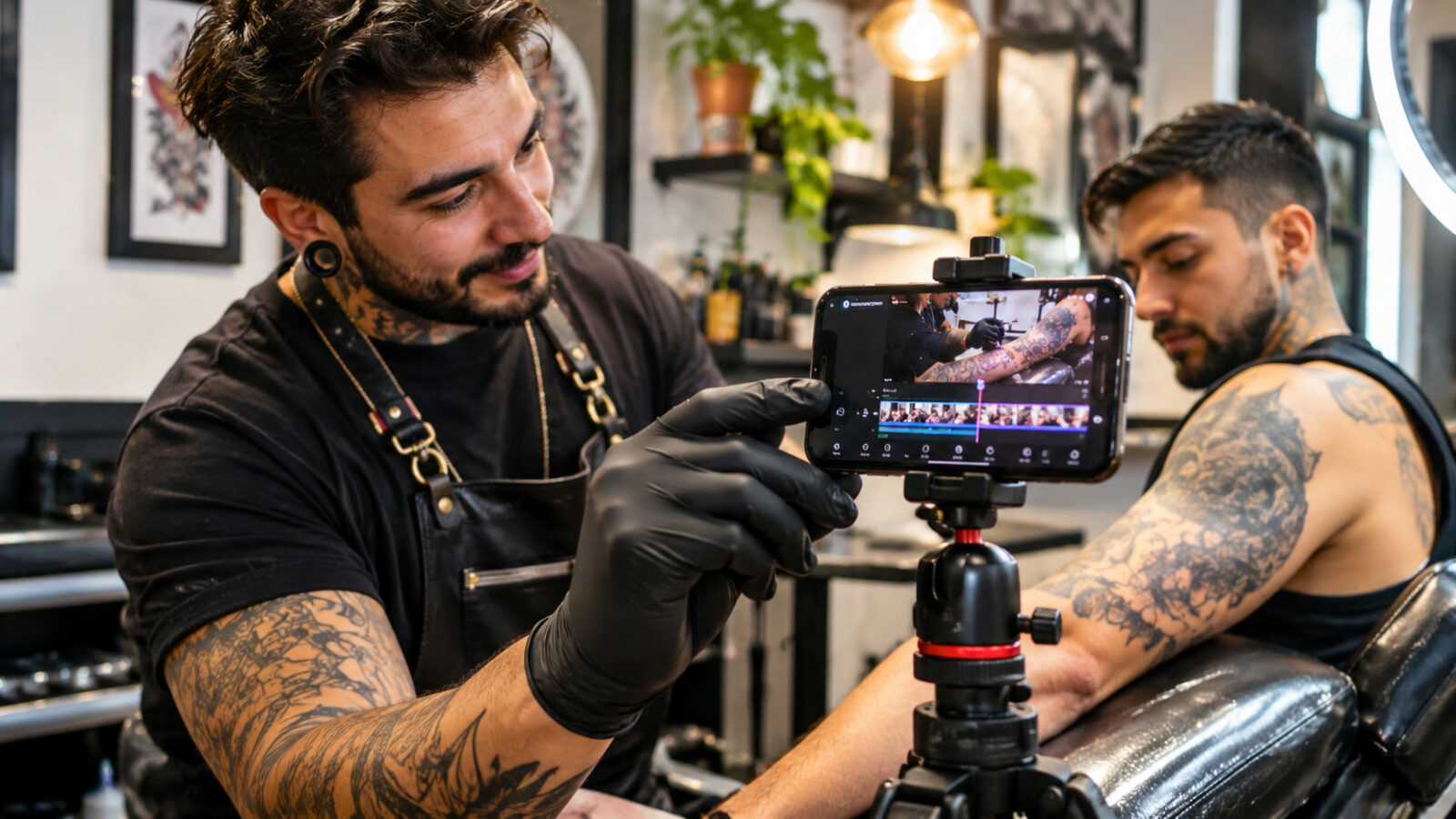
CapCut is the tool most tattoo artists already have on their phone, and for the daily work of a studio it is still the fastest. Film the session on your phone, drop the clip on the timeline, speed the line work up to a timelapse, add auto captions and trending music, and export vertical for Reels. The whole job takes minutes, and it happens on the same phone that filmed it.
For a tattoo studio, CapCut’s best features are the ones that remove friction. Auto captions mean a client scrolling with the sound off still reads the aftercare steps. Speed ramping turns a 40 minute shading session into a 30 second clip that holds attention. Templates give a flash promo a consistent look without designing anything from scratch. The free plan covers all of this, including 1080p export, which is enough for Reels and TikTok.
Price: CapCut is free to start. CapCut Pro is $19.99 a month, or $179.99 a year, which works out to $15 a month. Pro adds 1,200 AI credits a month, 1 TB of cloud storage, premium templates and 4K export at 60 frames per second. There is a 7-day free trial of Pro. Ultra is $79 a month and Teams is $12.49 per seat a month, but a small studio does not need either. Prices checked on the official CapCut pricing page, 23 November 2026.
When to pick it: pick CapCut if you film on your phone and want the edit done before the client has left the chair. It is the best first tool for a studio that has never edited video.
Watch out for: CapCut is an editor, not a clip finder. It will not watch a two hour session and pick the best moments for you. That job belongs to Opus Clip below. Also check the music licence if a clip will run as a paid ad outside TikTok, because library music is licensed narrowly.
2. Opus Clip: best for cutting long sessions into Reels
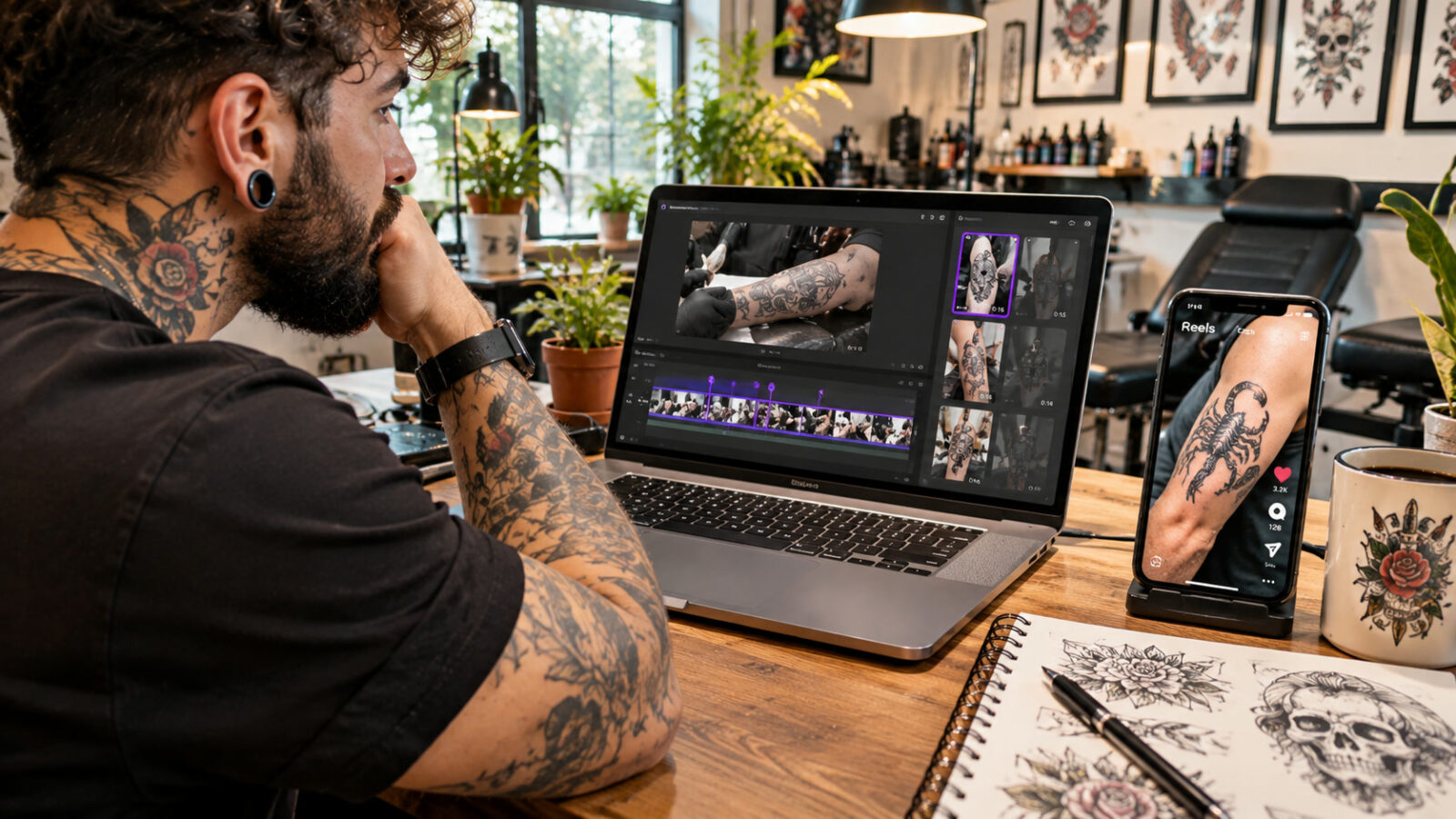
Opus Clip does the one job CapCut cannot: it watches a long video and finds the moments worth posting. Upload a 60 minute recording of a full tattoo session, or a long talk about aftercare, and Opus Clip cuts it into captioned vertical clips, scores each one with a Virality Score, and reframes the shot so the tattoo stays in frame.
For a tattoo artist, this is the highest value tool on the list. One filmed session becomes a week of Reels: the stencil going on, the first lines, the shading, the reveal, the healed check-in. The artist films once and the tool does the cutting. The Pro plan adds a social media scheduler, so the clips can go out across the week without the artist opening the apps every day.
Price: Opus Clip is free, with 60 credits a month. One credit is one minute of the video you upload. Starter is $15 a month, monthly billing only, with 150 credits a month and no watermark. Pro is $29 a month, or $14.50 a month billed annually ($174 a year), with 300 credits a month per pack, a scheduler and 1:1 and 16:9 export. Business is custom pricing. Prices checked on the official Opus Clip pricing page, 23 November 2026.
When to pick it: pick Opus Clip if you film long sessions and want several Reels out of each one. It pairs with CapCut: Opus Clip finds the clips, CapCut finishes them.
Watch out for: credits are charged on the length of the video you upload, not the clips you keep, so a two hour session costs 120 credits before you see a single clip. The free plan’s exports close after three days, and Starter only exports vertical 9:16 clips.
3. Descript: best for editing by transcript and clean captions
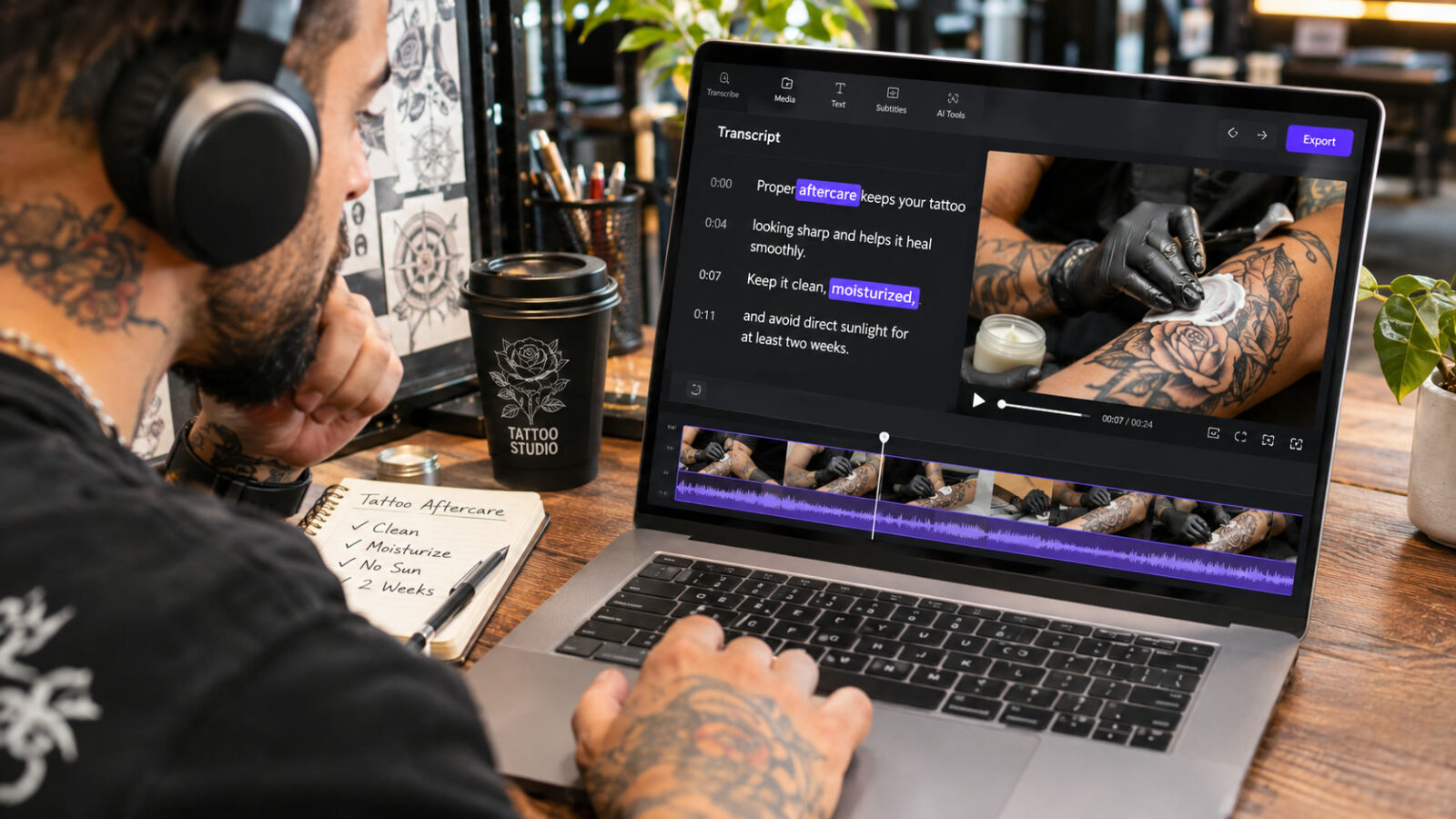
Descript edits video the way you edit a document. It transcribes the audio, and when you delete a sentence from the transcript, that part leaves the video. For an aftercare explainer or a studio tour, where the artist talks to camera for two minutes, this is the fastest way to cut the ums, the pauses and the repeated sentences.
For a tattoo studio, Descript’s strength is spoken video. Record the aftercare talk once, cut it by deleting words, clean the audio with Studio Sound, and add captions that are accurate because they come from the transcript. The same tool turns a long consultation recording into a short FAQ clip. Creator adds 4K export and timeline export to Premiere or Final Cut if a studio wants a professional finish elsewhere.
Price: Descript is free, with 60 media minutes a month, 100 one-time AI credits and 720p watermarked export. Hobbyist is $24 a month, or $16 a month billed annually, with 10 media hours and 400 AI credits a month. Creator is $35 a month, or $24 a month billed annually, with 30 media hours, 800 AI credits and 4K export. Business is $65 a month, or $50 a month billed annually, with 40 media hours and 1,500 AI credits. Prices are per person. Prices checked on the official Descript pricing page, 23 November 2026.
When to pick it: pick Descript if you talk on camera and want the cleanest captions and the fastest spoken-word edit. It is the best tool here for aftercare videos and artist intros.
Watch out for: Descript is built for spoken video, not for visual timelapses. A silent shading timelapse has no transcript to edit, so it belongs in CapCut. Media minutes and AI credits reset each month and do not roll over.
4. HeyGen: best for an avatar presenter for aftercare videos
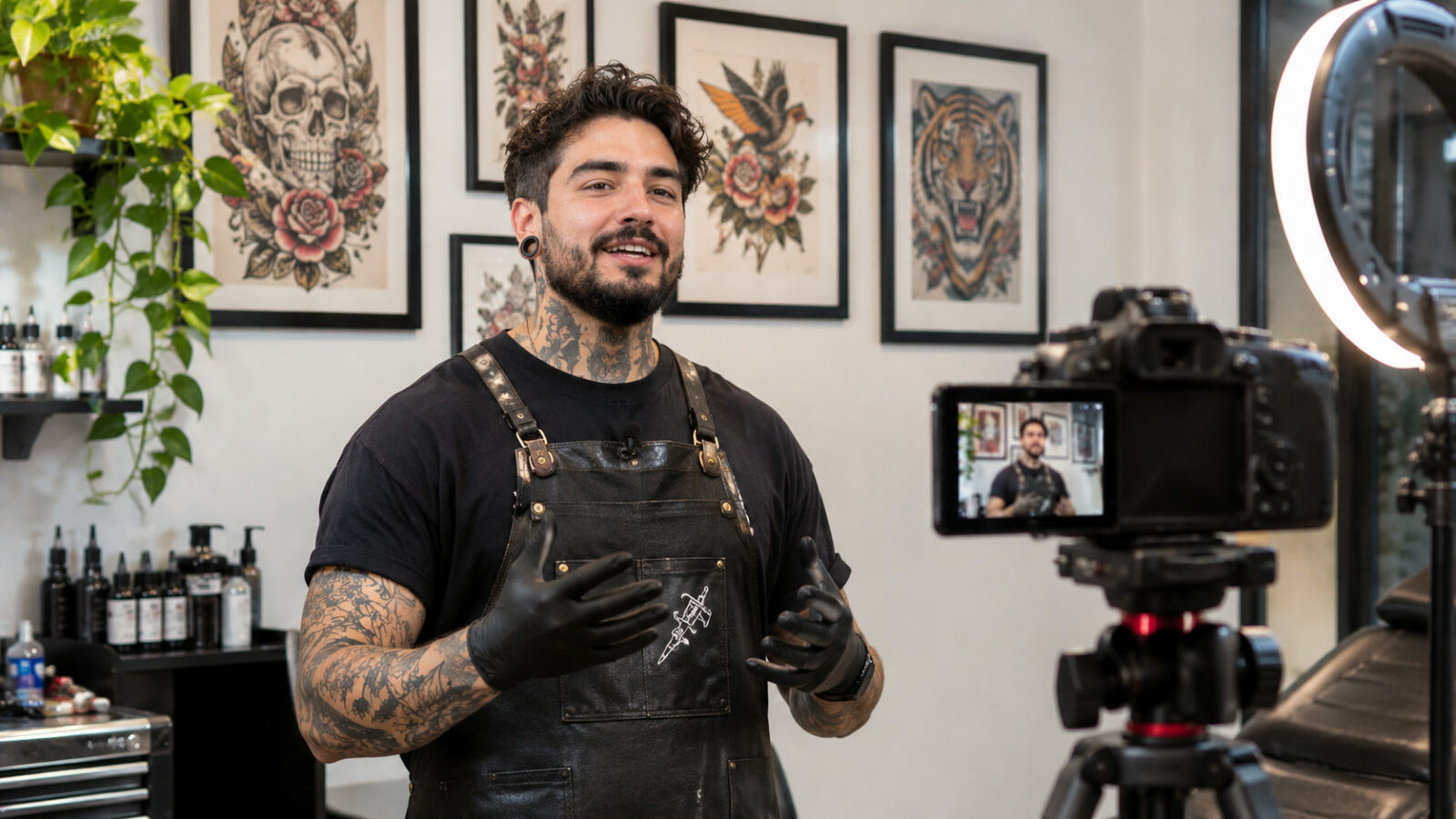
HeyGen turns a script into a video presented by a realistic AI avatar, and translates it into more than 175 languages. For a tattoo studio, the use case is simple: the artist writes the aftercare script once, and HeyGen’s presenter delivers it, every time, without the artist filming again. The same script can go out in English, Spanish and Urdu for a mixed local client base, with the presenter’s lip sync matched to each language.
HeyGen also fits the artist who does not want to be on camera. A digital twin of the artist can front the booking explainer and the deposit policy video, so the studio has a face on its videos without the artist recording every week. HeyGen requires explicit consent from anyone turned into an avatar, and a voice clone needs explicit, informed permission, so only ever clone yourself, never a client.
Price: HeyGen is free, with 3 videos a month up to one minute each. Creator is $29 a month, or $24 a month billed annually, with 600 credits a month, videos up to 30 minutes and 1080p export. Pro is $49 a month, or $41 a month billed annually, with 1,000 credits a month and 4K export. Business is $149 a month, or $119 a month billed annually, plus $20 per extra seat, with 1,500 credits a month. Prices checked on the official HeyGen pricing page, 23 November 2026.
When to pick it: pick HeyGen if you want a presenter on your aftercare and booking videos without filming every week, or if your clients speak more than one language.
Watch out for: credits are spent per video depending on the model, duration and complexity, and HeyGen does not publish a per-minute rate, so the monthly cost is harder to forecast than a tool priced in plain minutes. Start on Creator and watch one month of usage before committing to a year.
5. Synthesia: best for polished presenter explainers
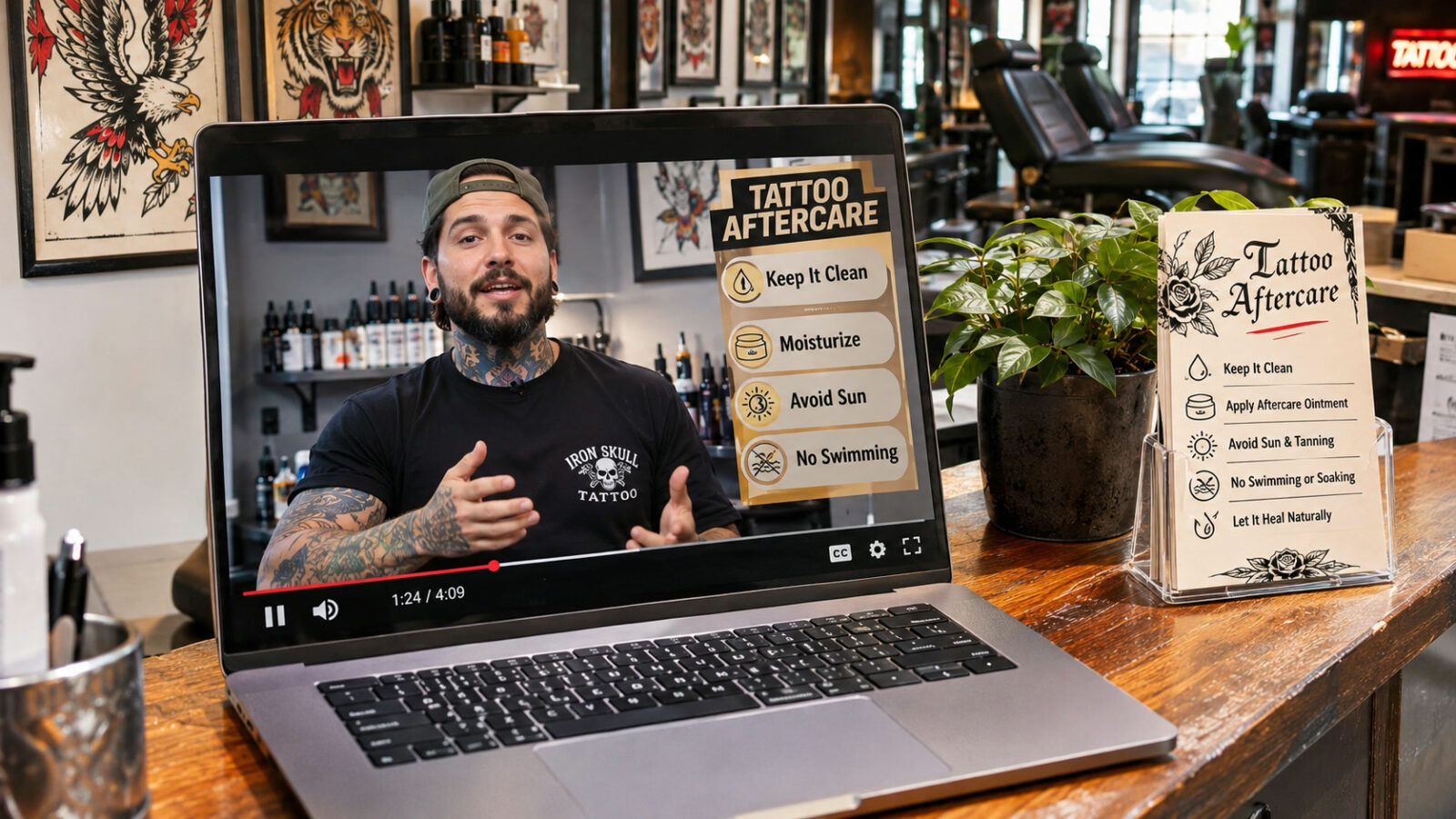
Synthesia is the most polished presenter tool on this list. It turns a script into a studio-style video with a stock avatar or a personal avatar of the artist, with branded pages, interactive video and one-click translation. For a tattoo studio, it fits the videos that need to look formal: the aftercare guide on the booking page, the consent and age policy explainer, the studio induction for a new artist.
Synthesia’s new Syren agent builds a creative video from a plain description, which suits a flash promo with a bolder look. The Basic plan is free and gives 500 credits a month and 10 minutes of Studio video or dubbing, so a studio can test the workflow before paying.
Price: Synthesia Basic is free. Starter is $19 a month, or $14 a month billed annually ($168 a year), with 1,250 credits a month, and the first month is $9. Pro, formerly called Creator, is $89 a month, or $59 a month billed annually ($708 a year), with the first month at $49. A Black Friday and Cyber Week offer is live on the Synthesia pricing page, valid from 10:00 GMT on 23 November to 07:59 GMT on 7 December 2026, for new customers and free users upgrading only. Business is $99 a month for one member plus $20 per extra member, or $79 a month billed annually. Enterprise is custom pricing. Prices checked on the official Synthesia pricing page, 23 November 2026.
When to pick it: pick Synthesia if your aftercare and policy videos need to look like a professional studio made them, and you want branded pages and interactive video. It is the most corporate feeling tool here, which suits a studio’s website more than its TikTok feed.
Watch out for: Synthesia’s credit system is the most complex on this list. One minute of video typically uses 1,000 to 2,000 credits, so the Starter plan’s 1,250 credits a month buys roughly one short video. Check the credit math against your 12 videos a month before paying, and remember the Black Friday first-month price is not the renewal price.
6. Pictory: best for flash promos from text or a script
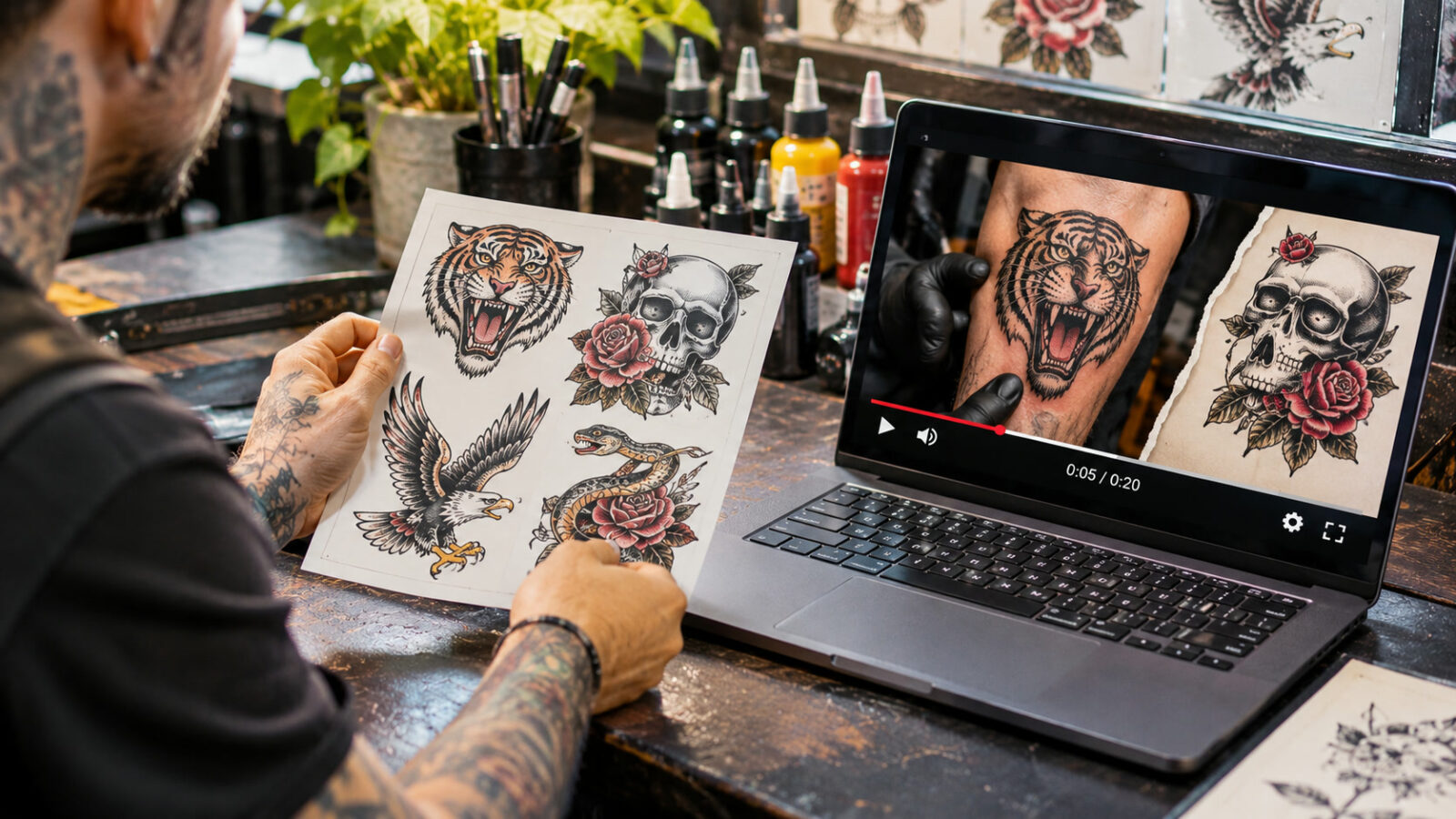
Pictory turns a script, a blog post or a slide deck into a narrated video with stock footage, AI voices, captions and avatars. For a tattoo studio, the use case is the flash promo: paste the text of a flash sheet, the prices and the booking link, and Pictory builds a short promo with music and voiceover. It also turns a written aftercare page into a video for clients who prefer to watch rather than read.
Pictory’s stock library comes from Getty Images and Storyblocks, with more than 5 million videos on Starter and more than 18 million on Professional, so the b-roll looks professional. Its AI video agent takes a brief and builds the video, then lets the studio refine it scene by scene.
Price: Pictory has a 14-day free trial with 300 credits. The list prices are Starter $29 a month or $25 a month billed annually, Professional $59 a month or $35 a month billed annually, and Teams $199 a month or $119 a month billed annually. A Black Friday offer is live on the Pictory pricing page today, 23 November 2026, with no end date shown: Starter $14.50 a month billed monthly or $12.50 a month billed annually, Professional $29.50 or $17.50, Teams $99.50 or $59.50. Starter gives 2,000 credits a month, up to 30 video minutes; Professional gives 6,000 credits, up to 90 minutes; Teams gives 18,000 credits, up to 300 minutes. Prices checked on the official Pictory pricing page, 23 November 2026.
When to pick it: pick Pictory if you write your flash promos and aftercare guides as text first and want them turned into video without filming. It is the best tool here for turning words into a finished clip.
Watch out for: the Black Friday price is a sale price and the page does not say whether it applies at renewal, so ask before committing to a year. Pictory’s strength is stock footage and narration, so it suits promos and explainers better than process videos of real tattooing, which still need a camera.
7. InVideo: best for fast promo clips from a prompt
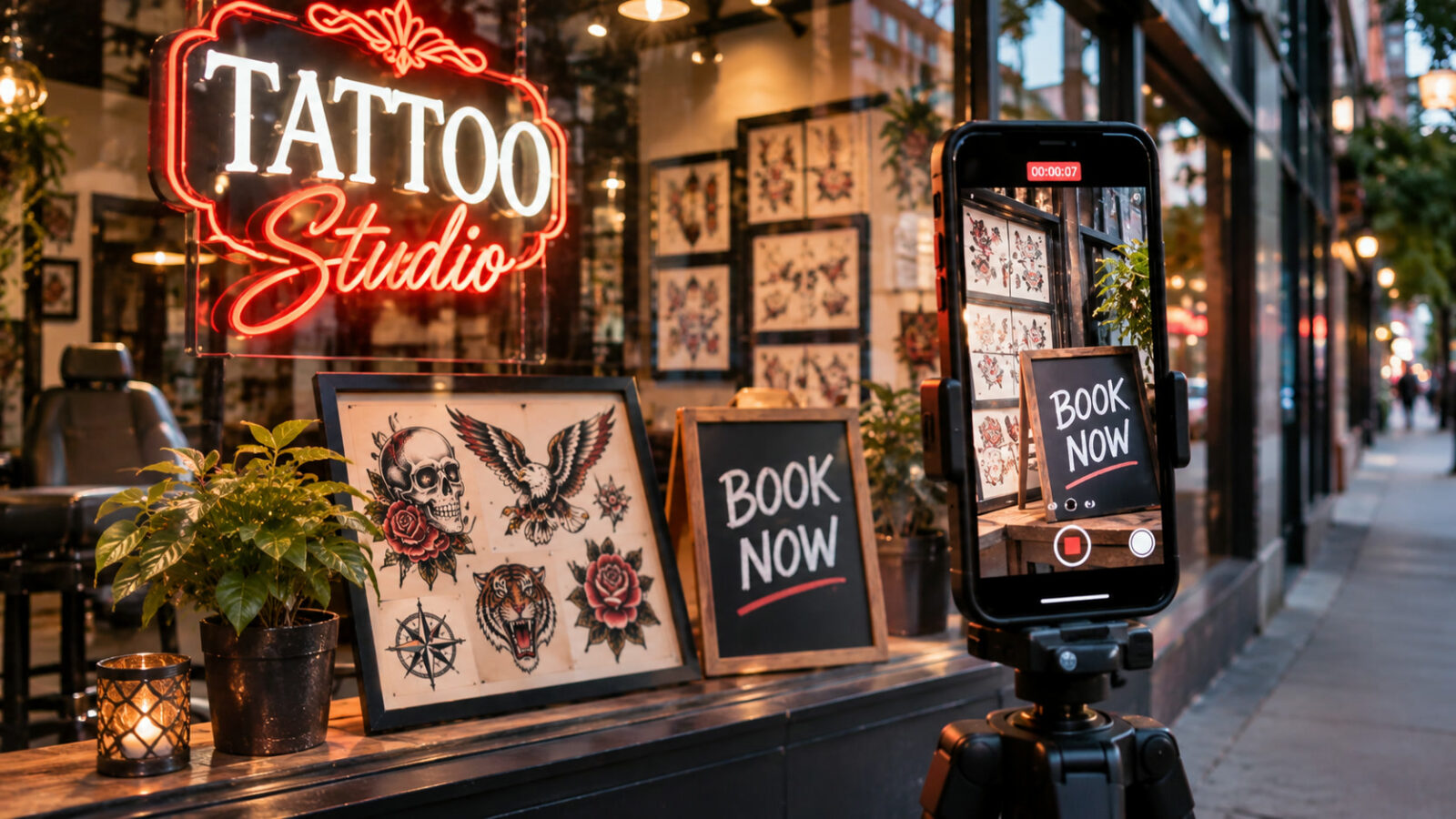
InVideo builds a complete first cut from a prompt or a script, then lets the studio finish it in a timeline editor. Type “30 second Reel promoting a Friday the 13th flash event, three designs, book through the link in bio” and the AI agent plans the shots, generates clips and assembles the edit. For a studio running a flash event or a seasonal offer, that speed matters: the promo is ready the same afternoon the idea arrives.
InVideo’s agent modes and generative models suit the quick seasonal clip, and the editor on every plan includes the full timeline, multiplayer editing, colour, audio and 3D. The free plan lets a studio test the workflow before paying.
Price: InVideo Starter is $20 per seat a month billed monthly, or $10 per seat a month billed annually, with 400 credits a seat a month. Plus is $60 a month or $30 a month billed annually, with 2,000 credits. Max is $250 a month or $125 a month billed annually, with 8,000 credits, under a 75 percent off limited offer that says pay for 12 months and get 24. Prices checked on the official InVideo pricing page, 23 November 2026.
When to pick it: pick InVideo if you want a finished promo from a one-line brief, especially for flash events, seasonal offers and last-minute booking gaps.
Watch out for: every AI action costs credits, premium video is charged per second, and credits do not roll over. InVideo has reshuffled its plan lineup several times in 2026, so confirm the price on the pricing page on the day you buy, and check whether the Max annual price you see is the $125 offer or the standard rate.
How to film a tattoo session so AI editing works
The tools are only as good as the footage. A few habits make every tool on this list work better.
Film in good light, from a fixed angle. A phone on a small tripod at the side of the chair beats a handheld shot every time, because the AI reframing in Opus Clip and the speed ramping in CapCut both assume a stable frame. Wipe the lens before you start; a smudge on the lens is visible in every clip.
Ask permission before you film, every time, and say where the clip will go. A client who agrees to a Reel is not agreeing to a paid ad, and a client who agrees to be filmed is not agreeing to have their face shown. Film the tattoo, not the person, wherever possible, and keep the face out of frame unless the client has clearly agreed.
Record the sound separately when you talk. A 60 second aftercare talk recorded in a quiet room after the session will always sound better than the same talk recorded over the buzz of the machine. Descript’s Studio Sound can clean a noisy recording, but it cannot invent a quiet room.
Film the healed result. The fresh tattoo looks good on the day, but the healed photo six weeks later is the proof that sells the next booking. Ask the client to send a healed photo, and turn it into a before and after Reel with CapCut. That single format brings more bookings than any other video a studio posts.
Keep the clips short. A 15 to 30 second Reel with one idea beats a three minute video with five ideas. Opus Clip’s Virality Score is a useful guide here: if a clip scores low, the hook is probably slow, and the first two seconds are where the viewer decides.
A week of videos from one tattoo session
One filmed session can fill a week of posts if the tools share the work. Here is how the seven tools split one job.
Monday: film a full session on the phone, fixed on a tripod. Upload the long recording to Opus Clip and let it find the best moments: the stencil, the first lines, the shading, the reveal.
Tuesday: take the three best Opus Clip clips into CapCut. Speed the shading up to a timelapse, add captions and music, export vertical. Post the first Reel.
Wednesday: record the aftercare talk in a quiet room, two minutes, one take. Cut it in Descript by deleting the pauses and the repeated sentences, then export with captions.
Thursday: turn the aftercare script into a HeyGen presenter video in a second language for the clients who ask for it. The script is already written, so this takes minutes.
Friday: write the flash promo as five lines of text, prices and booking link included, and let Pictory build the video. Or give InVideo a one-line brief for a weekend flash event and post the promo the same afternoon.
Saturday: post the healed result. A client sends a healed photo, CapCut turns the fresh and healed shots into a before and after Reel, and the caption carries the booking link.
Sunday: rest, and check which of the week’s videos held viewers past the first two seconds. The format that held attention is the format to repeat next week. The format that lost viewers in two seconds needs a faster hook, not a bigger budget.
This weekly plan is why the starter stack works. Opus Clip finds the clips, CapCut finishes them, and the artist films once. The other five tools join only when a specific format needs them: Descript for talking, HeyGen and Synthesia for presenters, Pictory and InVideo for text-first promos.
The starter stack: $15 a month
A studio starting from zero does not need all seven tools. Start with two.
Opus Clip Starter at $15 a month turns each filmed session into several captioned Reels, and CapCut Free edits them on the phone, adds music and exports them. That is $15 a month for the whole workflow, or about $1.25 per video across 12 videos a month.
Add Descript Free when you start recording aftercare talks, because 60 media minutes a month covers two or three short explainers. Add HeyGen Free when you want a presenter video without filming. The free plans on this list are genuinely usable for a studio posting a few times a week, and the only hard limit is the free plan’s watermark on some tools and the three day export window on Opus Clip Free.
The full stack: $141.49 a month, or $106.50 on annual billing
A studio posting 12 videos a month across every format can run all seven tools. On monthly billing: CapCut Pro $19.99, Opus Clip Starter $15, Descript Hobbyist $24, HeyGen Creator $29, Synthesia Starter $19, Pictory Starter $14.50 on the Black Friday monthly price, and InVideo Starter $20. That totals $141.49 a month. At Pictory’s list price of $29, the total is $155.99 a month.
On annual billing the same stack is cheaper: CapCut Pro $15 a month, Opus Clip Starter $15, Descript Hobbyist $16, HeyGen Creator $24, Synthesia Starter $14, Pictory Starter $12.50 on the Black Friday annual price, and InVideo Starter $10. That totals $106.50 a month. At Pictory’s list annual price of $25, the total is $119 a month.
Two warnings before you buy the full stack. First, the Black Friday prices on Pictory and the first-month prices on Synthesia are not the renewal prices, so budget on the list price and treat the sale as a saving, not the cost. Second, do not pay for a year of all seven tools at once. Run the starter stack for a month, see which formats your clients actually watch, then add the tools that serve those formats. A studio that posts mostly timelapses will never need Synthesia, and a studio that posts mostly aftercare explainers will never need Pictory.
What not to do with AI video in a tattoo studio
Do not post a generated tattoo as your work. Clients book on the strength of healed results, and a generated design that looks good on screen but cannot be tattooed will be found out at the consultation. It also breaks trust in a business that runs entirely on trust.
Do not film a client without clear permission, and never film a minor being tattooed. Age and consent rules apply to video as much as to the tattoo itself, and a clip of a client who did not agree to be filmed is a problem no tool can fix.
Do not use a client’s voice or face to train an avatar or a voice clone. HeyGen and Synthesia both require explicit consent for avatars and voice clones, and that consent must come from the person being cloned. Clone only yourself.
Do not promise a healed result in a video. A fresh tattoo and a healed tattoo look different, and a video that shows only the fresh work while the caption promises the healed look is misleading. Show both, with dates, and let the work speak.
Do not buy followers or engagement for the videos. The point of posting is bookings from real local clients, and fake engagement reaches no one who can walk into the studio.
Frequently asked questions
What is the best AI video tool for a tattoo artist?
CapCut is the best starting point, because it is free, it edits on the phone that filmed the session, and it handles timelapses, captions and music in minutes. Add Opus Clip at $15 a month when one filmed session needs to become several Reels. The best tool is the one that matches the video you actually post, so a studio that talks on camera should look at Descript, and a studio that needs a presenter without filming should look at HeyGen.
Can a tattoo artist make videos without showing their face?
Yes. HeyGen and Synthesia both make presenter videos from a script, so the studio can publish aftercare explainers and booking videos without anyone filming. CapCut and Pictory can also build a video from flash art, text and stock footage with no presenter at all. A face-free video still needs a clear hook in the first two seconds, or viewers will scroll past it.
How much do AI video tools cost a tattoo studio?
The starter stack is $15 a month: Opus Clip Starter plus CapCut Free. The full stack of all seven tools is $141.49 a month on monthly billing at current Black Friday prices, or $106.50 a month on annual billing. At list prices the totals are $155.99 and $119 a month. A studio posting four videos a month can stay on the free plans and pay nothing.
Are AI generated tattoo videos allowed on Instagram?
Yes, but label them honestly. A video of your real work, edited by AI, is your work and needs no special label beyond what the platform asks for. A fully generated clip must not be presented as a real tattoo. Instagram and TikTok both ask creators to label AI generated content, and a generated before and after of a tattoo you did not do will be treated as deceptive if it is presented as real.
Which tool is best for tattoo aftercare videos?
Descript is best if you record yourself talking, because it edits by transcript and makes accurate captions. HeyGen is best if you do not want to film, because its avatar delivers your script and can translate it into other languages for your clients. Synthesia is best if the aftercare video sits on your booking page and needs to look formal and branded.
The verdict
The best AI video tools for tattoo artists are the ones that turn a filmed session into bookings without adding hours to the working day. CapCut and Opus Clip do that for $15 a month, and they are where every studio should start. Descript earns its place the moment you talk on camera. HeyGen and Synthesia earn theirs when you need a presenter without filming. Pictory and InVideo earn theirs when the words come first and the video follows.
Start with the starter stack, film the work you already do, ask permission, show the healed result, and post one Reel every two or three days. The tools will not make a studio’s videos good on their own, but they will make a good studio’s videos fast, and fast is what keeps the books full.
Related reading
- Best AI Video Tools for Beauty Salons in 2026
- Best AI Video Tools for Barbers in 2026
- Best AI Video Tools for Pet Groomers in 2026
- Best AI Video Tools for Photographers in 2026
- Best AI Video Tools for Fitness Coaches in 2026
- How to Make Faceless YouTube Videos with AI
- Best AI Video Tools for Wedding Videographers in 2026
- Best AI Video Tools for Florists in 2026