A coffee shop runs on its camera roll. The latte art pour in the morning light, the steam rising off a fresh flat white, the queue at the counter during the morning rush, the new seasonal drink on the menu board, the beans being ground, the barista’s hands at work. Every one of those moments is a video waiting to happen, and the shops that post them regularly are the ones with a queue out the door.
The problem is time. A coffee shop owner spends the day serving customers, not editing. A 20 second pour needs cutting, captions, music and a vertical crop before it can go on Reels, and that work usually happens after the last customer leaves. That is where the best AI video tools for coffee shops earn their place. They cut a long morning recording into short clips, add captions, turn a script into a presenter video, or turn a menu update into a promo, without a filming crew.
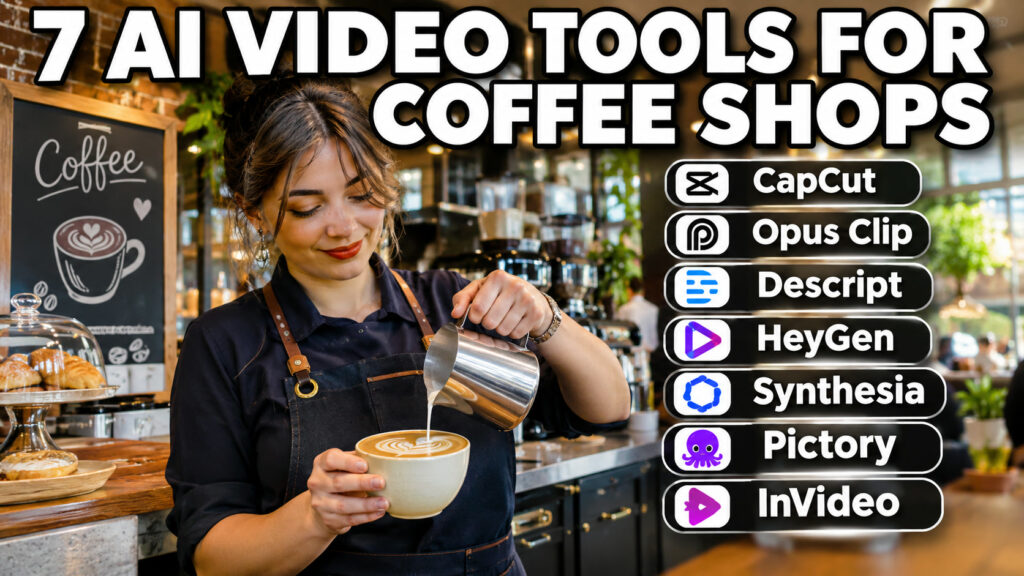
This guide compares seven tools on one job: 12 short videos a month for a small coffee shop. Four latte art and pour clips, four seasonal menu promos and booking clips, and four brewing explainers. Every price below was checked on the official pricing page on 23 November 2026. Prices are in US dollars. Where a Black Friday offer is live, both the list price and the sale price are shown, because a sale price is not the price you will pay at renewal unless the page says so.
How we compared the tools
One job, one price, one checklist. Each tool was judged on what a coffee shop actually needs: editing real footage from behind the counter, cutting long morning recordings into vertical Reels, captions that work with the sound off, a presenter option for brewing guides when the owner does not want to be on camera, and a price that fits a small shop.
The 12 videos a month in this guide are the volume a busy single shop can sustain: one Reel every two or three days. If you post less, the free plans below will stretch further. If you post daily, you will need a paid plan and you should watch the credit limits, because every tool here meters its AI work in credits or minutes.
A note on honesty before the tools. A generated clip must never be presented as a real drink on your menu. If you do not serve it, do not post it as your drink. A generated latte art design for a drink that does not exist is a misleading claim, and a customer who walks in asking for it will leave disappointed. The tools below are for editing your real work and for presenter videos, not for faking drinks.
The 7 tools at a glance
| Tool | Best for a coffee shop | Free plan | Paid from (monthly billing) |
|---|---|---|---|
| CapCut | Fast phone edits and latte art clips | Yes | $19.99/mo Pro |
| Opus Clip | Cutting long mornings into Reels | Yes, 60 credits/mo | $15/mo Starter |
| Descript | Editing by transcript, clean captions | Yes, 60 media minutes/mo | $24/mo Hobbyist |
| HeyGen | Avatar presenter for brewing guides | Yes, 3 videos/mo | $29/mo Creator |
| Synthesia | Polished presenter explainers | Yes, Basic | $19/mo Starter |
| Pictory | Menu promos from text or a script | 14-day trial | $29/mo Starter, $14.50 on Black Friday sale |
| InVideo | Fast promo clips from a prompt | Yes | $20/seat/mo Starter |
CapCut: best for fast phone edits and latte art clips
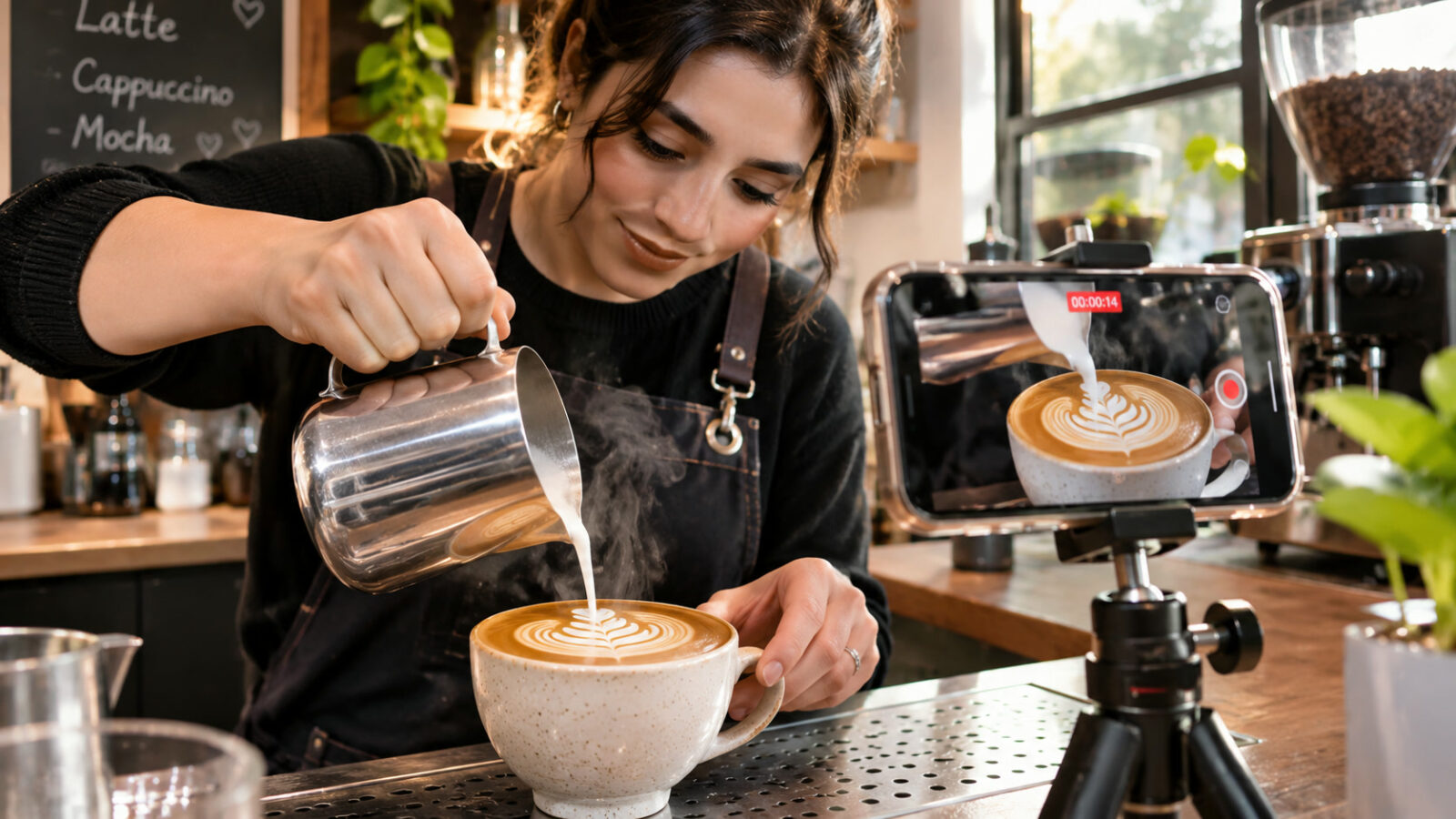
CapCut is the tool most coffee shop owners already have on their phone, and for the daily work of a shop it is still the fastest. Film the pour on your phone, drop the clip on the timeline, slow the milk stream down to a smooth pour, add auto captions and trending music, and export vertical for Reels. The whole job takes minutes, and it happens on the same phone that filmed it.
For a coffee shop, CapCut’s best features are the ones that remove friction. Auto captions mean a customer scrolling with the sound off still reads the drink name and the price. Slow motion turns a three second pour into a six second clip that holds attention. Templates give a seasonal promo a consistent look without designing anything from scratch. The free plan covers all of this, including 1080p export, which is enough for Reels and TikTok.
Price: CapCut is free to start. CapCut Pro is $19.99 a month, or $179.99 a year, which works out to $15 a month. Pro adds 1,200 AI credits a month, 1 TB of cloud storage, premium templates and 4K export at 60 frames per second. There is a 7-day free trial of Pro. Ultra is $79 a month and Teams is $12.49 per seat a month, but a small shop does not need either. Prices checked on the official CapCut pricing page, 23 November 2026.
When to pick it: pick CapCut if you film on your phone and want the edit done before the morning rush ends. It is the best first tool for a shop that has never edited video.
Watch out for: CapCut is an editor, not a clip finder. It will not watch a two hour morning recording and pick the best moments for you. That job belongs to Opus Clip below. Also check the music licence if a clip will run as a paid ad outside TikTok, because library music is licensed narrowly.
Opus Clip: best for cutting long mornings into Reels
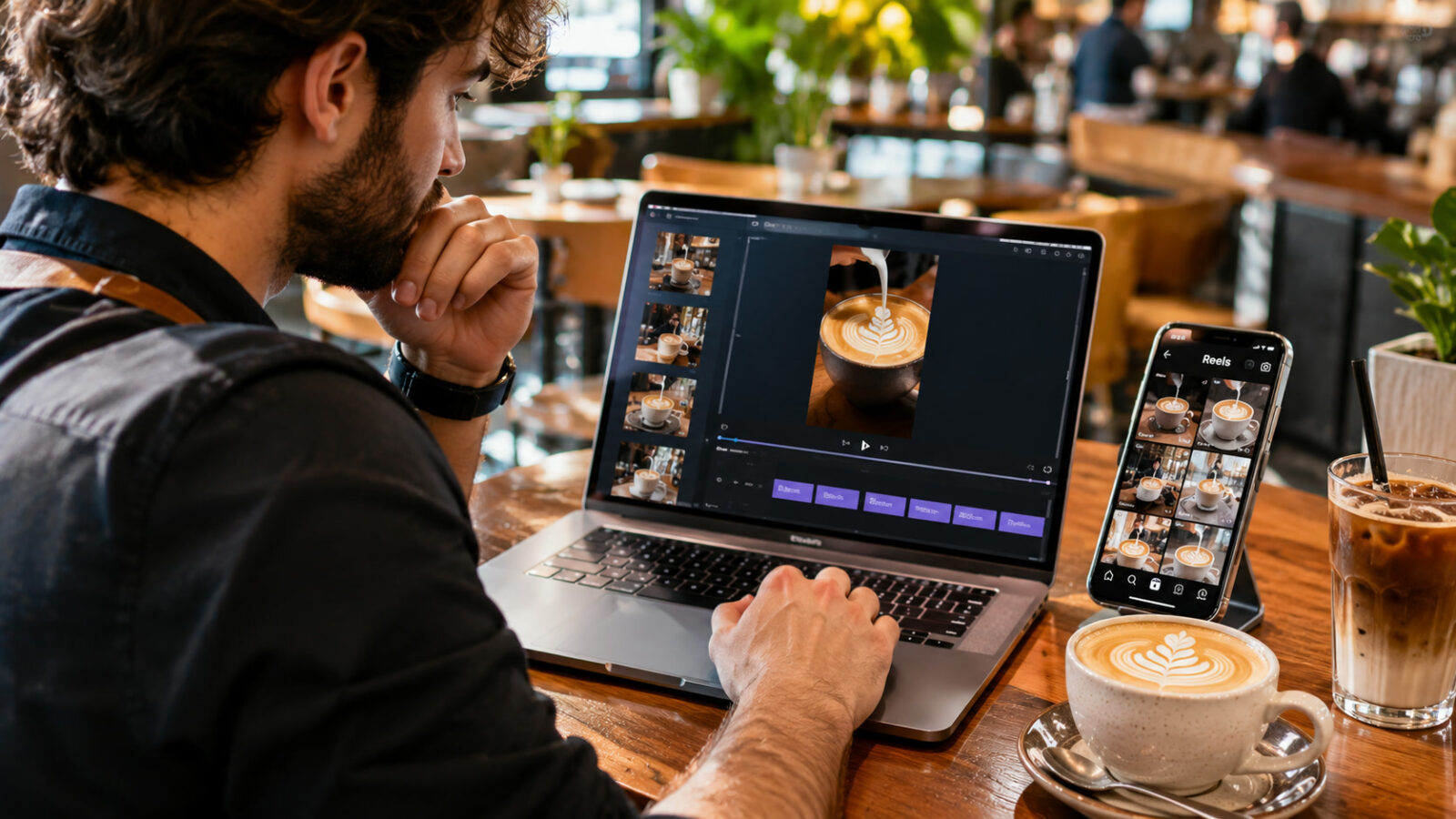
Opus Clip does the one job CapCut cannot: it watches a long video and finds the moments worth posting. Upload a 60 minute recording of a morning behind the counter, or a long talk about your beans, and Opus Clip cuts it into captioned vertical clips, scores each one with a Virality Score, and reframes the shot so the cup stays in frame.
For a coffee shop, this is the highest value tool on the list. One filmed morning becomes a week of Reels: the first pour, the steam, the latte art finish, the regular’s order, the new seasonal drink. The owner films once and the tool does the cutting. The Pro plan adds a social media scheduler, so the clips can go out across the week without the owner opening the apps every day.
Price: Opus Clip is free, with 60 credits a month. One credit is one minute of the video you upload. Starter is $15 a month, monthly billing only, with 150 credits a month and no watermark. Pro is $29 a month, or $14.50 a month billed annually ($174 a year), with 300 credits a month per pack, a scheduler and 1:1 and 16:9 export. Business is custom pricing. Prices checked on the official Opus Clip pricing page, 23 November 2026.
When to pick it: pick Opus Clip if you film long mornings and want several Reels out of each one. It pairs with CapCut: Opus Clip finds the clips, CapCut finishes them.
Watch out for: credits are charged on the length of the video you upload, not the clips you keep, so a two hour recording costs 120 credits before you see a single clip. The free plan’s exports close after three days, and Starter only exports vertical 9:16 clips.
Descript: best for editing by transcript and clean captions
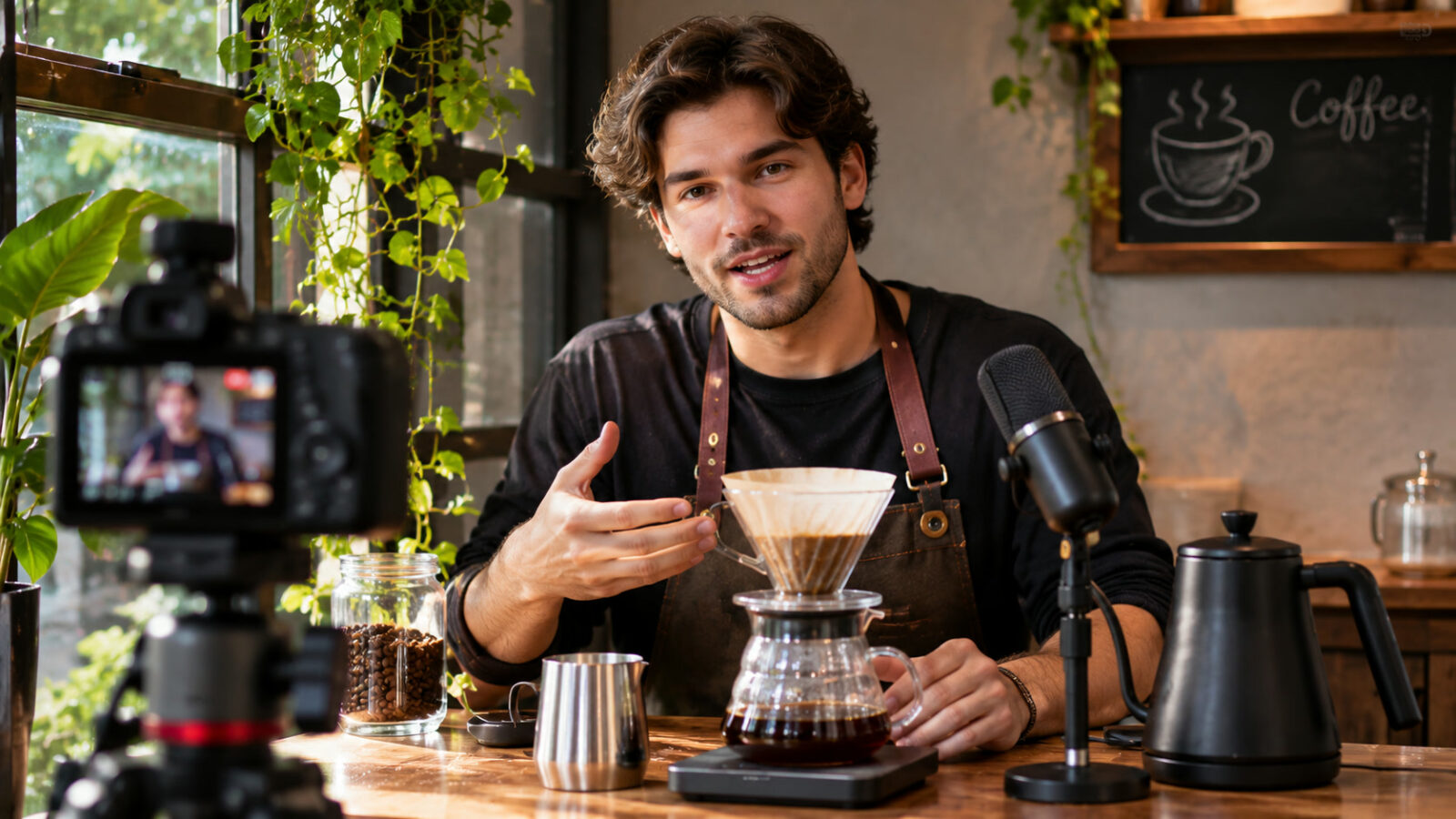
Descript edits video the way you edit a document. It transcribes the audio, and when you delete a sentence from the transcript, that part leaves the video. For a brewing guide or a bean origin story, where the owner talks to camera for two minutes, this is the fastest way to cut the ums, the pauses and the repeated sentences.
For a coffee shop, Descript’s strength is spoken video. Record the pour over guide once, cut it by deleting words, clean the audio with Studio Sound, and add captions that are accurate because they come from the transcript. The same tool turns a long staff training recording into a short clip for new baristas. Creator adds 4K export and timeline export to Premiere or Final Cut if a shop wants a professional finish elsewhere.
Price: Descript is free, with 60 media minutes a month, 100 one-time AI credits and 720p watermarked export. Hobbyist is $24 a month, or $16 a month billed annually, with 10 media hours and 400 AI credits a month. Creator is $35 a month, or $24 a month billed annually, with 30 media hours, 800 AI credits and 4K export. Business is $65 a month, or $50 a month billed annually, with 40 media hours and 1,500 AI credits. Prices are per person. Prices checked on the official Descript pricing page, 23 November 2026.
When to pick it: pick Descript if you talk on camera and want the cleanest captions and the fastest spoken-word edit. It is the best tool here for brewing guides and owner intros.
Watch out for: Descript is built for spoken video, not for visual pours. A silent latte art pour has no transcript to edit, so it belongs in CapCut. Media minutes and AI credits reset each month and do not roll over.
HeyGen: best for an avatar presenter for brewing guides
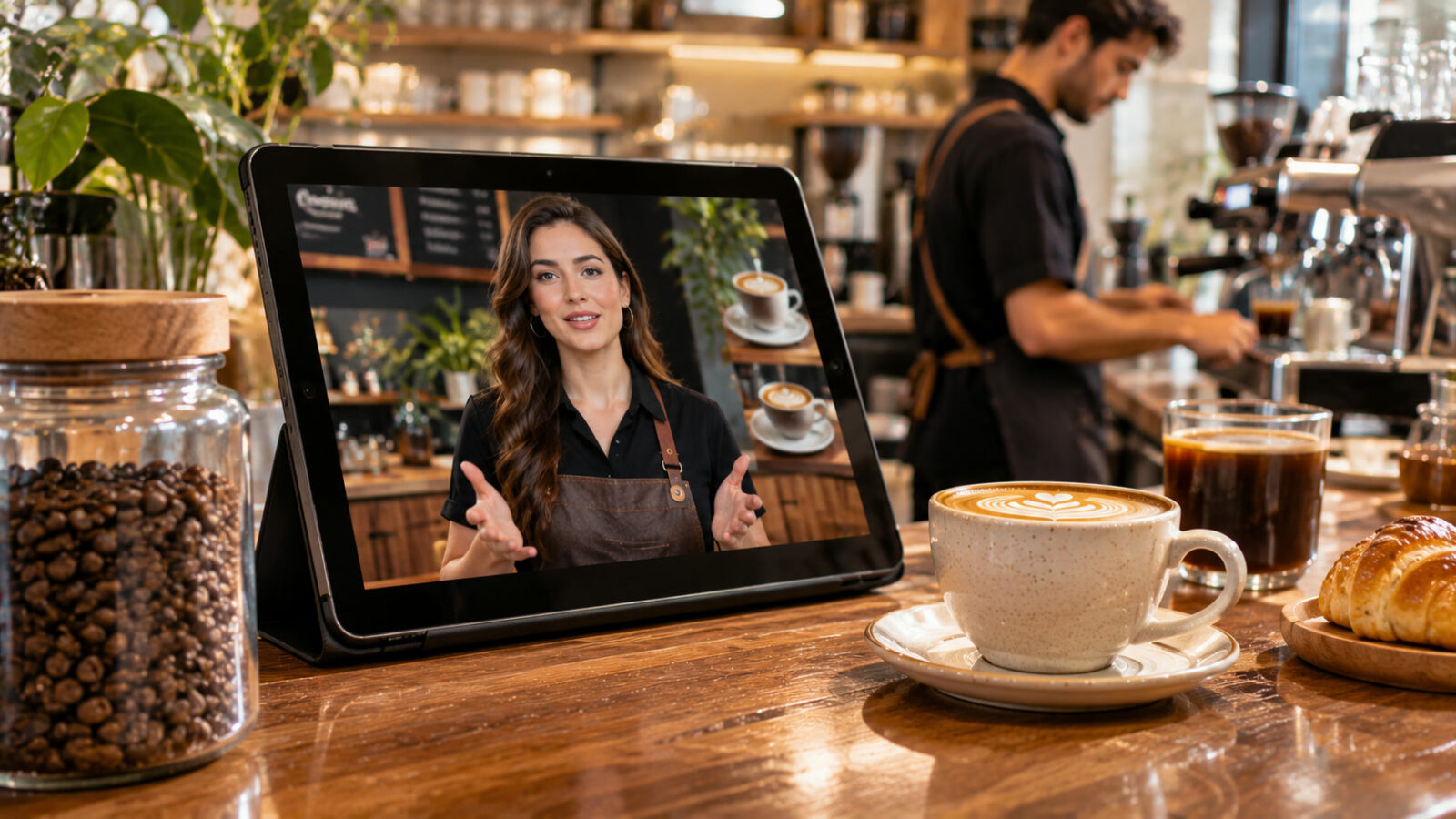
HeyGen turns a script into a video presented by a realistic AI avatar, and translates it into more than 175 languages. For a coffee shop, the use case is simple: the owner writes the brewing guide script once, and HeyGen’s presenter delivers it, every time, without the owner filming again. The same script can go out in English, Spanish and Urdu for a mixed local customer base, with the presenter’s lip sync matched to each language.
HeyGen also fits the owner who does not want to be on camera. A digital twin of the owner can front the loyalty program explainer and the new branch announcement, so the shop has a face on its videos without the owner recording every week. HeyGen requires explicit consent from anyone turned into an avatar, and a voice clone needs explicit, informed permission, so only ever clone yourself, never a customer or a member of staff.
Price: HeyGen is free, with 3 videos a month up to one minute each. Creator is $29 a month, or $24 a month billed annually, with 600 credits a month, videos up to 30 minutes and 1080p export. Pro is $49 a month, or $41 a month billed annually, with 1,000 credits a month and 4K export. Business is $149 a month, or $119 a month billed annually, plus $20 per extra seat, with 1,500 credits a month. Prices checked on the official HeyGen pricing page, 23 November 2026.
When to pick it: pick HeyGen if you want a presenter on your brewing guides and loyalty videos without filming every week, or if your customers speak more than one language.
Watch out for: credits are spent per video depending on the model, duration and complexity, and HeyGen does not publish a per-minute rate, so the monthly cost is harder to forecast than a tool priced in plain minutes. Start on Creator and watch one month of usage before committing to a year.
Synthesia: best for polished presenter explainers
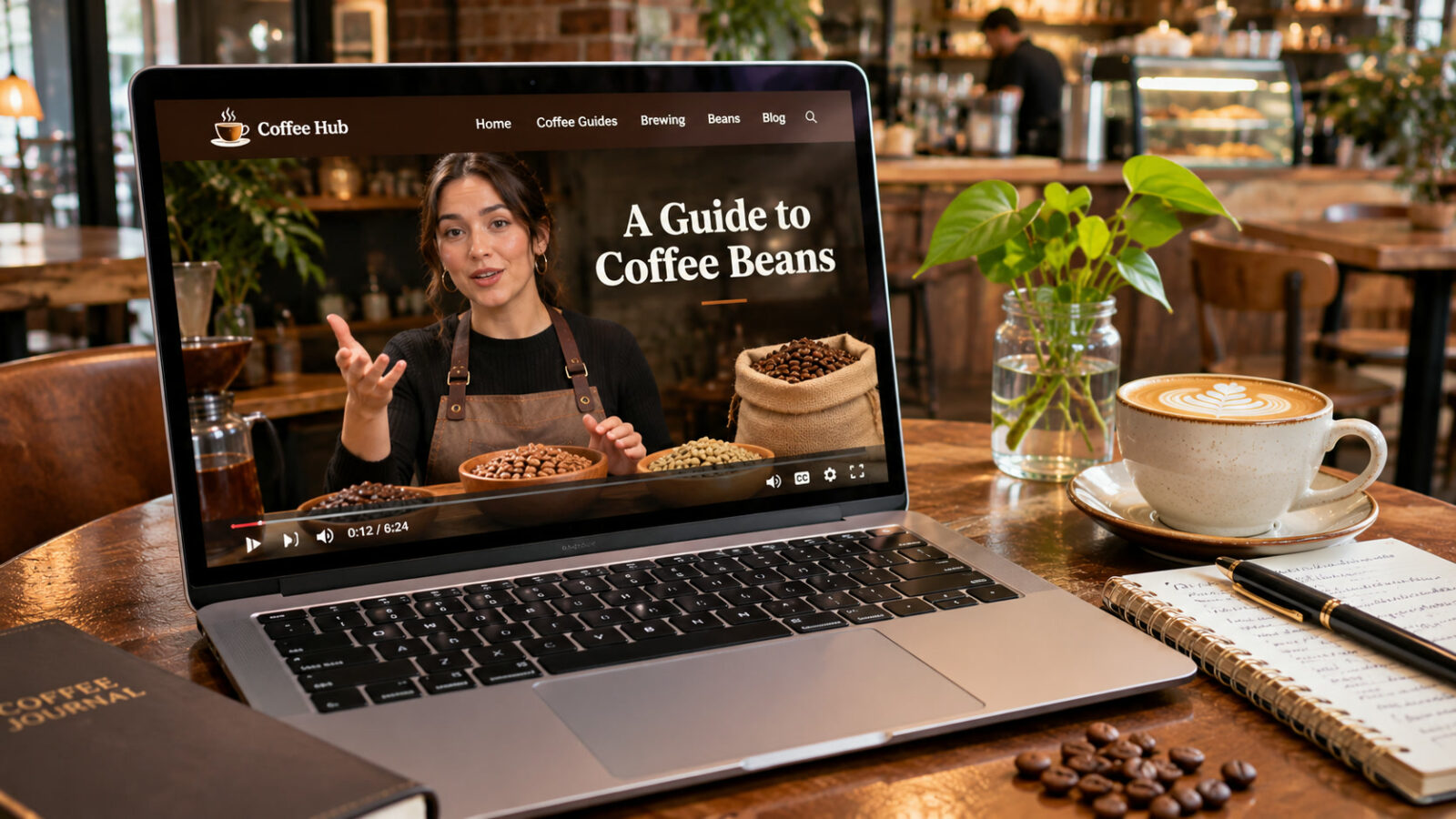
Synthesia is the most polished presenter tool on this list. It turns a script into a studio-style video with a stock avatar or a personal avatar of the owner, with branded pages, interactive video and one-click translation. For a coffee shop, it fits the videos that need to look formal: the brewing guide on the menu page, the loyalty program explainer, the staff induction for a new barista.
Synthesia’s new Syren agent builds a creative video from a plain description, which suits a seasonal promo with a bolder look. The Basic plan is free and gives 500 credits a month and 10 minutes of Studio video or dubbing, so a shop can test the workflow before paying.
Price: Synthesia Basic is free. Starter is $19 a month, or $14 a month billed annually ($168 a year), with 1,250 credits a month, and the first month is $9. Pro, formerly called Creator, is $89 a month, or $59 a month billed annually ($708 a year), with the first month at $49. A Black Friday and Cyber Week offer is live on the Synthesia pricing page, valid from 10:00 GMT on 23 November to 07:59 GMT on 7 December 2026, for new customers and free users upgrading only. Business is $99 a month for one member plus $20 per extra member, or $79 a month billed annually. Enterprise is custom pricing. Prices checked on the official Synthesia pricing page, 23 November 2026.
When to pick it: pick Synthesia if your brewing guides and loyalty videos need to look like a professional studio made them, and you want branded pages and interactive video. It is the most corporate feeling tool here, which suits a shop’s website more than its TikTok feed.
Watch out for: Synthesia’s credit system is the most complex on this list. One minute of video typically uses 1,000 to 2,000 credits, so the Starter plan’s 1,250 credits a month buys roughly one short video. Check the credit math against your 12 videos a month before paying, and remember the Black Friday first-month price is not the renewal price.
Pictory: best for menu promos from text or a script
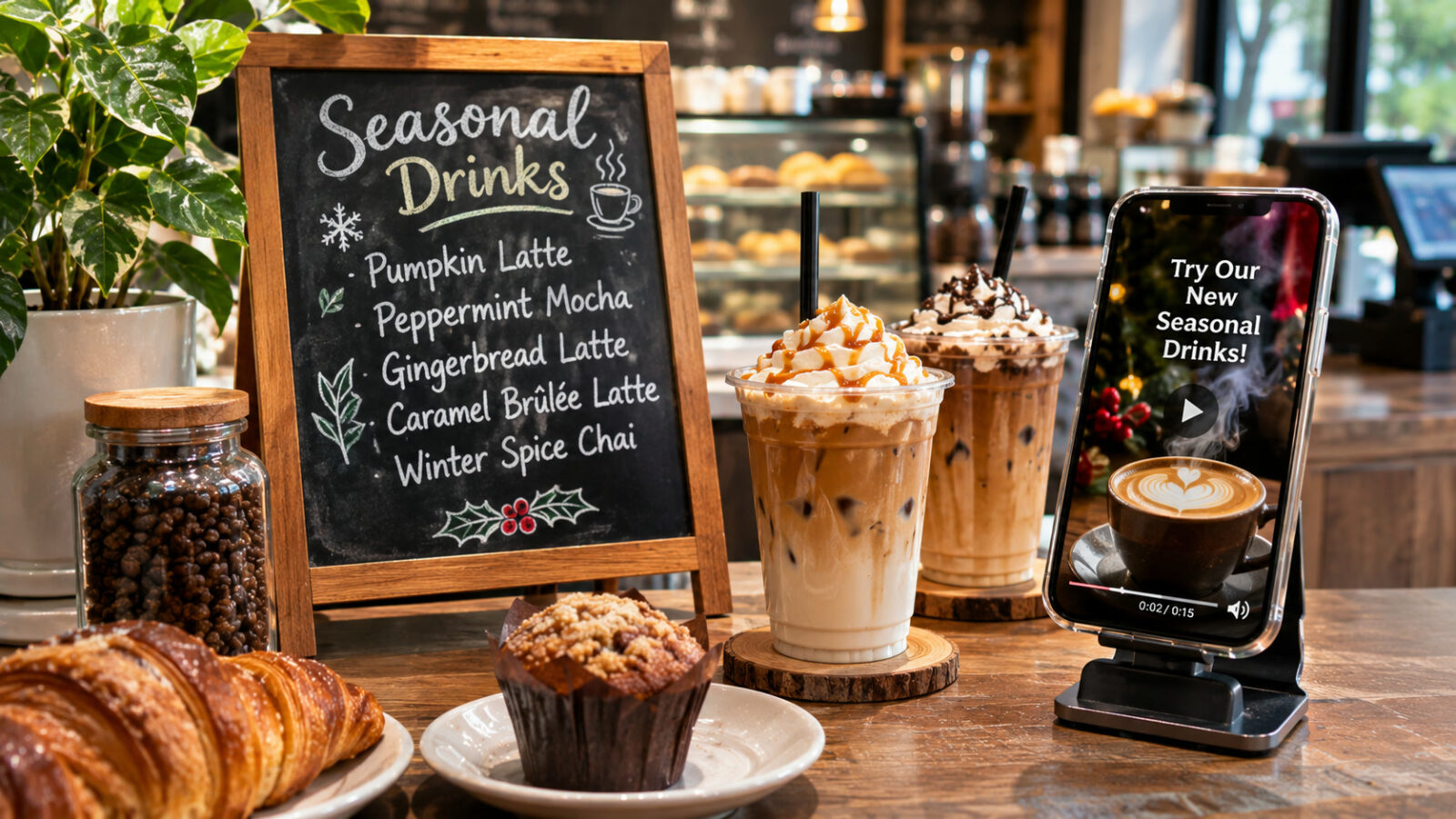
Pictory turns a script, a blog post or a slide deck into a narrated video with stock footage, AI voices, captions and avatars. For a coffee shop, the use case is the seasonal menu promo: paste the text of the new drinks, the prices and the offer, and Pictory builds a short promo with music and voiceover. It also turns a written brewing guide into a video for customers who prefer to watch rather than read.
Pictory’s stock library comes from Getty Images and Storyblocks, with more than 5 million videos on Starter and more than 18 million on Professional, so the b-roll looks professional. Its AI video agent takes a brief and builds the video, then lets the shop refine it scene by scene.
Price: Pictory has a 14-day free trial with 300 credits. The list prices are Starter $29 a month or $25 a month billed annually, Professional $59 a month or $35 a month billed annually, and Teams $199 a month or $119 a month billed annually. A Black Friday offer is live on the Pictory pricing page today, 23 November 2026, with no end date shown: Starter $14.50 a month billed monthly or $12.50 a month billed annually, Professional $29.50 or $17.50, Teams $99.50 or $59.50. Starter gives 2,000 credits a month, up to 30 video minutes; Professional gives 6,000 credits, up to 90 minutes; Teams gives 18,000 credits, up to 300 minutes. Prices checked on the official Pictory pricing page, 23 November 2026.
When to pick it: pick Pictory if you write your seasonal promos and brewing guides as text first and want them turned into video without filming. It is the best tool here for turning words into a finished clip.
Watch out for: the Black Friday price is a sale price and the page does not say whether it applies at renewal, so ask before committing to a year. Pictory’s strength is stock footage and narration, so it suits promos and explainers better than process videos of real pours, which still need a camera.
InVideo: best for fast promo clips from a prompt
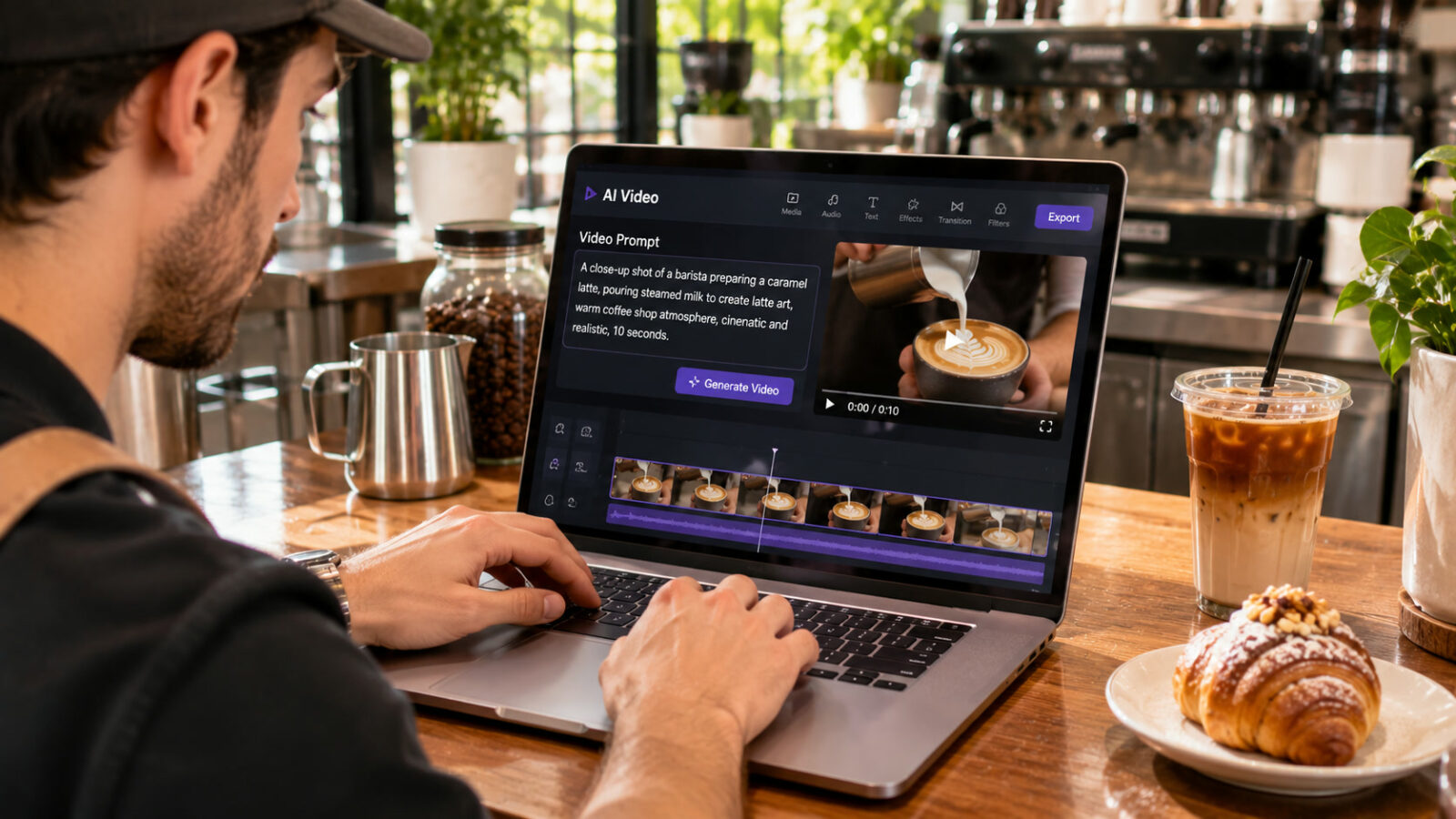
InVideo builds a complete first cut from a prompt or a script, then lets the shop finish it in a timeline editor. Type “30 second Reel promoting a new iced coffee, three flavours, happy hour 4 to 6 pm, book through the link in bio” and the AI agent plans the shots, generates clips and assembles the edit. For a shop running a seasonal offer or a happy hour, that speed matters: the promo is ready the same afternoon the idea arrives.
InVideo’s agent modes and generative models suit the quick seasonal clip, and the editor on every plan includes the full timeline, multiplayer editing, colour, audio and 3D. The free plan lets a shop test the workflow before paying.
Price: InVideo Starter is $20 per seat a month billed monthly, or $10 per seat a month billed annually, with 400 credits a seat a month. Plus is $60 a month or $30 a month billed annually, with 2,000 credits. Max is $250 a month or $125 a month billed annually, with 8,000 credits, under a 75 percent off limited offer that says pay for 12 months and get 24. Prices checked on the official InVideo pricing page, 23 November 2026.
When to pick it: pick InVideo if you want a finished promo from a one-line brief, especially for seasonal offers, happy hours and last-minute gaps in the diary.
Watch out for: every AI action costs credits, premium video is charged per second, and credits do not roll over. InVideo has reshuffled its plan lineup several times in 2026, so confirm the price on the pricing page on the day you buy, and check whether the Max annual price you see is the $125 offer or the standard rate.
How to film a coffee shop so AI editing works
The tools are only as good as the footage. A few habits make every tool on this list work better.
Film in good light, from a fixed angle. A phone on a small tripod at the side of the counter beats a handheld shot every time, because the AI reframing in Opus Clip and the slow motion in CapCut both assume a stable frame. Morning light through the window is the best light a coffee shop has, so film the pours early. Wipe the lens before you start; steam from the machine fogs a lens fast, and a fogged lens is visible in every clip.
Ask permission before you film, every time, and say where the clip will go. A customer who agrees to a Reel is not agreeing to a paid ad, and a customer who agrees to be filmed is not agreeing to have their face shown. Film the cup, not the person, wherever possible, and keep faces out of frame unless the customer has clearly agreed.
Record the sound separately when you talk. A 60 second brewing guide recorded in a quiet corner after the rush will always sound better than the same talk recorded over the grinder and the milk steamer. Descript’s Studio Sound can clean a noisy recording, but it cannot invent a quiet room.
Film the finished drink, not just the pour. The pour looks good in the moment, but the finished latte art on the table, in good light, is the photo that sells the next visit. Ask a regular to let you film their drink before it leaves the counter, and turn it into a before and after Reel with CapCut. That single format brings more customers than any other video a shop posts.
Keep the clips short. A 15 to 30 second Reel with one idea beats a three minute video with five ideas. Opus Clip’s Virality Score is a useful guide here: if a clip scores low, the hook is probably slow, and the first two seconds are where the viewer decides.
A week of videos from one morning rush
One filmed morning can fill a week of posts if the tools share the work. Here is how the seven tools split one job.
Monday: film a full morning behind the counter on the phone, fixed on a tripod. Upload the long recording to Opus Clip and let it find the best moments: the first pour, the steam, the latte art finish, the regular’s order.
Tuesday: take the three best Opus Clip clips into CapCut. Slow the pour down, add captions and music, export vertical. Post the first Reel.
Wednesday: record the brewing guide in a quiet corner, two minutes, one take. Cut it in Descript by deleting the pauses and the repeated sentences, then export with captions.
Thursday: turn the brewing script into a HeyGen presenter video in a second language for the customers who ask for it. The script is already written, so this takes minutes.
Friday: write the seasonal promo as five lines of text, drink names and prices included, and let Pictory build the video. Or give InVideo a one-line brief for a weekend happy hour and post the promo the same afternoon.
Saturday: post the finished drink. A regular lets you film their latte art before it leaves the counter, CapCut turns the pour and the finished cup into a before and after Reel, and the caption carries the menu link.
Sunday: rest, and check which of the week’s videos held viewers past the first two seconds. The format that held attention is the format to repeat next week. The format that lost viewers in two seconds needs a faster hook, not a bigger budget.
This weekly plan is why the starter stack works. Opus Clip finds the clips, CapCut finishes them, and the owner films once. The other five tools join only when a specific format needs them: Descript for talking, HeyGen and Synthesia for presenters, Pictory and InVideo for text-first promos.
The starter stack: $15 a month
A shop starting from zero does not need all seven tools. Start with two.
Opus Clip Starter at $15 a month turns each filmed morning into several captioned Reels, and CapCut Free edits them on the phone, adds music and exports them. That is $15 a month for the whole workflow, or about $1.25 per video across 12 videos a month.
Add Descript Free when you start recording brewing guides, because 60 media minutes a month covers two or three short explainers. Add HeyGen Free when you want a presenter video without filming. The free plans on this list are genuinely usable for a shop posting a few times a week, and the only hard limit is the free plan’s watermark on some tools and the three day export window on Opus Clip Free.
The full stack: $141.49 a month, or $106.50 on annual billing
A shop posting 12 videos a month across every format can run all seven tools. On monthly billing: CapCut Pro $19.99, Opus Clip Starter $15, Descript Hobbyist $24, HeyGen Creator $29, Synthesia Starter $19, Pictory Starter $14.50 on the Black Friday monthly price, and InVideo Starter $20. That totals $141.49 a month. At Pictory’s list price of $29, the total is $155.99 a month.
On annual billing the same stack is cheaper: CapCut Pro $15 a month, Opus Clip Starter $15, Descript Hobbyist $16, HeyGen Creator $24, Synthesia Starter $14, Pictory Starter $12.50 on the Black Friday annual price, and InVideo Starter $10. That totals $106.50 a month. At Pictory’s list annual price of $25, the total is $119 a month.
Two warnings before you buy the full stack. First, the Black Friday prices on Pictory and the first-month prices on Synthesia are not the renewal prices, so budget on the list price and treat the sale as a saving, not the cost. Second, do not pay for a year of all seven tools at once. Run the starter stack for a month, see which formats your customers actually watch, then add the tools that serve those formats. A shop that posts mostly pours will never need Synthesia, and a shop that posts mostly brewing guides will never need Pictory.
What not to do with AI video in a coffee shop
Do not post a generated drink as your drink. Customers order on the strength of what they see, and a generated latte art design that looks good on screen but cannot be poured will be found out at the counter. It also breaks trust in a business that runs entirely on trust.
Do not film a customer without clear permission, and never film a child in the shop. A clip of a customer who did not agree to be filmed is a problem no tool can fix.
Do not use a customer’s voice or face to train an avatar or a voice clone. HeyGen and Synthesia both require explicit consent for avatars and voice clones, and that consent must come from the person being cloned. Clone only yourself.
Do not promise a drink you do not serve. A video that shows a seasonal drink while the caption promises it all year is misleading. Show the real menu, with real prices and real dates, and let the work speak.
Do not buy followers or engagement for the videos. The point of posting is customers from the local area, and fake engagement reaches no one who can walk into the shop.
Frequently asked questions
What is the best AI video tool for a coffee shop?
CapCut is the best starting point, because it is free, it edits on the phone that filmed the pour, and it handles slow motion, captions and music in minutes. Add Opus Clip at $15 a month when one filmed morning needs to become several Reels. The best tool is the one that matches the video you actually post, so a shop that talks on camera should look at Descript, and a shop that needs a presenter without filming should look at HeyGen.
Can a coffee shop make videos without showing the owner’s face?
Yes. HeyGen and Synthesia both make presenter videos from a script, so the shop can publish brewing guides and loyalty videos without anyone filming. CapCut and Pictory can also build a video from menu text, drink photos and stock footage with no presenter at all. A face-free video still needs a clear hook in the first two seconds, or viewers will scroll past it.
How much do AI video tools cost a coffee shop?
The starter stack is $15 a month: Opus Clip Starter plus CapCut Free. The full stack of all seven tools is $141.49 a month on monthly billing at current Black Friday prices, or $106.50 a month on annual billing. At list prices the totals are $155.99 and $119 a month. A shop posting four videos a month can stay on the free plans and pay nothing.
Are AI generated coffee shop videos allowed on Instagram?
Yes, but label them honestly. A video of your real pour, edited by AI, is your work and needs no special label beyond what the platform asks for. A fully generated clip must not be presented as a real drink. Instagram and TikTok both ask creators to label AI generated content, and a generated latte art design you never poured will be treated as deceptive if it is presented as real.
Which tool is best for coffee shop brewing guides?
Descript is best if you record yourself talking, because it edits by transcript and makes accurate captions. HeyGen is best if you do not want to film, because its avatar delivers your script and can translate it into other languages for your customers. Synthesia is best if the brewing guide sits on your menu page and needs to look formal and branded.
The verdict
The best AI video tools for coffee shops are the ones that turn a filmed morning into customers without adding hours to the working day. CapCut and Opus Clip do that for $15 a month, and they are where every shop should start. Descript earns its place the moment you talk on camera. HeyGen and Synthesia earn theirs when you need a presenter without filming. Pictory and InVideo earn theirs when the words come first and the video follows.
Start with the starter stack, film the work you already do, ask permission, show the finished drink, and post one Reel every two or three days. The tools will not make a shop’s videos good on their own, but they will make a good shop’s videos fast, and fast is what keeps the queue full.
Related reading
- Best AI Video Tools for Tattoo Artists in 2026
- Best AI Video Tools for Barbers in 2026
- Best AI Video Tools for Pet Groomers in 2026
- Best AI Video Tools for Photographers in 2026
- Best AI Video Tools for Fitness Coaches in 2026
- How to Make Faceless YouTube Videos with AI
- Best AI Video Tools for Wedding Videographers in 2026
- Best AI Video Tools for Florists in 2026
- Best AI Video Tools for Plumbers in 2026
- Best AI Video Tools for Beauty Salons in 2026