A client signs up after watching a coach, not after reading a price list. A 20 second Reel that shows the correct squat setup, a calm explainer about why rest days matter, a short clip that turns one 60 minute class into five posts for the week, a program promo that lands in the feed on the first of January: these are the videos that fill a coach’s diary. Until recently that meant filming every session and editing late at night. Now a coach can cut a workout Reel on a phone between clients, turn one long training session into a week of short clips without watching it back, clean up a talking head coaching video by deleting words from a transcript, and build a program promo from one sentence, all without a film crew. This guide compares 7 of the best AI video tools for fitness coaches, with real prices checked on 21 November 2026, so a coach can build a stack that fits one diary, one month of posting, and a real monthly budget.
The short verdict: start with CapCut Free for the daily workout Reels and Opus Clip Starter at $15 a month for turning one long session into a week of clips. That starter stack costs $15 a month, or about $1.25 per video across a month of 12 videos. Add Descript Hobbyist at $24 a month on monthly billing when talking head coaching videos need proper cleanup, and HeyGen Creator at $29 a month on monthly billing when program explainers need to reach clients in more than one language. Buying the cheapest paid plan of all seven tools costs $155.99 a month, or about $13.00 per video across the same 12-video month. The free route costs $0, but watermarked exports, non-commercial licences and hard caps on free credits make it a testing route, not a business routine.
One honest warning before the list, and it matters for fitness coaches because wrong form injures people: never use AI-generated video to teach exercise form. A generated clip can show a knee collapsing inward, a rounded back under load, or a landing that no qualified coach would teach, and a client who copies it can get hurt. Film real form yourself, with your own body or a qualified colleague, and use AI for the presenter, the camera move, the edit, the captions and the translation, never for the movement itself. A coach must also check every health claim in every video, because wrong advice about training through pain, about supplements, or about exercising with a medical condition can harm a client. A video is general information, never personal advice for one client, and a client with an injury or a medical condition needs a qualified professional, not a video. Keep client data out of every tool below, because none of the seven publishes a fitness data agreement on the pages checked for this guide, and never upload a client’s name, photo, injury record or identifiable detail into any of them. The rule for this guide is simple: use AI to edit, caption, clip and translate, and use your own filmed coaching for every real result, every testimonial and every form demonstration.
Quick comparison table
| Tool | Best for | Cheapest paid plan | Free option |
|---|---|---|---|
| CapCut | Daily workout Reels with captions | $19.99 a month | Yes |
| Opus Clip | Turning one long session into a week of clips | $15 a month | Yes, watermarked |
| Descript | Cleaning up talking head coaching videos | $24 a month | Yes, 1 media hour a month, watermarked |
| HeyGen | Program explainers in many languages | $29 a month | Yes, 3 videos a month, watermarked |
| Synthesia | Structured training videos with a presenter | $19 a month | Yes, Basic plan, watermarked |
| Pictory | Turning a written workout guide into video | $29 a month | 14-day free trial, watermarked |
| InVideo AI | Class and program promos from one sentence | $20 a seat a month | Yes, limits not listed on the pricing page |
All prices are in US dollars, before tax, and were checked on 21 November 2026. Prices change often, so confirm at checkout. Prices with a caveat are noted under the tool below.
Section 1. CapCut: best for daily workout Reels with captions
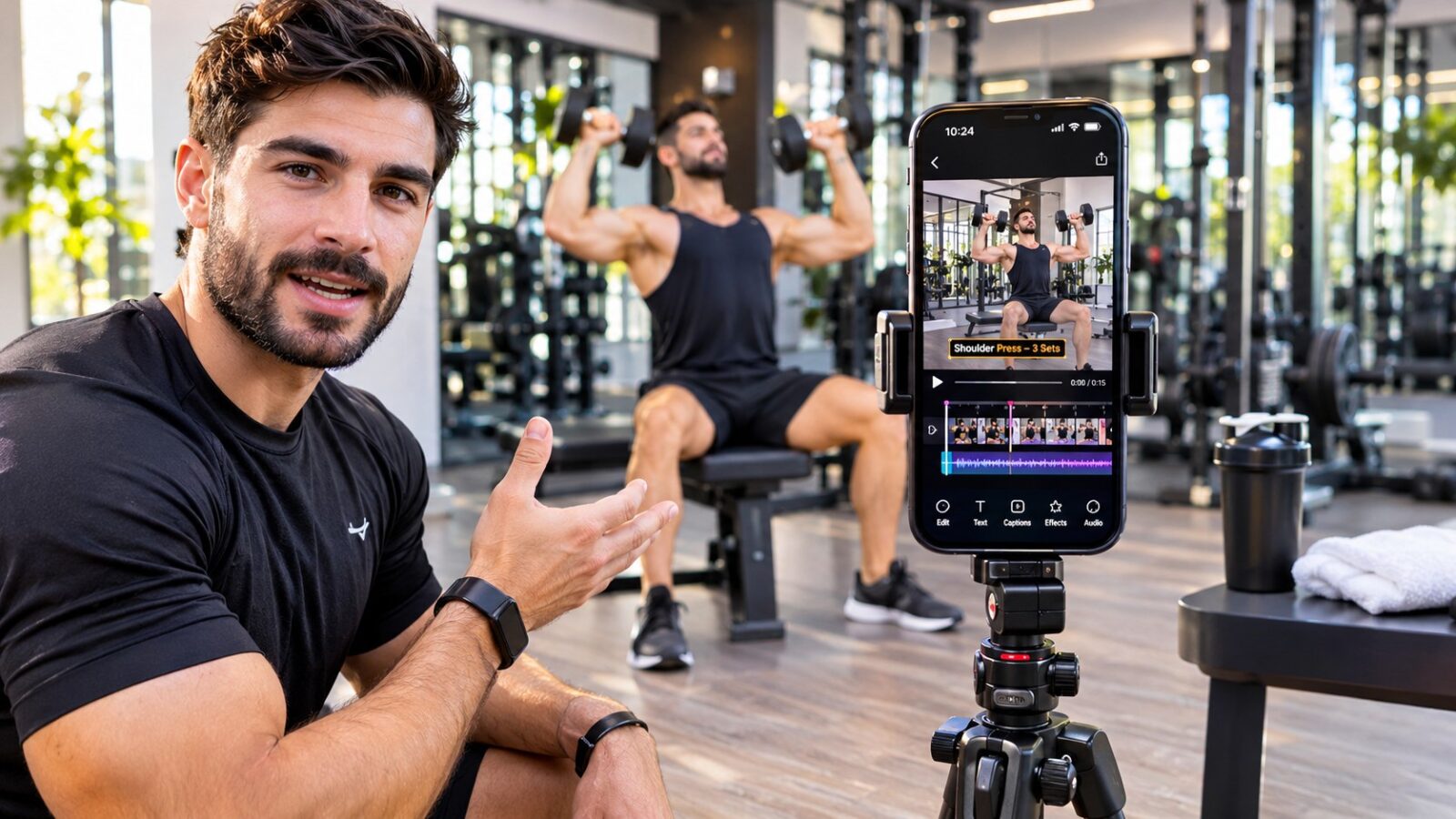
CapCut is the editor most fitness coaches already have on a phone, and it is built for short vertical video: trending templates, auto captions, effects and sounds that match what is performing on Reels and TikTok right now. For a coach, its two most useful features are auto captions in more than 20 languages, including bilingual captions and translation, because a workout Reel filmed in one country is often watched in another, and most people watch fitness videos on mute, so a Reel without captions loses the coaching cue entirely; and auto beat sync, which cuts clips to the music automatically, so a 30 second Reel of a circuit keeps pace with the track without manual trimming. The Pro plan adds 1,200 AI credits a month, all premium templates, 1 TB of storage and Seedance video generation, and one Pro account unlocks Pro on phone, desktop and web. A 7-day free trial of Pro needs no credit card, and the free plan exports with no watermark on a video cut from your own footage, so a workout Reel can be filmed in the gym, captioned on the bench, and posted before the coach leaves the floor.
Price: the Pro plan costs $19.99 a month as shown on the official pricing page. Pro includes 1,200 monthly AI credits, 1 TB of cloud storage, all premium templates and Pro features, AI video generation, and 4K export at 60 frames per second. The annual price is $179.99 a year, about $15 a month. The Teams plan costs $12.49 a month per seat and adds a Brand Kit plus Pro features for every seat. The Ultra plan costs $79 a month with 8,645 AI credits for heavy AI generation work. The free plan costs $0 and covers basic editing tools and free templates, and a video cut from your own footage can export with no watermark on Free.
Caveat: CapCut’s own page warns that displayed prices are for reference only and the final price appears after sign-in, and prices can vary by region, device and current promotions. A cheaper $9.99 a month Standard tier exists in the mobile app only and is not sold on the website, so this guide does not quote it as a web price.
Best for: a coach who films in the gym, edits the same day, and needs finished vertical workout Reels with captions and beat-synced cuts for Reels, TikTok and Shorts before leaving the floor.
Limit: it is a single-account editor, not a video generator, so it cannot create the workout footage itself, only edit what you already filmed or generated elsewhere, and the AI credits are a monthly pool that runs out if you generate a lot of video.
Section 2. Opus Clip: best for turning one long session into a week of clips
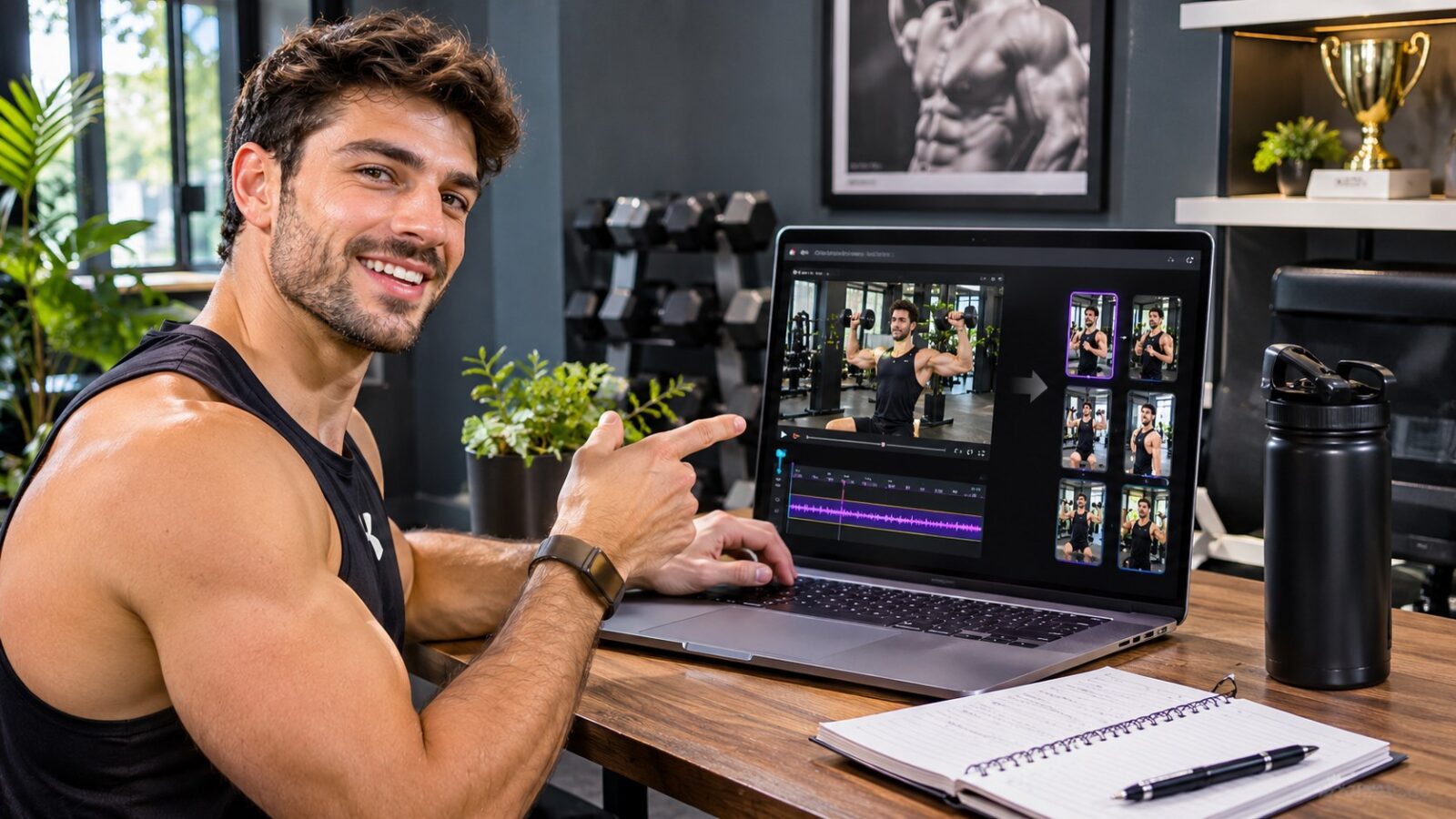
Opus Clip is purpose built for one job, and for a fitness coach it is the most valuable job in this list: upload a 60 minute training session, a class recording or a coaching call, and it finds the best moments, cuts them into vertical clips, adds animated captions, and scores each clip for virality, so one session becomes a week of posts without the coach watching the whole recording back. A coach who films a full strength class on Monday can have five Reels ready by Tuesday, each with a hook, captions and a title and hashtag suggestion, and the AI copilot lets the coach pick the clipping timeframe and the clip length, or re-prompt the clipping to fine tune the result. The Starter plan adds the virality score, re-prompting, text and timeline based editing, and watermark-free export, while the Pro plan adds moving object tracking, genre specific reframing, 100 GB of storage, AI video B-roll, dubbing, and export to Adobe Premiere Pro and DaVinci Resolve. For a coach, the practical point is simple: the filming already happened, and Opus Clip is the tool that turns that one hour of filming into the week’s posting.
Price: the Starter plan costs $15 a month. Starter includes the virality score, re-prompting to fine tune clips, text and timeline based editing, AI image and stock B-roll at 3 clips a month each, 20 AI voice-overs a day, speech cleanup for pauses and filler words, AI video upscaling, watermark-free export, and a clip title, description and hashtag generator. The Pro plan costs $29 a month, with 100 GB of fixed storage, moving object tracking, AI video B-roll, dubbing, eye contact correction, bulk export, and export to Premiere Pro and DaVinci Resolve. The Business plan is custom priced. The free plan costs $0, with animated caption templates that carry a watermark, multi-language transcription, and exports up to 1080p with a 3-day limit on the rendered clip.
Caveat: the official pricing page read on 21 November 2026 lists the plan prices above but does not state a monthly credit figure for any plan in the fetched text, so this guide quotes no credit figure for Opus Clip. The page also does not state an annual rate, so the annual stack figure in this guide uses the $15 a month Starter figure as listed. Confirm both at checkout before buying.
Best for: a coach who films one long session or class a week and wants it cut into captioned vertical clips with hooks and virality scores, without watching the recording back or opening a timeline.
Limit: it clips what you filmed, so a badly filmed session still needs a reshoot, and the free plan’s watermark and 3-day export limit make it a test, not a routine. A generated clip must never be used to teach form, so keep Opus Clip on real footage of real coaching.
Section 3. Descript: best for cleaning up talking head coaching videos
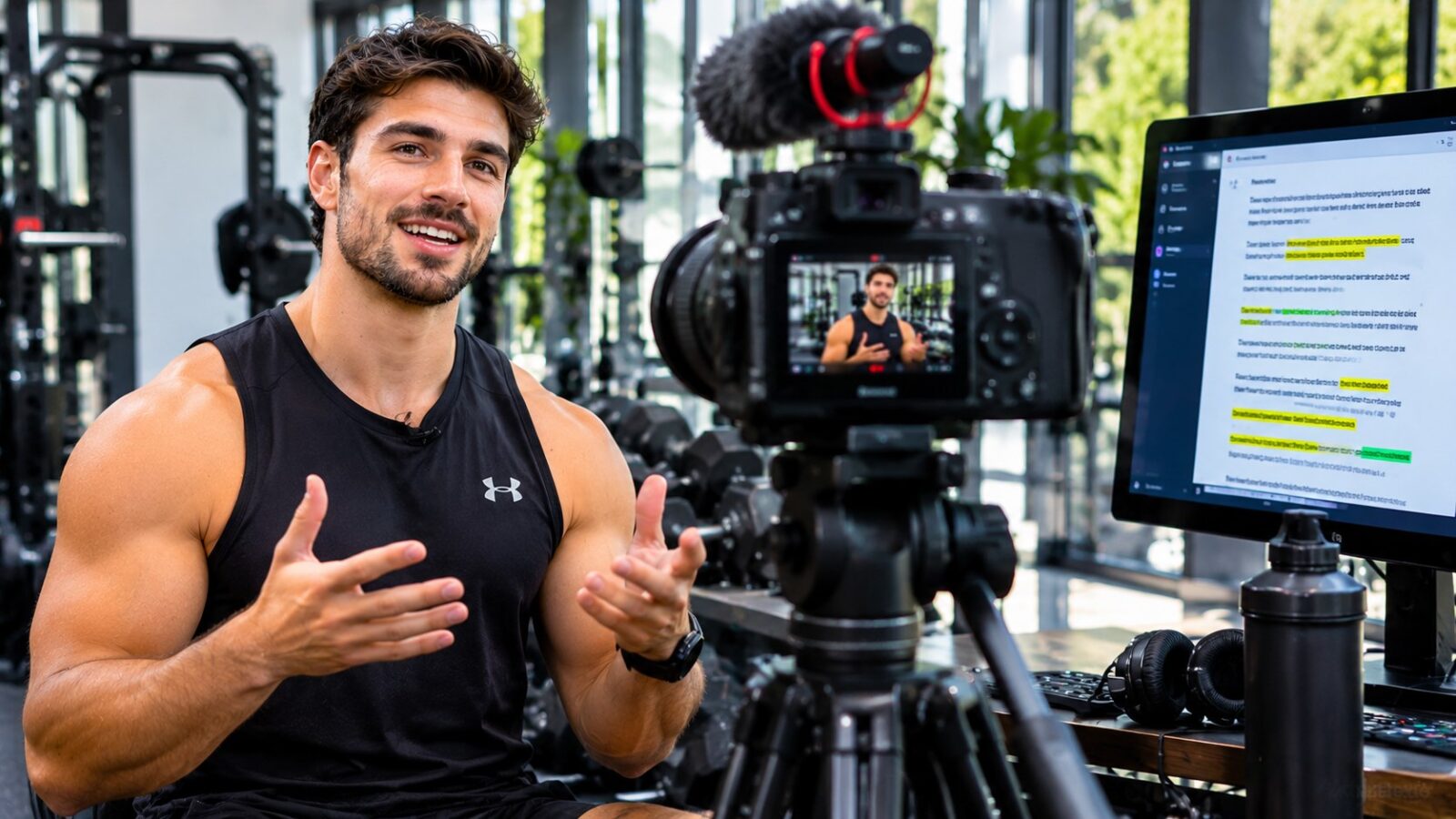
Descript treats video like a text document, and for a fitness coach who talks through workouts that is the fastest way to edit. Record a coaching explanation, a program walkthrough or a nutrition talk, and Descript transcribes the voiceover. Delete a sentence from the transcript and the matching video disappears, so a rambling 12 minute explanation becomes a tight 4 minute video without scrubbing a timeline. Its AI tools include Studio Sound, which cleans up echoey gym audio, Remove Filler Words, which cuts the ums and ers from a coaching cue, and Create Clips, which pulls short vertical clips from a longer recording. The Hobbyist plan gives 10 media hours a month and 400 AI credits, with watermark-free 1080p export, and the Creator plan, the one Descript marks most popular, gives 30 media hours, 800 AI credits, 4K export, full access to Underlord, its AI video co-editor, and AI video generation with the latest models. For a coach, the job is clear: the talking parts of coaching, the why behind a program, the explanation of a warm up, the nutrition talk, get recorded once and tightened in the transcript, while the movement itself stays on real filmed footage.
Price: the Hobbyist plan costs $24 a month on monthly billing, or $16 a month billed annually. Hobbyist includes 10 media hours a month, 400 AI credits a month, watermark-free 1080p export, access to Underlord, and AI Speech with custom voice clones. The Creator plan costs $35 a month on monthly billing, or $24 a month billed annually, with 30 media hours a month, 800 AI credits a month, 4K export, full Underlord access and more than 20 AI tools, AI video generation, and unlimited royalty-free stock media. The Business plan costs $65 a month on monthly billing, or $50 a month billed annually, with 40 media hours a month, 1,500 AI credits a month, Brand Studio, translation and dubbing in more than 30 languages with proofreading, and custom avatars. The free plan costs $0, with 1 media hour a month, 100 one-time AI credits, and 720p export with a watermark.
Caveat: the dollar figures did not render in today’s direct read of the official Descript pricing page, so the figures above are the ones every independent November 2026 check of that page agrees on, and the plan structure, media hours and AI credits match the official page read today. Descript’s plans are metered in media hours, and media hours count uploaded and recorded media, not final runtime, so a coach who records long sessions uses hours faster than the finished video suggests. Confirm the current figure at checkout.
Best for: a coach who talks through workouts and wants to tighten the spoken coaching by editing a transcript, clean up gym audio, and pull short clips from longer recordings, without learning a timeline.
Limit: it is an editor for footage you already have, not a generator of workout footage, and the media hour meter means a month of long class recordings needs the Creator plan. Never let it generate a movement demonstration, because a generated rep can show unsafe form.
Section 4. HeyGen: best for program explainers in many languages
HeyGen puts a realistic presenter on screen, and its strongest fitness feature is video translation with lip sync in 175 languages and dialects. Record one program explainer, one welcome video for a new client, or one class announcement, and HeyGen localises it for every client community the coach serves, with the presenter’s lips matching the translated words. A coach with clients from different language backgrounds can explain a 12 week program, a warm up routine or a nutrition guide in each client’s own language without recording five versions. The Creator plan also includes a custom video avatar and a voice clone, so the presenter can be the coach themselves, a consistent face for the coaching brand, explaining the program instead of a stranger reading a script. For a coach, that consistency matters, because clients trust a face they recognise from the gym floor.
Price: the Creator plan costs $29 a month, or $24 a month billed annually. Creator includes a 30-minute maximum per video, up to 1080p export, more than 700 stock avatars, 175 languages and dialects, 1 custom video avatar and 1 voice clone. The Pro plan starts at $49 a month, with tiers from 1,000 credits a month at $49 up to 100,000 credits a month at $4,300. All Pro tiers share the same features, only the credit allocation changes. The Business plan costs $149 a month plus $20 a seat a month, with 3 or more seats, a 60-minute maximum per video and 4K export. The free plan costs $0, with up to 3 videos a month, a 1-minute maximum per video, more than 500 stock avatars, 30 or more languages, and a watermark.
Caveat: no annual Pro price is stated on the official page, so this guide quotes only the $49 a month starting figure for Pro. The Creator annual figure of $24 a month is stated in HeyGen’s own FAQ. Monthly subscribers’ unused credits roll over for one more month, and annual subscribers’ credits accumulate until renewal.
Best for: a coach with clients from different language backgrounds that needs one program explainer, one welcome video and one class announcement translated into every client language, presented by a consistent face.
Limit: an AI presenter is not the coach, so an explainer should introduce the program, not pretend the avatar performed the workout, and the free plan’s 3 videos a month with a 1-minute cap is a trial, not a routine.
Section 5. Synthesia: best for structured training videos with a presenter
Synthesia is the training specialist in this list. Its Studio turns a written script, the program guide the coach already hands out, into a video with a realistic AI presenter, in more than 140 languages, with no camera and no filming. For a coach, the job is clear: one short, general video per topic, how to warm up before a strength session, how to structure a rest week, how to choose a program for a beginner, what to eat before a morning class, made from the guide the coach already gives out, checked for accuracy, then sent to the client by text, embedded on the coach’s website, or shown to new clients on their first day. Its new Syren agent builds a video from a plain description, and its 1-click translation turns the same explainer into every client language. The Starter plan includes 125 or more AI avatars, survey tools for checking client understanding, and no watermark.
Price: the Starter plan costs $19 a month on monthly billing, or $14 a month billed annually at $168 a year. Starter includes 1,250 credits a month, about 12 extra minutes of Studio video a month on top of the free allowance, 125 or more AI avatars, 3 guests, and no 3-minute cap on Syren videos. The Pro plan costs $89 a month on monthly billing, or $59 a month billed annually at $708 a year, with 6,000 credits a month, about 60 extra minutes of video a month, 180 or more avatars, 5 personal avatars and priority support. The Basic plan costs $0, with 500 credits a month, 10 minutes of Studio video creation or dubbing a month, 1 Syren video with a 3-minute cap, 9 AI avatars, and a Synthesia watermark.
Caveat: the first month is discounted, $9 for Starter and $49 for Pro, so the figures above are the regular renewal prices after month one. Synthesia’s pricing is now credit based, so a minute of video uses credits, and the exact video minutes per plan are estimates on the official page, not guarantees. A Black Friday and Cyber Week offer was live on the official page on 21 November 2026, shown as ending in about 6 days, so the figures above are the regular prices, not the offer prices. The official page lists no fitness data agreement, so keep client data out and use Synthesia only for general education videos, never for a named client’s program or injury.
Best for: a coach that wants proper training videos and program explainers, one per topic, made from its own written guides, with a presenter and in every client language, without filming anyone.
Limit: it is the most formal tool here, so a quick workout Reel is faster in CapCut, and the credit maths mean a month of long training videos needs the Pro plan.
Section 6. Pictory: best for turning a written workout guide into video
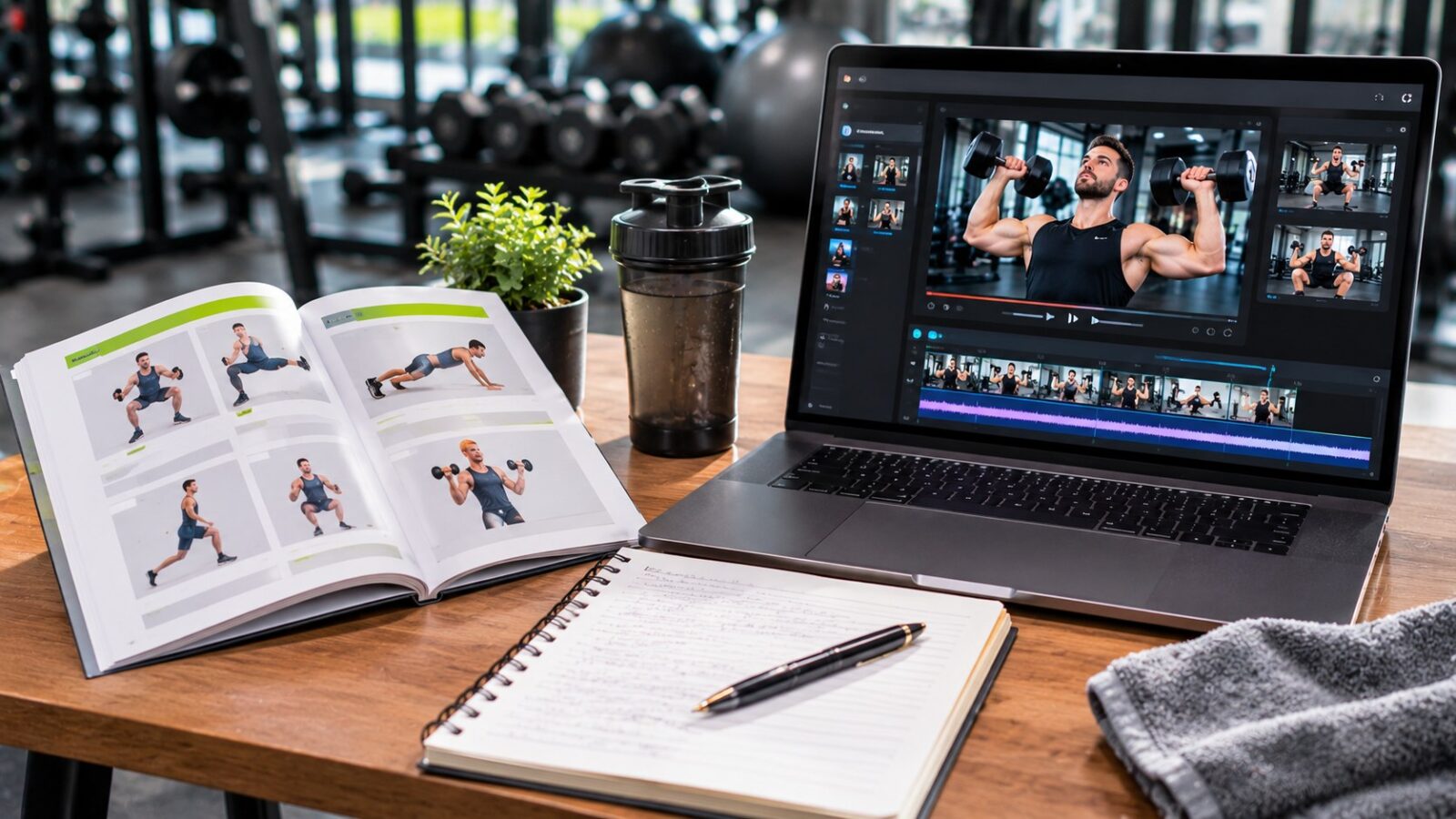
Pictory turns words into video, and its fitness job is the coach’s own writing. A coach writes up every topic, a beginner’s guide to strength training, a guide to warming up properly, a 4 week home workout plan, a guide to rest and recovery, and Pictory builds a captioned video from that text, matching stock footage to the script, adding an ElevenLabs voiceover in several languages, and offering Veo 3.1 generated clips inside the same project. For a coach, that means the written guide they already made becomes a video a client will actually watch, instead of a page they will skim. It also handles the formats a coach needs, 16:9 for the website, 9:16 for Reels and Shorts, and automatic subtitles for viewers who watch on mute. A slide deck of program options can become a video too, which suits a coach that already presents program choices on slides.
Price: the Starter plan costs $29 a month billed monthly. A Black Friday offer of $14.50 a month on monthly billing, or $12.50 a month billed annually, was live on 21 November 2026, and the regular annual rate is $25 a month. Starter includes 24,000 credits, up to 360 minutes a year, unlimited videos, 1080p export, 1 brand kit, unlimited access to more than 5 million royalty-free videos from Getty Images and Storyblocks, multilingual ElevenLabs voices, and stock avatars. The Professional plan costs $59 a month billed monthly, with a Black Friday offer of $29.50 a month monthly or $17.50 a month annual live on 21 November 2026, and adds cloned avatars, voice clones, 5 brand kits and 72,000 credits. The Teams plan costs $199 a month billed monthly, with a Black Friday offer of $99.50 a month monthly or $59.50 a month annual live on 21 November 2026, and adds 3 or more users and 216,000 credits. The free trial lasts 14 days, with 300 credits, up to 10 minutes, 3 videos, and a Pictory watermark.
Caveat: the Black Friday prices above are temporary offers, so this guide quotes the regular $29 a month Starter price as the headline figure and notes the offer separately. The annual regular rate of $25 a month comes from the page header and today’s text read, since the page today also shows the offer price for annual billing.
Best for: a coach that already writes up every topic and wants that description turned into a captioned video with a voiceover, without filming or opening a timeline.
Limit: it builds from stock footage and generated clips, so it cannot show your actual coaching or your actual form unless you upload your own footage into the project, and the credit pool is shared across every AI feature, so heavy generation drains it fast. Never use its generated clips to demonstrate an exercise, because a generated rep can show unsafe form.
Section 7. InVideo AI: best for class and program promos from one sentence
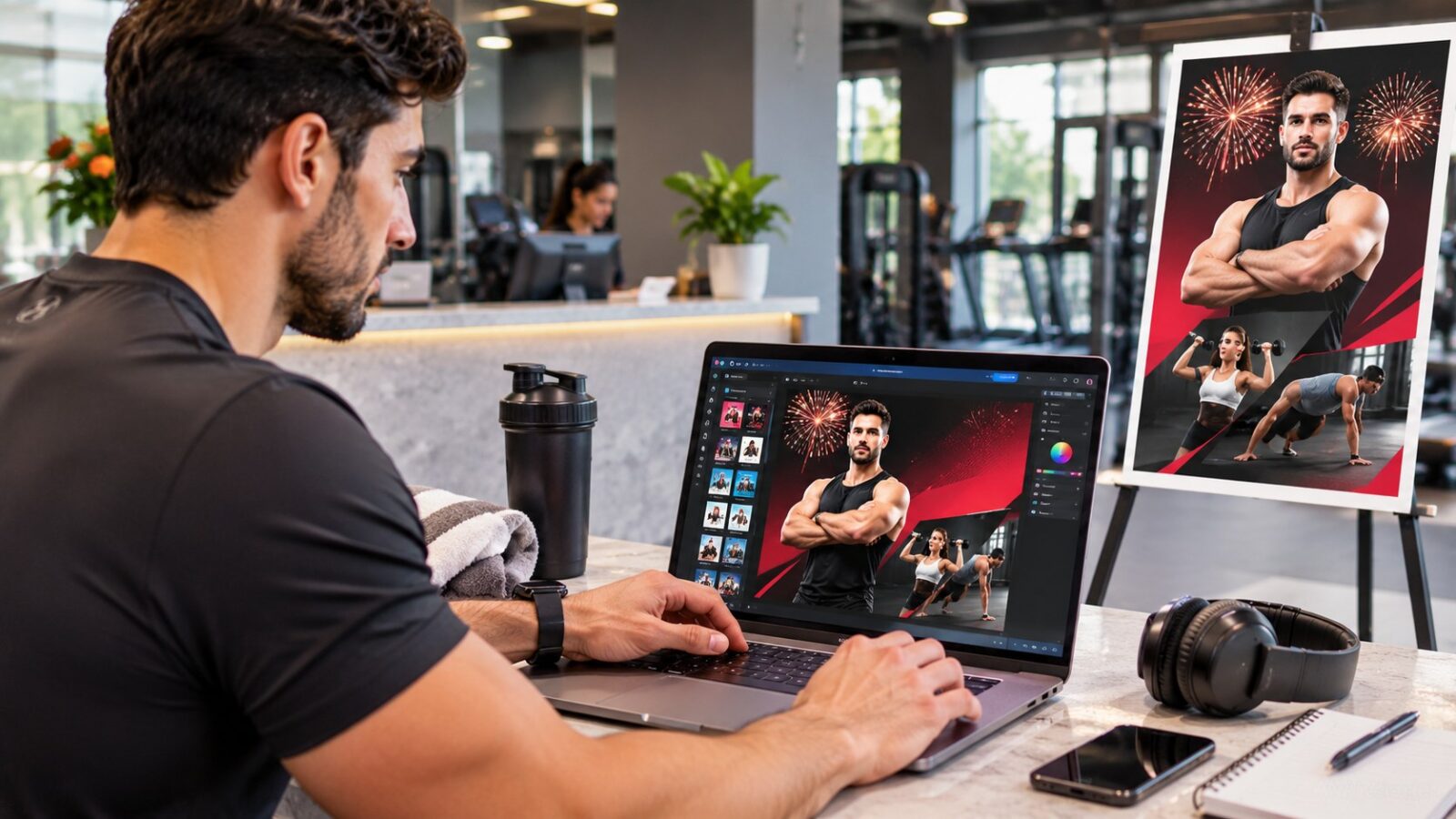
InVideo AI is template-first: type a prompt such as a 30-second promo for a January beginner strength program, and it returns a draft video with stock footage, text and music, ready to edit. For a coach, that means a class promo, a new program launch, a January sign-up offer or a same-week class reminder without opening a timeline. Its Agent Two builds the video from a prompt, and the Plus plan adds all Seedance models, so the footage can be AI-generated instead of stock. When a coach launches a new program or refreshes a seasonal offer, the promo writes itself from one sentence, and the same prompt pattern works for every occasion on the calendar.
Price: the Starter plan costs $10 a seat a month when billed annually at $120 a year, or $20 a seat a month on monthly billing. Starter includes 400 credits a seat a month, about 15 Seedance 2.0 Fast videos, 200 GB of storage, and Agent Two Lite only. The Plus plan costs $30 a seat a month on annual billing, with 2,000 credits a month and all Seedance models. The Max plan costs $125 a seat a month on annual billing, with 8,000 credits a month and 2,000 GB of storage. Unused credits do not roll over. The pricing page says accounts downgrade to a Free plan after cancellation, but it does not list the free plan’s limits, so this guide does not quote them. The timeline editor itself is free, and the page says 40 hours of editing costs nothing.
Caveat: the Plus annual price changed twice in two days. It was $24 a seat a month on 19 November 2026, then $60 a seat a month with 5,000 credits on the morning of 20 November 2026, and then $30 a seat a month with 2,000 credits on the afternoon of 20 November 2026, shown as a 50 percent off Black Friday offer. On 21 November 2026 it is still $30 a seat a month with 2,000 credits. A Black Friday sale of up to 75 percent off, pay for 12 months and get 24, is live on the pricing page today. Confirm the current figure at checkout. The monthly prices for Plus and Max were not directly shown in today’s read, so confirm them at checkout too.
Best for: a coach that launches a new program or refreshes a seasonal offer every month and wants a promo, a launch video or a January sign-up reminder from a sentence, such as a beginner strength program promo, a class timetable announcement, or a new year challenge launch, without filming or editing.
Limit: Starter cannot use the full Seedance range, so AI-generated footage really starts at Plus at $30 a month on annual billing under today’s Black Friday offer, and Starter’s stock-first videos will not show your actual coaching, so the promo is a mood piece, not a record of your work.
A worked example: one coach, 12 videos
Take a fitness coach with one gym who posts 12 videos a month: 4 workout tip Reels, 3 form-check clips, 2 program promos, 1 client transformation video, 1 nutrition explainer, and 1 class announcement. Here is how the month runs on the starter stack and on the full stack.
On the starter stack, Opus Clip Starter at $15 a month turns the one long weekly session into the 4 workout tip Reels and the 3 form-check clips, with hooks, captions and virality scores, and CapCut Free finishes them with beat-synced cuts and captions at the bench and exports them with no watermark. Total: $15 a month, about $1.25 per video. The program promos are simple slideshows, the nutrition explainer is a talking-head clip, the class announcement is filmed on a phone, and the transformation video is filmed with the client’s written permission, which is slower but costs nothing.
On the full stack, Opus Clip Starter makes the 4 workout tip Reels and the 3 form-check clips from the weekly session, Descript Hobbyist cleans up the nutrition explainer and the class announcement by editing the transcript, HeyGen Creator narrates the program promos and translates them for clients in other languages, Synthesia Starter turns the written warm-up guide into 1 more education video with a presenter, Pictory Starter turns the written program guide into the transformation video script, InVideo Starter writes the 2 program promos from one sentence each, and CapCut Pro finishes the 4 workout tip Reels with captions and beat-synced cuts. The cost builds up like this: $15 for Opus Clip, $39 after adding Descript, $68 after adding HeyGen, $87 after adding Synthesia, $116 after adding Pictory, $136 after adding InVideo, and $155.99 after adding CapCut. Total: $155.99 a month, about $13.00 per video across the 12-video month.
On annual billing, the same seven cheapest plans cost $119 a month: Opus Clip $15, Descript $16, HeyGen $24, Synthesia $14, Pictory $25, InVideo $10 and CapCut about $15. That is about $9.92 per video across the same 12-video month. Opus Clip’s annual figure is the $15 a month Starter price as listed, because the official page states no annual rate in today’s read, and Pictory’s annual figure is the regular rate of $25 a month, not the temporary Black Friday offer of $12.50.
Which of the best AI video tools for fitness coaches is right for your coaching
A coach with one gym should start with the starter stack: Opus Clip Starter plus CapCut Free, $15 a month. Turn the one long weekly session into the week’s clips, film the workout Reels yourself, and let CapCut finish them at the bench. Add Descript Hobbyist at $24 a month when talking head coaching videos need proper cleanup, because a tight explanation is the video that keeps a client watching. Add HeyGen Creator at $29 a month when clients need a program video in more than one language, because one program video that every client understands is the video that pays for itself fastest. Add Synthesia Starter next when the coach wants proper training videos from written guides, with a presenter who never gets tired. Add Pictory next when the written guides on the website deserve a video, and InVideo comes last, when the monthly posting volume justifies a prompt-to-video tool.
Frequently asked questions
Can a fitness coach use AI video tools without filming anything? Yes, for explainers, promos and program videos, but not for form or real results. HeyGen, Synthesia, Pictory and InVideo can build a video from text alone, and Opus Clip and Descript can cut and clean footage you already filmed, which covers program explainers, class promos, nutrition talks and welcome videos. A form demonstration or a transformation has to show your actual coaching and your actual client, so film that yourself, with the client’s written permission, and use CapCut to finish it. A client who follows an AI-generated squat will get hurt on the gym floor.
Do AI-generated workout videos break advertising rules? They can, if they mislead. A video that shows a result, a transformation or a form demonstration your coaching did not produce is a misleading claim in many countries, and a client who signs up on it will feel cheated. A slow camera move across your own gym is honest. A video that shows a body your program cannot deliver, or a transformation that is not your client, is a refund request waiting to happen. Use AI for the presenter, the camera move and the edit, and your own filmed coaching, with the client’s written permission, for the results, the transformations and the form demonstrations. Our separate guide to the best AI video tools for wedding videographers covers a similar honesty rule for wedding videos in a neighbouring trade.
What if the exercise in the video is unsafe for some clients? Say so in the video. A workout video must carry a clear line that it is general information, that clients with injuries or medical conditions should check with a qualified professional first, and that form matters more than load. Build every video around the movement your clients can actually do safely that week, and say the exercise names in the video so the client follows what they saw. A video that shows an advanced lift to a beginner audience will hurt someone.
Is client data safe in AI video tools? Not automatically. None of the seven tools in this guide publishes a fitness data agreement on the pages checked for this guide, so treat every tool as unsuitable for client data. Never upload a client’s name, photo, injury record or identifiable detail into any of them. Make only general education videos, how to warm up in general, how to structure a rest week in general, and keep every named client’s program out of the tools entirely. Add a line to every video that it is general information and not a substitute for a qualified coach.
What does a fitness coach video stack cost per month? The starter stack in this guide is $15 a month, about $1.25 per video across 12 videos. The full stack of all seven cheapest paid plans is $155.99 a month on monthly billing, or $119 a month on annual billing. Start with the starter stack and add one tool at a time as the videos earn their keep.
Conclusion
A fitness coach does not need a film crew. It needs 12 honest videos a month: workout tip Reels that teach one thing well, form-check clips that show real coaching, program promos that fill the next intake, and a class announcement that puts a face to the coaching. The best AI video tools for fitness coaches in this guide cover those jobs for $15 a month to start, or $155.99 a month for the full stack, with real prices checked on 21 November 2026. Start with Opus Clip and CapCut, add Descript when your talking head videos need proper cleanup, and add HeyGen when your clients speak more than one language. Film your own form, let AI cut the clips and write the captions, and never let a generated clip pretend to be coaching you did not do.