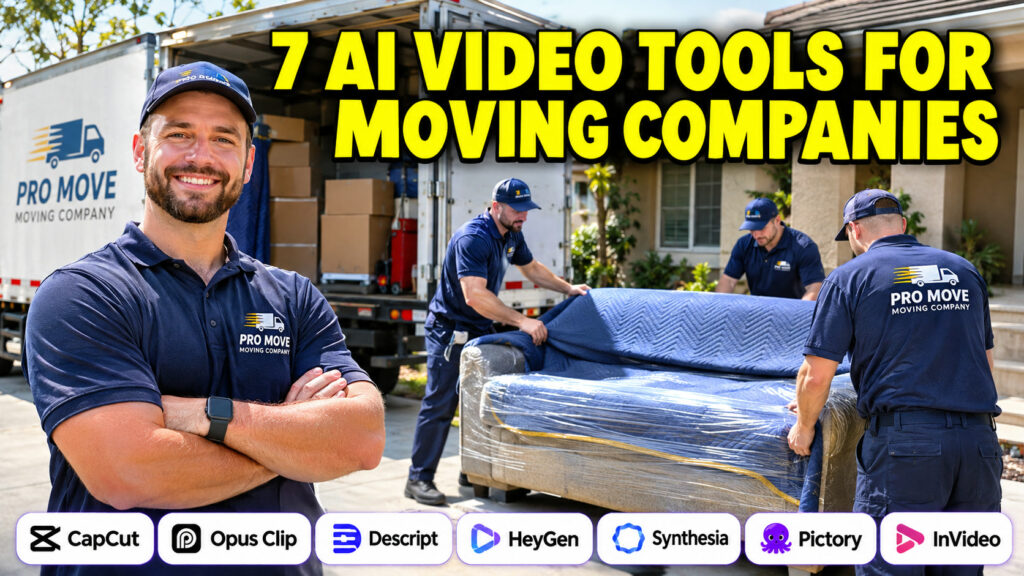
A moving company sells trust before it sells a truck. A customer is handing over everything they own, their furniture, their family photos, their children’s toys, to strangers for a day, and the decision is made long before anyone lifts a box. A short video that shows a careful crew wrapping a sofa, labelling boxes, and loading a truck neatly does more for that decision than any flyer. That is the job these tools do. They turn the work a moving company already does every day into short videos that bring in the next booking.
The best AI video tools for moving companies in 2026 are CapCut, Opus Clip, Descript, HeyGen, Synthesia, Pictory and InVideo. Each one solves a different part of the job. CapCut is the best all-round editor for filming real moves on your phone. Opus Clip is the best at cutting one long move recording into short clips for Reels, Shorts and TikTok. Descript is the best for turning your spoken walkthroughs and quote explanations into clean, captioned videos. HeyGen and Synthesia are the best when you do not want to be on camera and need an avatar to present instead. Pictory is the best for turning a written packing tip or moving checklist into a finished video without filming anything. InVideo is the best for fast promotional videos that sell peak season slots and end of month availability.
All prices in this guide were checked on the official pricing page of each tool on 24 November 2026. Where a Black Friday offer is live, the sale price is shown first and the list price is shown beside it, so you can see what the price becomes when the offer ends.
- What a moving company actually needs from AI video tools
- The 7 tools at a glance
- Which tool for which job
- The verdict
What a moving company actually needs from AI video tools
A moving company is not a content studio. You have a truck to load, a crew/list to manage, and a phone in your pocket. The tools that work are the ones that fit that reality. Before choosing, it helps to name the four videos a moving company makes again and again.
First, packing tips and how to videos. A 30 second clip showing how to wrap a mirror, how to pack dishes so they survive the journey, or how to label a box so the right room gets it first. These are the videos that stop thumbs, because they show real skill and solve a problem every person who is about to move already has. Film them on your phone between jobs, and they take almost no extra time.
Second, crew introductions and behind the scenes footage. A 60 second video that introduces the crew, shows a truck being loaded neatly, or shows the team carrying a piano down a flight of stairs without a scratch. These videos build trust, because a customer who is about to hand over their home wants to see the people they will be trusting. They also answer the questions customers ask most, such as how long a move takes, what is included in the price, and whether the crew will take apart a bed. The routine for turning one recording into a week of posts is covered in our guide on how to create AI shorts and reels in minutes.
Third, quotes, virtual surveys and moving day explainers. A short video that explains how a video survey works, what a customer should film when they walk through their home, or what happens on moving day from the first box to the last. These videos have a clear job, which is to turn an enquiry into a booked job, and they save phone calls, because the customer arrives at the quote already knowing how it works.
Fourth, seasonal promos and local offers. A short video for the summer peak season, an end of month availability offer, a student move special, or a storage deal for people between homes. These videos have a clear job, which is to fill a specific week or a specific truck, and they need to be made fast, because the slot will not wait for a filming day.
The right tool depends on which of those four you make most. A solo mover with one truck who films on a phone needs a different tool from a company with five trucks that wants an avatar to record the weekly availability update in two languages. The comparison below is built around those real jobs, not around feature lists.
The 7 tools at a glance
| Tool | Best for | Free plan | Paid plan from | What you get for the money |
|---|---|---|---|---|
| CapCut | Editing real move footage on your phone | Yes | $19.99 a month, or $179.99 a year | Full editor, auto captions, 1,200 AI credits a month, 4K export, 1 TB storage |
| Opus Clip | Cutting one long move recording into many short clips | Yes | $15 a month | AI clipping, virality score, auto captions, watermark-free export |
| Descript | Editing video by editing the transcript | Yes | $24 a month, or $16 a month billed annually | Text-based editing, Studio Sound, filler removal, 4K export on Creator |
| HeyGen | An avatar that presents when you cannot be on camera | Yes, 3 videos a month | $29 a month, or $24 a month billed annually | Digital twin presenter, 140 plus languages, voice cloning |
| Synthesia | Avatar-led crew training at scale | Yes | $19 a month, or $14 a month billed annually | 125 plus avatars, surveys, interactive video, 140 plus languages |
| Pictory | Turning a written packing tip into a video without filming | 14-day free trial | $14.50 a month on the Black Friday offer, list price $29 a month | Script to video, stock footage, AI voices, brand kits |
| InVideo | Fast promotional videos for peak season slots | Yes | $20 a month, or $10 a seat a month billed annually | Prompt to video, timeline editor, stock media, 400 credits a month on Starter |
1. CapCut: best all-round AI video tool for a moving company

CapCut is the tool most moving companies should start with, because it does the ordinary work brilliantly. You film a crew wrapping a dining table on your phone, drop the clip into CapCut, and within ten minutes you have a captioned, trimmed, vertical video ready for Reels, Shorts and TikTok. It is the editor behind most of the moving videos you already see on social media, and there is a reason for that. It is fast, it works on the phone you already carry, and the free plan is genuinely usable.
The free plan includes the core editor, basic effects, auto captions and 1080p export, which is enough for most move videos. The paid plan, CapCut Pro, costs $19.99 a month or $179.99 a year, and adds 4K export, the full AI toolkit, premium templates, 1,200 AI credits a month and 1 TB of cloud storage. There is also an Ultra plan at $79 a month for heavy AI generation, but a moving company will not need it. A 7-day free trial of Pro is available, with no card required to start it.
What CapCut does best for a moving company is speed. The auto caption feature puts accurate subtitles on a move video in seconds, and captions matter, because most customers watch with the sound off on the bus or at work. The auto cut and silence removal tools take a rambling five minute explanation and tighten it into a 60 second video without you scrubbing through a timeline by hand. The templates are built for vertical video, so a clip made for TikTok also fits Instagram Reels and YouTube Shorts with one tap.
Where CapCut is weaker is long-form teaching. If you want to record a ten minute training video for new crew members with chapters, slides and a presenter, CapCut is not the tool. It is an editor for short clips, not a course builder. It also has no avatar presenter, so if you do not want to appear on camera, you will need HeyGen or Synthesia as well.
Here is how the best AI video tools for moving companies work in practice: the crew is loading a truck on a Tuesday morning, and the foreman films 40 seconds of the team wrapping a glass cabinet, carrying it down the stairs, and sliding it into the truck on a blanket. In CapCut you trim the clip to the 30 seconds that matter, add auto captions, add a text overlay that says “Wrapped, carried, loaded. No scratches”, and post it before the truck leaves. The customers who see it call for a quote, and the ones who were comparing movers now have a reason to choose you.
CapCut is the best choice if you film real moves and want the fastest route from phone to posted video. It is also the cheapest serious option, because the free plan covers the basics and the paid plan is the best value of the seven tools here for a small moving company.
2. Opus Clip: best for turning one long move into many clips
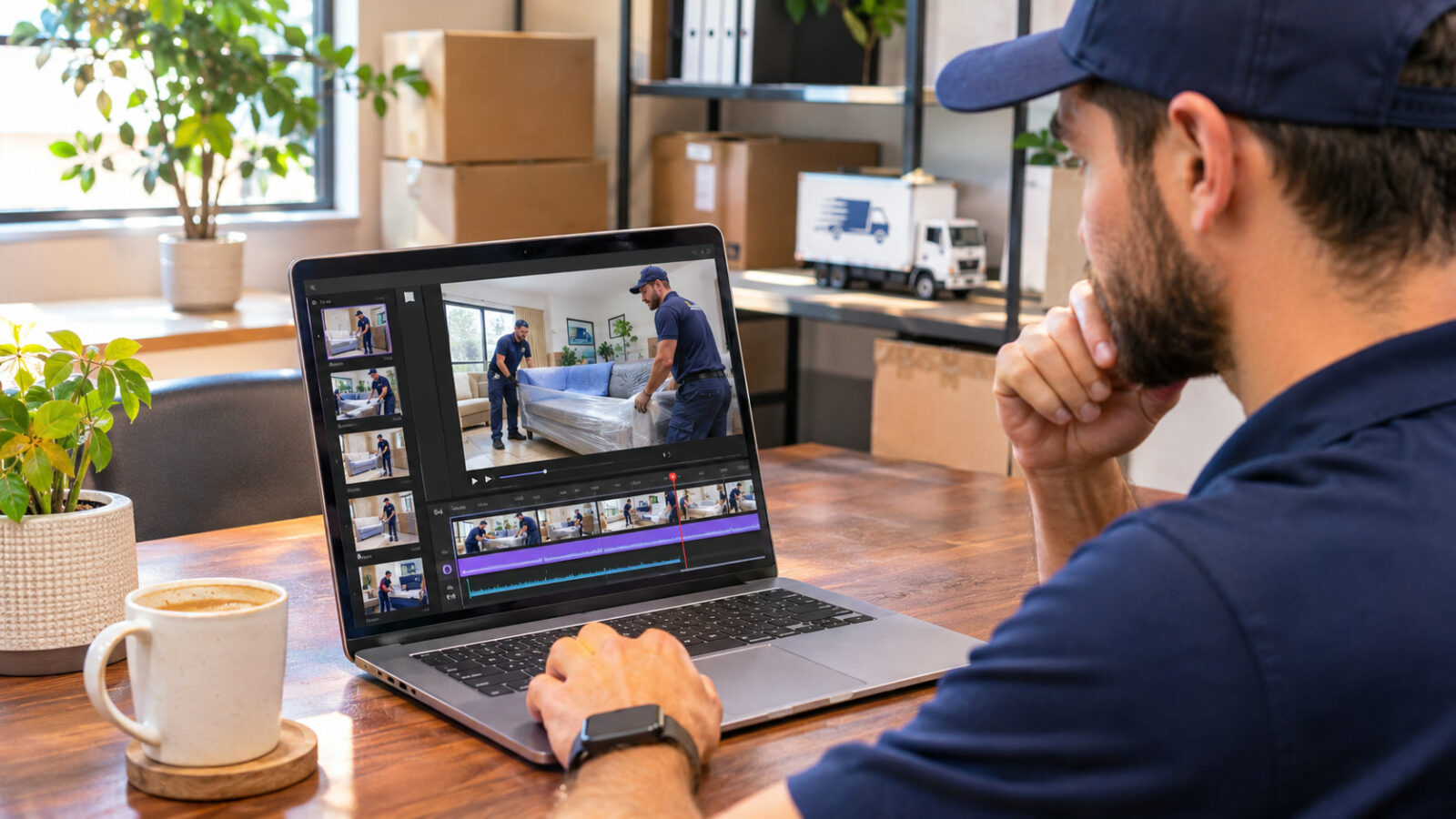
Opus Clip solves a different problem. A mover records a 40 minute packing session, a full moving day walkthrough, or a long video survey with a customer, and then has nothing to post, because nobody watches a 40 minute video on TikTok. Opus Clip watches the long recording, finds the moments worth sharing, and cuts them into short vertical clips with captions, a hook, and a virality score for each one. One move becomes eight or ten posts.
The free plan lets you try the clipping with limited exports. The Starter plan costs $15 a month and is the plan most small moving companies need. It includes AI clipping, auto captions, the virality score, watermark-free export and posting to social media. The Pro plan costs $29 a month, or $14.50 a month billed annually, and adds faster processing, more clip length options, 100 GB of storage, bulk export and team seats. The Business plan is custom priced for moving companies with several branches.
What Opus Clip does best is finding the clip inside the recording. Its AI looks for clear explanations, strong moments and natural breaks, and it scores each clip for how likely it is to hold attention. For a moving company, that means a long recording of a house being packed can become a clip about wrapping fragile items, a clip about labelling boxes, and a clip about loading the truck in the right order. Each clip gets captions and a hook automatically, so you are editing by approving and trimming, not by building from scratch.
The limit is that Opus Clip works from footage you already have. It does not generate video, it does not give you an avatar, and it will not help if you have nothing recorded. It is also a clip tool, not a full editor. If a clip needs a careful re-cut or a custom graphic, you will finish it in CapCut or Descript.
A moving company scenario: you set a phone on a tripod and record a full morning of packing a three bedroom house. Opus Clip finds the six moments that matter, such as the wrapping of a mirror, the packing of the kitchen, the labelling system, and the moment the last box goes on the truck, and turns them into six captioned Reels. You post one a day for a week, and each one shows a skill a customer is paying for when they book.
Opus Clip is the best choice if you already record moves or packing sessions and want a week of social media posts from a single recording. At $15 a month, it is the cheapest paid tool in this guide, and paired with free CapCut it is the starter stack recommended below.
3. Descript: best for editing your spoken walkthroughs
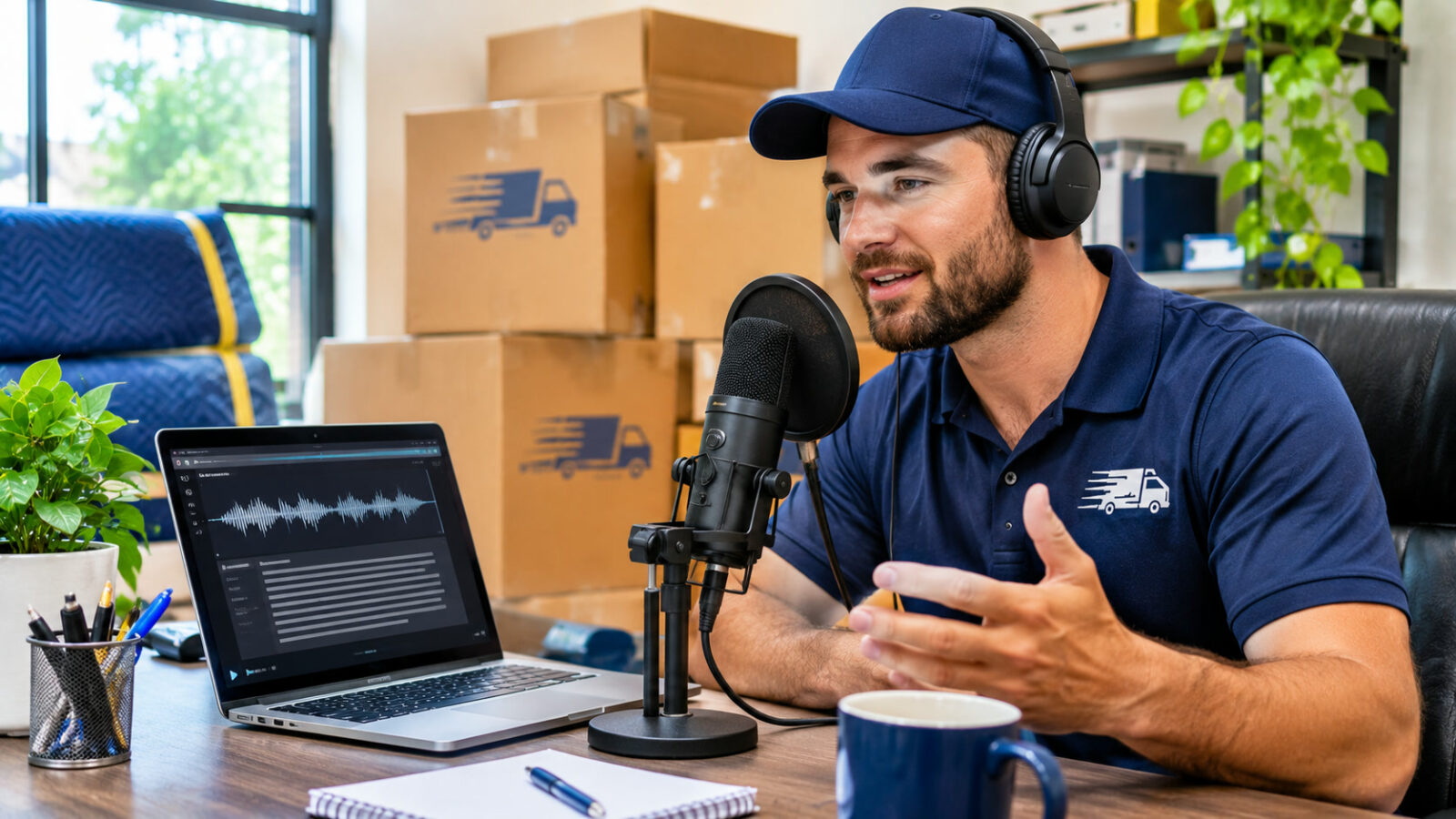
Descript is built for movers who talk. You record a walkthrough of a customer’s home, a quote explanation, or a voiceover for a packing video, and Descript turns the recording into a written transcript. You edit the video by editing the words. Delete a sentence from the transcript and it disappears from the video. Remove every “um” and pause with one click. That is a very different way of editing, and for a mover who explains things out loud, it is much faster than dragging clips on a timeline.
The free plan costs nothing and includes one media hour a month, 100 one-time AI credits and 720p export with a watermark. The Hobbyist plan costs $24 a month, or $16 a month billed annually, and adds 10 media hours a month, 400 AI credits, watermark-free 1080p export and the Underlord AI co-editor. The Creator plan costs $35 a month, or $24 a month billed annually, and is the plan most moving companies should look at. It adds 30 media hours, 800 AI credits, 4K export, full Underlord access, AI video generation and unlimited stock media. The Business plan costs $65 a month, or $50 a month billed annually, and adds 40 media hours, 1,500 AI credits, Brand Studio, translation and dubbing in more than 30 languages, and custom avatars.
What Descript does best for a moving company is clean up spoken explanations. Studio Sound removes the street noise, the truck engine and the echo of an empty room from a recording made on a real job, so a walkthrough filmed during a busy move still sounds professional. The filler word removal takes out the ums and pauses that make a five minute explanation feel like ten. The transcript makes it easy to find the exact moment you explained why a piano needs a four person crew, and to pull that moment out as a standalone clip. Underlord, the AI co-editor, takes plain instructions such as “cut this to 60 seconds and keep the three tips” and does the edit for you.
The limit is that Descript is not a visual editor. If you want flashy transitions, animated text or a polished advert, CapCut or InVideo will do it better. Descript is also priced per person, so a moving company with three crew leaders pays per seat, and the costs add up. The free plan’s one media hour a month is small, so you will need a paid plan quickly if you record every week.
A moving company scenario: you record a five minute voiceover explaining how a video survey works, with a clip of a customer walking through their home playing underneath. In Descript you delete the two sentences where you repeated yourself, remove the filler words, and export a clean three minute video with captions. The same recording becomes a guide for your YouTube channel and a clip you send to every customer before their survey.
Descript is the best choice if most of your teaching is spoken, and you want to edit by words instead of by timeline. It is the strongest tool here for quote and survey explanations, and it pairs well with CapCut for the visual finish.
4. HeyGen: best avatar presenter when you do not want to be on camera
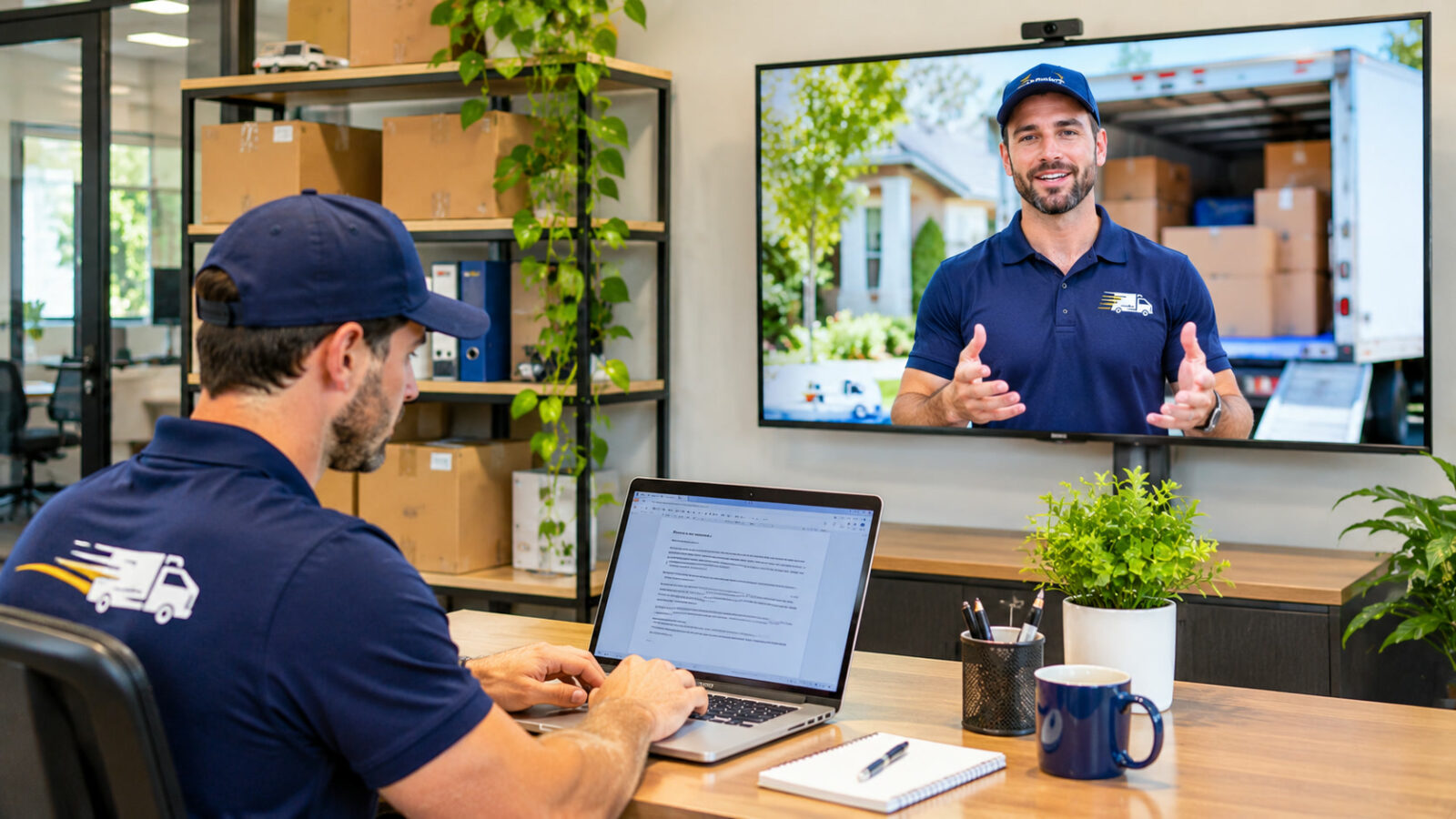
HeyGen is the tool for the mover who has good advice but no wish to appear on camera every day. You type a script, choose an avatar, and HeyGen produces a video of a realistic presenter delivering your message. You can also create a digital twin of yourself, a short recording that HeyGen turns into an avatar that looks and sounds like you, so the video still feels personal even when you never stood in front of a camera.
The free plan includes up to 3 videos a month, which is enough to test whether avatar videos suit your customers. The Creator plan costs $29 a month, or $24 a month billed annually, and is the right plan for a small moving company. The Pro plan starts at $49 a month and scales with credits, and the Business plan costs $149 a month plus $20 per seat a month for moving companies that need several staff on one account. Unused credits roll over for one month on monthly plans, and until renewal on annual plans.
What HeyGen does best is presence without filming. A weekly availability announcement, a welcome video for new customers, or a peak season offer can be recorded by typing a script at your desk at 9 pm, after the last job of the day. The avatar speaks clearly, the lip sync is convincing, and the video is available in more than 140 languages, which matters if you serve customers in more than one language. A digital twin of yourself makes the videos feel like yours, and regulars recognise the owner they will actually meet.
The limit is honesty. An avatar video is not a real move, and it should never be presented as one. It works for announcements, for packing explainers and for offers. It does not work for showing a real move, because a customer needs to see the actual crew and the actual truck. HeyGen is also a credit system, so a long video costs more credits than a short one, and you need to watch your monthly allowance.
A moving company scenario: you write a 90 second script announcing the summer peak season dates, with the booking deadline and the early booking discount. HeyGen turns it into a video with your digital twin presenting it. You post it to your Facebook page and pin it to the top of your Instagram profile. The customers who watch it book before the deadline, and you spend the week moving instead of answering the same question on the phone.
HeyGen is the best choice if you want a presenter on screen without filming yourself, or if you serve customers in more than one language. It is the most personal of the avatar tools, because the digital twin is you.
5. Synthesia: best for avatar-led crew training at scale
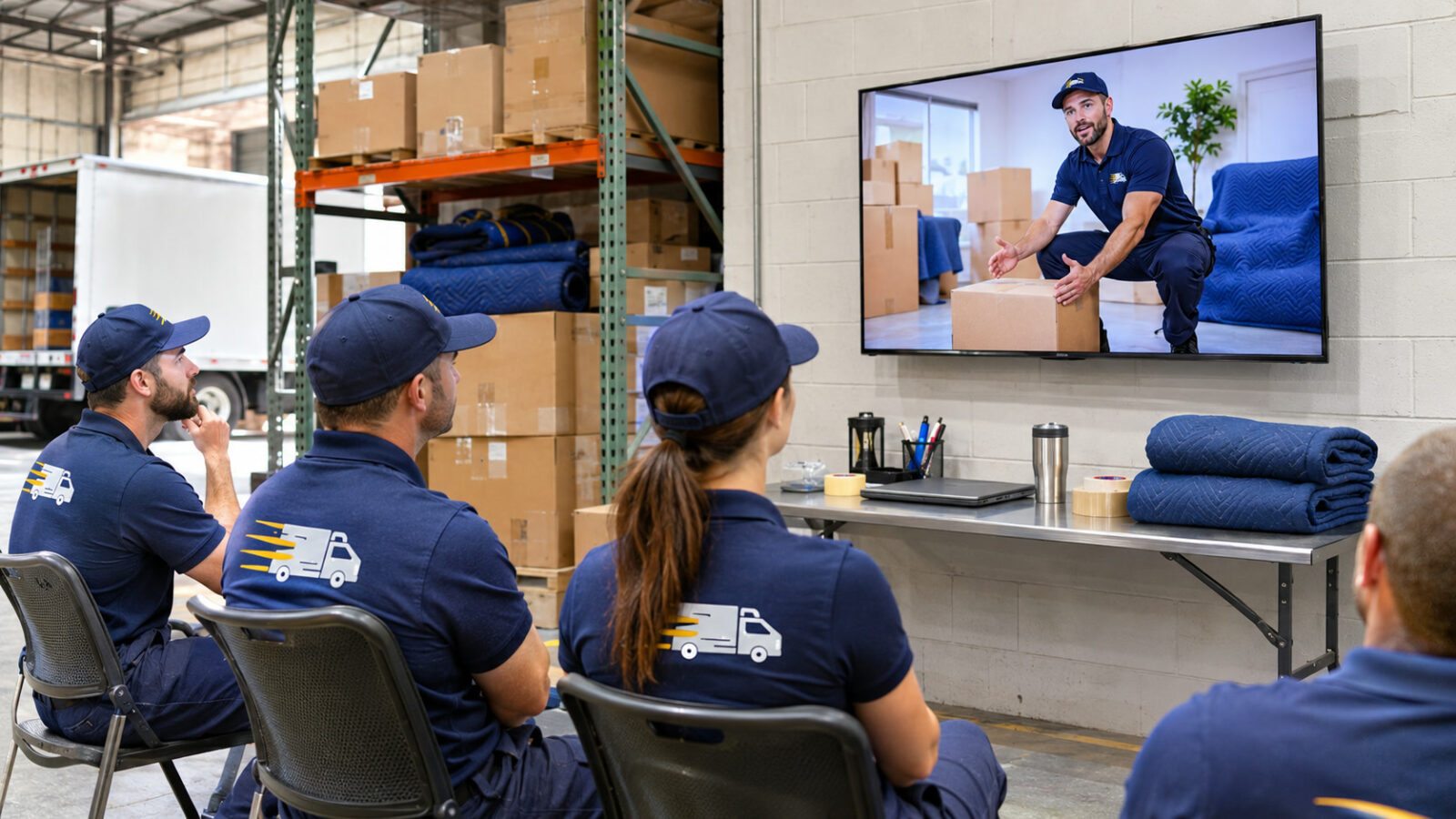
Synthesia is the other avatar tool in this guide, and it is the better choice when you want to build a small library of training videos for your crew rather than one-off videos. Where HeyGen is built around a presenter, Synthesia is built around a course. It has more than 125 avatars, interactive video with quizzes, surveys, and a structured studio for lessons that need to be updated over time.
The Basic plan costs nothing and includes 500 credits a month, 10 minutes of studio video creation and one Syren video. The Starter plan costs $19 a month, or $14 a month billed annually, with the first month at $9. It includes 1,250 credits a month, 125 plus avatars, no watermark and no 3 minute cap on Syren videos. The Pro plan costs $89 a month, or $59 a month billed annually, with the first month at $49. It includes 72,000 credits a year, 180 plus avatars, 5 personal avatars, branded video pages and interactive video. A Black Friday and Cyber Week offer is live from 16:00 GMT on 23 November to 07:59 GMT on 7 December 2026, for new customers and free plan users upgrading to a paid plan only.
What Synthesia does best for a moving company is consistency. New crew members need the same training, how to lift safely, how to wrap furniture, how to load a truck so nothing moves, how to talk to a customer on the doorstep. Synthesia gives you that in a structured course, and when a procedure changes, you edit the text and regenerate the video instead of re-filming. The interactive features let you add a quiz at the end of a lesson, so a new starter answers three questions about safe lifting before their first job. The surveys let you ask the crew which part of the job they find hardest, and build the next lesson around the answer.
The limit is cost and tone. The Pro plan is the most expensive in this guide, and the Starter plan’s 1,250 credits a month only stretches to about two short videos a month on top of the free allowance. Avatar lessons can also feel formal. A new crew member learning to wrap a wardrobe may prefer a real foreman in a real truck to a polished avatar in a studio, so Synthesia works best for structured training, not for the daily move videos that win bookings.
A moving company scenario: you build a six lesson training course covering safe lifting, wrapping furniture, packing fragile items, loading a truck, talking to customers, and the end of day checklist. Each lesson is a three minute avatar video with a short quiz. New starters watch the course before their first job, and by the time they arrive on site they already know the terms and the standards you will be checking.
Synthesia is the best choice if you want to build proper crew training with quizzes and a consistent presenter, and you are willing to pay for the structure. For a single mover who only needs a few avatar videos, HeyGen is cheaper.
6. Pictory: best for turning a written packing tip into a video without filming

Pictory is the tool for the mover who writes well but never films. You paste a script, a packing tip or even a few bullet points, and Pictory builds a video from stock footage, AI voices and automatic captions. You do not need a camera, a truck or a quiet room. You need a tip worth sharing.
A 14-day free trial is available, with 300 credits and three videos. The Starter plan lists at $29 a month, or $25 a month billed annually, and the Professional plan lists at $59 a month, or $35 a month billed annually. The Teams plan lists at $199 a month, or $119 a month billed annually. A Black Friday offer is live at the time of writing, and it halves those prices. On the offer, Starter is $14.50 a month, or $12.50 a month billed annually. Professional is $29.50 a month, or $17.50 a month billed annually. Teams is $99.50 a month, or $59.50 a month billed annually. Check the live price before you buy, because the offer will end and the list price will return.
What Pictory does best is speed from words to video. A mover who writes a 200 word note about the five things to pack first, or the three mistakes that damage furniture, can have a finished video in fifteen minutes, with stock footage of packing and moving, a natural AI voiceover in more than one language, and captions throughout. The stock library includes millions of clips from Getty Images and Storyblocks, so the footage looks professional even though you never filmed it. The AI scene editor lets you swap a clip or change a line without starting again.
The limit is that stock footage is not your crew, your truck or your move. A video about your own packing standard will always be better filmed than stocked. Pictory videos can also look generic if you accept the first draft, so the movers who get the best results are the ones who edit the script carefully and choose their clips rather than accepting the automatic choices.
A moving company scenario: you write a short script about the five things customers forget on moving day, with the passport, the phone charger, the kettle, the bedding, and the cleaning kit. Pictory turns it into a 60 second video with a voiceover and moving footage. You send it to your customer list the week before their move and post it on your Google Business Profile, and the customers arrive prepared instead of stressed.
Pictory is the best choice if you prefer writing to filming, and you want a finished video from a script in minutes. It is the most useful tool here for movers who have good tips and no time to film them.
7. InVideo: best for fast promotional videos that sell peak season slots

InVideo is the tool for the business side of a moving company. It turns a prompt into a promotional video, with a timeline editor for finishing touches, stock media, and AI agents that build the video from a short description. It is the tool you reach for when you need a summer peak season video, an end of month availability promo, or a 15 second advert for Facebook and Instagram.
The Starter plan costs $20 a month, or $10 a seat a month billed annually, and includes 400 credits a month, the timeline editor and 200 GB of storage. The Plus plan costs $60 a month, or $24 a seat a month billed annually on the current limited offer, and includes 2,000 credits a month, 600 GB of storage and access to the Seedance 2.5 video model. The Max plan costs $250 a month, or $62.50 a seat a month over two years on a pay for 12 months, get 24 months offer, and includes 8,000 credits a month, 2,000 GB of storage and the lowest cost per credit. Unused credits do not roll over to the next month, so you should only pay for the credits you will use.
What InVideo does best is promotional speed. Type “a 15 second video for a moving company, summer peak season, show a crew loading a truck in the morning light” and InVideo builds a draft with footage, music, voiceover and captions. You then adjust the text, swap a clip, and export. For a small moving company that runs seasonal offers, that is a video a week without a filming day.
The limit is that InVideo is built for promotion, not for teaching. A generated video will not show your own crew, your truck or your packing standard. The credit system also punishes waste. If you generate ten drafts and use one, you have spent ten drafts worth of credits, so it pays to write a clear prompt first time. The monthly price of Plus at $60 is the highest single plan price in this guide after Synthesia Pro, so it only makes sense if you run regular offers.
A moving company scenario: it is the first week of June and you want to fill the last two weekends of the month before the peak season rush. InVideo makes a 15 second promo showing the crew, with the booking deadline and your phone number on screen. You post it to Facebook and Instagram, and the bookings that come in pay for the month’s subscription several times over.
InVideo is the best choice if you run regular promotions and want a finished advert without filming. It is a marketing tool first and a teaching tool second, and it earns its place in the full stack for that reason.
Which tool for which job
If you only buy one tool, buy for the job you do most. A solo mover who films real moves should start with CapCut, because the free plan covers most of the work and Pro is $19.99 a month. A mover who records long packing sessions and wants a week of social media posts from each one should start with Opus Clip Starter at $15 a month. A mover who explains quotes and surveys by talking should start with Descript Creator at $35 a month, or $24 a month billed annually. A mover who will not appear on camera should start with HeyGen Creator at $29 a month, or $24 a month billed annually. A mover who wants crew training should start with Synthesia Starter at $19 a month, or $14 a month billed annually. A mover who writes packing tips and wants videos without filming should start with Pictory Professional on the Black Friday offer at $29.50 a month, or $17.50 a month billed annually. A moving company that runs regular seasonal offers should start with InVideo Starter at $20 a month, or $10 a seat a month billed annually.
The tools also combine well. CapCut and Opus Clip are the natural pair, because Opus Clip finds the clips and CapCut finishes them. Descript and HeyGen are the natural pair for teaching, because Descript cleans up your spoken walkthroughs and HeyGen covers the announcements you do not want to record yourself. Pictory and InVideo are the natural pair for written content, because Pictory turns packing tips into teaching videos and InVideo turns offers into adverts. The same choose-by-job method works for other local businesses too. Restaurants that film dishes, coffee shops that sell a morning ritual, and event planners who film venues all pick tools the same way, by matching the tool to the job they do most.
Starter stack and full stack: what it costs
The starter stack is for a solo mover who wants to start posting this week without a big bill. Opus Clip Starter at $15 a month, plus CapCut Free at $0, gives you clipping, captions and a full editor for $15 a month. Over a year that is $180, and it covers the four videos that matter most: packing tips, crew introductions, quote explainers and seasonal promos. If you film one move a week and post three clips from it, the starter stack costs about $1.25 per video over a year of weekly posting.
The full stack is for a moving company or small chain that wants every job covered. On monthly billing, with the Black Friday prices that are live on 24 November 2026, it costs $221.49 a month. That is CapCut Pro $19.99, Opus Clip Pro $29, Descript Creator $35, HeyGen Creator $29, Synthesia Starter $19, Pictory Professional $29.50 on the Black Friday offer, and InVideo Plus $60. On annual billing the same stack costs $133.00 a month. That is CapCut $15.00 a month on the $179.99 a year plan, Opus Clip $14.50, Descript $24, HeyGen $24, Synthesia $14, Pictory $17.50 on the Black Friday offer, and InVideo $24 on the current limited offer. Without any sale prices, the list prices are $250.99 a month on monthly billing and $156.50 a month on annual billing.
Most moving companies do not need the full stack. Start with the starter stack, add Descript when your spoken walkthroughs need cleaning up, and add HeyGen or Pictory when you want videos without filming. Only add Synthesia Pro or InVideo Max when the work clearly pays for them, such as a training course for a growing crew, or a peak season promotion that fills a month of bookings.
A week of videos from one move
The fastest way to use these tools is to build one recording into a week of posts. Here is a realistic week for a moving company with a three bedroom house move on a Tuesday.
On Monday, set a phone on a tripod and record a 30 minute packing session, with the customer’s permission and a clean, tidy room. Upload the recording to Opus Clip. It finds six or seven clips, including the wrapping of a mirror, the packing of the kitchen, and the labelling system. Approve the three best.
On Tuesday, open the best clip in CapCut. Trim it to 60 seconds, add auto captions, and add a text overlay with the three steps of the technique. Post it as a Reel and a Short.
On Wednesday, take the question a customer asked, such as how far ahead to book a summer move, and paste a 150 word answer into Pictory. It builds a 60 second video with stock footage and a voiceover. Post it to your Facebook page.
On Thursday, record a 90 second voiceover in Descript explaining the same answer in your own words, and let Descript remove the pauses and street noise. Post it to YouTube with a title that matches the question a customer would search for.
On Friday, use HeyGen to make a 30 second video announcing the weekend availability, with your digital twin explaining the slots and the price. Pin it to the top of your social profiles.
On Saturday, use InVideo to make a 15 second promo for next month’s peak season dates, with the booking deadline and the phone number on screen. Post it to Facebook and Instagram, and boost it locally if you have the budget.
That is six videos from one recorded session, one written answer, one voiceover and one prompt. The tools do the editing, the captions and the formatting. Your job is the move, which is the part no tool can do.
Filming on a move: trust and honesty
A quick word on doing this properly. Always get a customer’s permission before filming inside their home, and a parent’s permission too if a child is in the frame. A simple question at the door is enough, and it should say what the video is for and where it will be posted. Never film a customer’s face without asking, and never post a video that shows a home address, a house number, a phone number, a delivery note, or a labelled box with a family name in a way that identifies a customer.
Keep the phone and the tripod clear of the crew’s path, and never film in a way that slows down the move or distracts someone carrying a heavy item. Safety comes before content, every time.
Finally, never present a generated video as a real move. An avatar announcing availability is a message, and it should be clear it is one. A stock footage video about packing is a promo, not a recording of your own crew. Customers trust a moving company that is honest about what they are watching, and that trust is worth more than any video.
Frequently asked questions
Do I need to appear on camera to make moving company videos?
No. HeyGen and Synthesia can present your announcements and training with an avatar, and Pictory can build a video from your written packing tip with stock footage and an AI voiceover. Many movers still appear on camera for packing videos, because customers want to see the real crew who will handle their belongings, but announcements and offers work well with an avatar.
What is the cheapest way to start making videos as a moving company?
Start with CapCut Free and Opus Clip Starter at $15 a month. That combination covers filming, editing, captions and clipping, and it is enough for three or four videos a week. Add a paid tool only when a specific job, such as cleaning up spoken walkthroughs or making avatar videos, is clearly worth paying for.
Can AI video tools help a moving company get more bookings?
They can help customers find you and trust you, which is not the same as a booking. A short video that shows a crew packing carefully before a customer calls means the customer arrives already convinced about the standard of work. Seasonal promos help with timing, and packing tip videos help with the searches that bring new customers to your page. The move itself still needs to be good, because a customer who books once on the strength of a video will only recommend you if the move goes well.
Which tool is best for packing tutorials?
Descript is the best for tutorials you record yourself, because it edits your spoken explanation by the transcript and cleans up the street and truck noise. Opus Clip is the best for turning a long packing session into short clips, because it finds the moments that matter. CapCut is the best for finishing a clip on your phone. Use all three together, and one packing session becomes a week of posts.
How much should a moving company spend on AI video tools?
A solo mover should start at $15 a month on the starter stack, and only add tools when the work pays for them. A moving company with several trucks can justify the full stack at $133 a month on annual billing, because it covers filming, clipping, walkthroughs, avatars and promotions for the whole business. Never buy a tool for a job you have not tried doing on the free plan first.
Are the Black Friday prices in this guide permanent?
No. Pictory’s Black Friday offer and Synthesia’s Black Friday and Cyber Week offer are limited time offers, and InVideo’s Plus annual price of $24 a seat a month is a limited offer. Check the live price on the official pricing page before you buy, and do not build a yearly budget on a sale price. The list prices are shown in this guide so you can see what each tool costs when the offer ends.
The verdict
The best AI video tools for moving companies in 2026 are the ones that fit between jobs, not the ones with the longest feature list. Start with CapCut Free and Opus Clip Starter at $15 a month, and post three short videos a week. Add Descript when your spoken walkthroughs need cleaning up. Add HeyGen when you want a presenter without filming yourself, and Pictory when you have packing tips worth sharing but no time to film. Add Synthesia when you are ready to build proper crew training, and InVideo when you run seasonal offers that need a fast advert.
A moving company does not need to become a video studio. You need one good clip a day, made from the moving you already do, posted where your next customer is already scrolling. These seven tools do the editing, the captions and the formatting. Your crew does the rest.