
An interior designer sells a feeling before a client ever walks into the room. A still photo shows the sofa, the light and the layout, but a video lets the client feel the space: the slow push into a living room, the curtains moving, the before-and-after reveal that makes a renovation worth sharing. Until recently that meant hiring a videographer for every project. Now a designer can turn one finished room photo into a moving walkthrough, cut a before-and-after Reel on a phone at the project, and send a client a narrated walkthrough in their own language, all without a film crew. This guide compares 7 of the best AI video tools for interior designers, with real prices checked on 18 November 2026, so a designer can build a stack that fits one project a month, one month of posting, and a real monthly budget.
The short verdict: start with Kling AI Standard at $8.80 a month for the hero room-reveal clips, and CapCut Free for finishing the before-and-after Reels on a phone at the project. That starter stack costs $8.80 a month, or about $0.73 per video across a month of 12 videos. Add Runway Standard at $15 a month when the room photos deserve proper cinematic camera moves, and HeyGen Creator at $24 a month on annual billing when clients need narrated walkthroughs in more than one language. Buying the cheapest paid plan of all seven tools costs $151.79 a month, or about $12.65 per video across the same 12-video month. The free route costs $0, but watermarked exports, non-commercial licences and hard caps on free credits make it a testing route, not a client routine.
One honest warning before the list: an AI-generated room is not your room. A model can invent furniture, change the shape of a window, or show a finish you never specified, and a client who books on that video will complain on handover day. Use your own photos for the room itself, and use AI for the camera move, the atmosphere and the edit, never as proof of a space your client will walk into. A slow drift across your own finished photo is honest. A generated living room presented as your work is not.
Quick comparison table
| Tool | Best for | Cheapest paid plan | Free option |
|---|---|---|---|
| Runway | Cinematic walkthroughs from still room photos | $15 a month | Yes, 125 one-time credits, watermarked |
| Kling AI | Realistic motion for curtains, plants and fabric | $8.80 a month | Yes, monthly free credits, watermarked |
| Luma Dream Machine | Natural camera moves through a room | $30 a month | No free plan on the current page |
| HeyGen | Narrated client walkthroughs in many languages | $29 a month | Yes, 3 videos a month, watermarked |
| InVideo AI | Room reveal Reels from one sentence | $20 a seat a month | Yes, limits not listed on the pricing page |
| Pictory | Turning a design case study into video | $29 a month | 14-day free trial, watermarked |
| CapCut | Before-and-after Reels with captions | $19.99 a month | Yes |
All prices are in US dollars, before tax, and were checked on 18 November 2026. Prices change often, so confirm at checkout. Prices with a caveat are noted under the tool below.
1. Runway: best for cinematic walkthroughs from still room photos
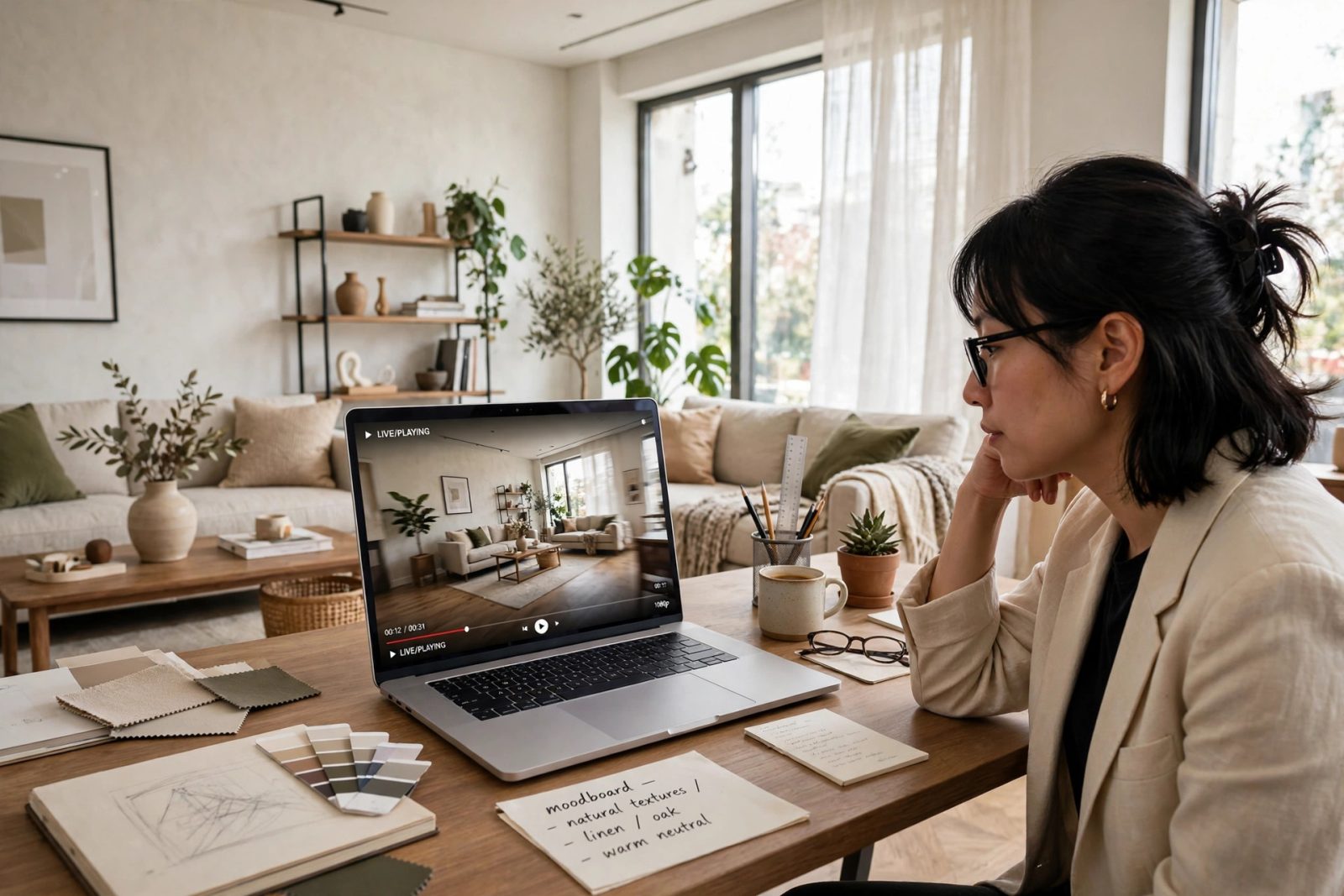
Runway is the camera operator in this list. Its Gen-4.5 model turns text or an image into video, so a single still photo of a finished living room, a kitchen, a bedroom or a hotel lobby can become a moving walkthrough, with prompt-controlled camera motion such as dolly in, pan, tilt, locked-off or handheld. For an interior designer, that means a hero shot you did not film, a slow push-in on a styled coffee table, or a dreamlike transition from the hallway into the main room, all made from photos you already took on handover day. It is also the tool with the most precise control over the move itself, so the camera goes where you tell it, not where the model guesses.
Price: the Standard plan costs $15 a month on monthly billing, or $12 a month when billed annually at $144 a year. Standard includes 625 credits a month, about 52 seconds of Gen-4.5 video, 20 GB of storage, no watermark, 4K upscaling, and up to 3 projects. The Pro plan costs $35 a month, or $28 a month on annual billing, with 2,250 credits a month, about 187 seconds of Gen-4.5 video. The Max plan costs $95 a month, or $76 a month on annual billing, with 9,500 credits a month. The free plan costs $0 forever, with 125 one-time credits that never expire, 5 GB of storage, a selection of generative models, and watermarked videos, but no Gen-4 video.
Best for: a designer who wants cinematic walkthroughs, camera moves on still room photos, and opening shots that look like a film, without a videographer or a second visit to the project. Limit: the credits buy seconds, not minutes, so 625 credits a month covers about 52 seconds of Gen-4.5 video, which is enough for reveals and transitions, not for a full project film, and heavy use means buying a higher plan.
2. Kling AI: best for realistic motion for curtains, plants and fabric

Kling AI is the motion specialist in this list, and it is the cheapest paid plan here. Its image-to-video keeps the room in your photo intact and moves what should move: a linen curtain in a breeze, a plant by the window, water in a courtyard fountain, fabric on a chair. That matters for interiors because a room is mostly still, and the wrong kind of motion, a wall that bends or a sofa that shifts, breaks the illusion at once. Kling also offers first and last frame control, so you can set the opening photo and the closing photo and let the model fill the move between them, which keeps the room’s geometry honest. It is the tool to reach for when the whole point of the clip is natural movement inside a real room.
Price: the Standard plan costs $6.99 for the first month, then $8.80 a month, with 660 credits a month. Billed yearly it costs $79.20 a year, or $6.60 a month. The Pro plan costs $25.99 for the first month, then $32.56 a month, with 3,000 credits a month. The Premier plan runs from $80.96 to $376.99 a month depending on how many credits you pick, and the Ultra+ plan costs $544.99 a month with 57,000 credits. The free Basic plan costs $0, with monthly free credits claimed on login, a watermark, 720p export, and no commercial use.
Caveat: Kling’s official pricing page, read on 18 November 2026, renders its marketing page with no prices in the fetched text, so the figures above come from multiple independent checks of Kling’s official membership page in October and November 2026, most recently 12 to 15 November 2026, and all of them agree. Confirm the price at checkout before buying. Credits are spent per second of video and monthly credits expire 31 days after they are issued, so Standard’s 660 credits buy a few short hero clips a month, not a library. Watermark removal and commercial use are paid-plan only, so the free plan is a test, not a client workflow.
Best for: a designer who wants believable movement inside a real room, a curtain, a plant, water, fabric, with the room itself unchanged, at the lowest paid price in this list. Limit: the credit pool is small, so a month of daily reveals needs a higher plan, and the first-month discount hides the renewal price, so read the renewal figure before subscribing.
3. Luma Dream Machine: best for natural camera moves through a room
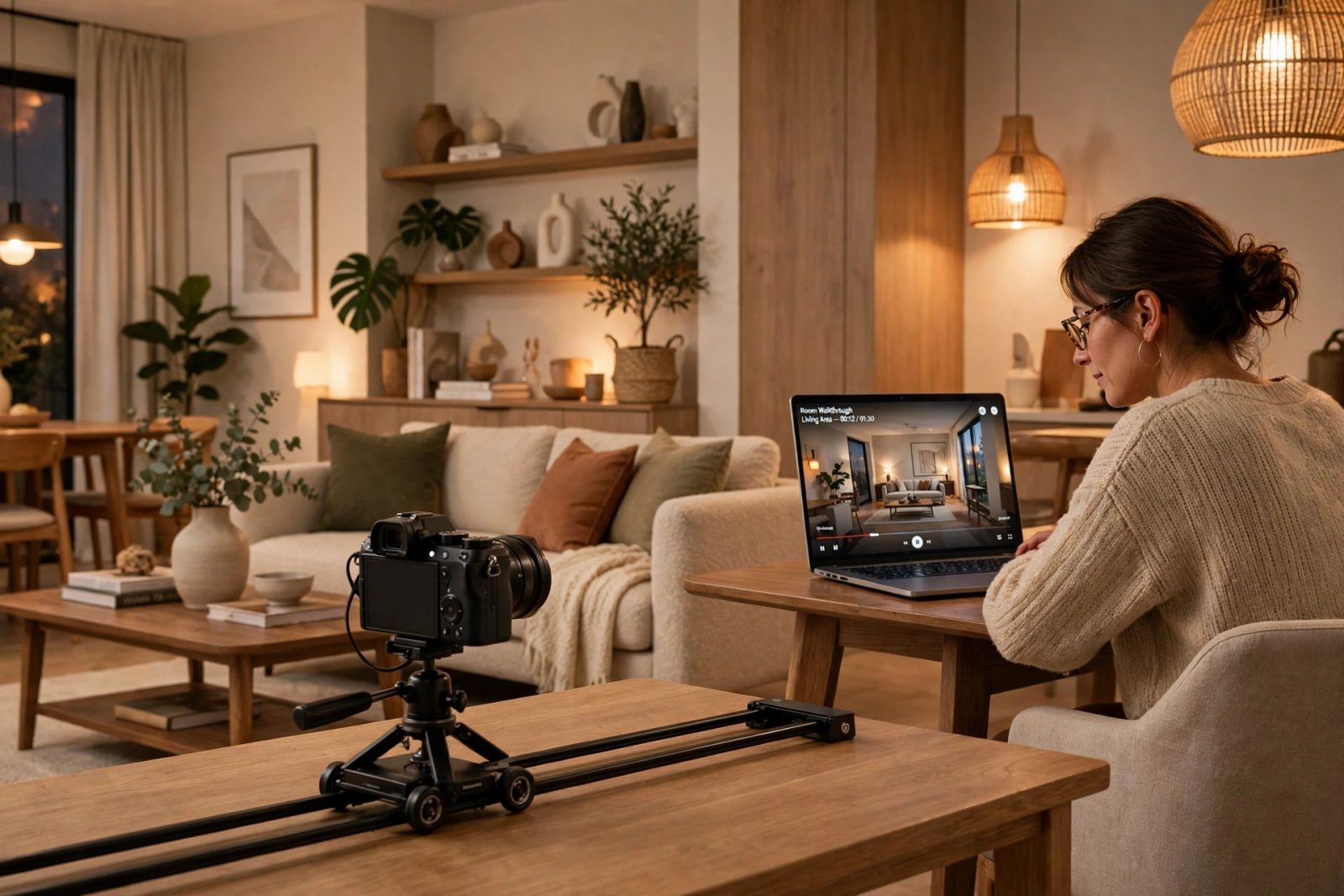
Luma Dream Machine is the spatial specialist in this list. Its Ray 3.14 model understands depth and perspective better than most generators, so a slow camera drift through a finished room respects the walls, the furniture and the light instead of warping them. For an interior designer, that is the difference between a walkthrough that looks filmed and one that looks generated: the camera glides past the sofa, the doorway stays where it is, and the room keeps its proportions. It also hosts third-party models, including Kling and Veo, inside the same credit pool, so one subscription can generate the hero clip in Ray and a detail shot in another model without opening a second tool.
Price: the Plus plan costs $30 a month, or $25 a month billed annually at $300 a year. Plus includes 10,000 credits a month, commercial use, no watermark, and access to Luma and third-party image and video models. The Pro plan costs $90 a month, or $75 a month billed annually, with 40,000 credits a month. The Ultra plan costs $300 a month, or $250 a month billed annually, with 150,000 credits a month. A 5-second image-to-video clip in Ray 3.14 costs 100 credits at 720p or 400 credits at 1080p, so Plus buys about 100 five-second clips at 720p or 25 at 1080p each month.
Caveat: the official pricing page, read on 18 November 2026, shows the credit amounts above but renders the dollar prices in JavaScript, so the dollar figures were not visible in today’s text read. They match the credit amounts exactly and were verified against the same official page on 16 November 2026, but confirm them at checkout. There is no free plan on the current pricing page, only free trial credits. A legacy Lite tier at $9.99 a month still appears in the mobile app and the help centre, but it is watermarked and non-commercial, so it is not a working plan for client videos.
Best for: a designer who wants the most natural camera moves through a room, with the geometry held steady, and who posts enough walkthroughs to use a 10,000-credit month. Limit: it is the most expensive entry plan in this list at $30 a month, and the credit maths punish 1080p, so most months will be shot at 720p unless the clip is a hero piece.
4. HeyGen: best for narrated client walkthroughs in many languages
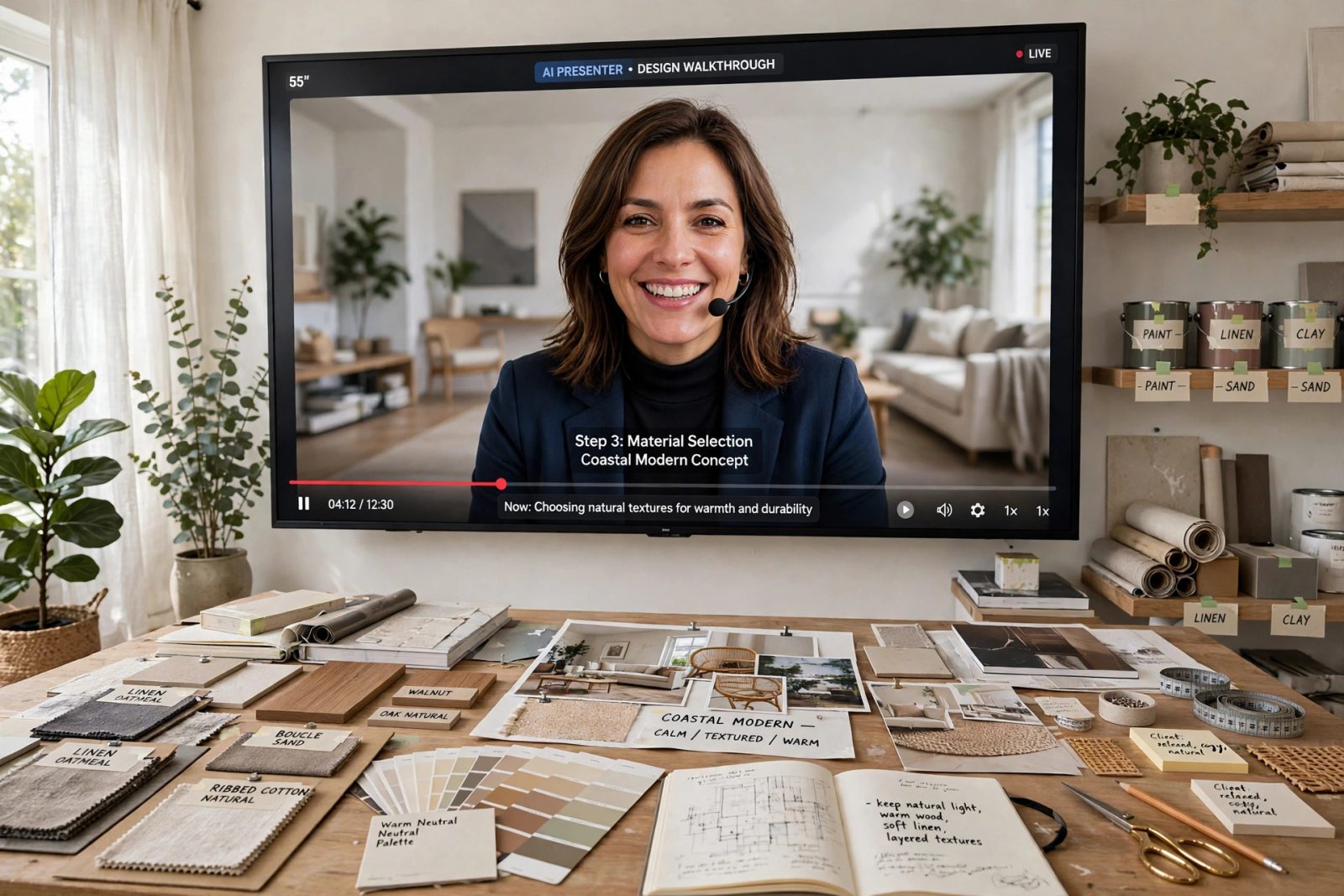
HeyGen puts a realistic presenter on screen, and its strongest designer feature is video translation with lip sync in 175 languages and dialects. Record one walkthrough narration, one design explainer or one handover message, and HeyGen localises it for every client market you serve, with the presenter’s lips matching the translated words. A designer with international clients can walk each one through the same project in their own language without recording five versions. The Creator plan also includes a custom video avatar and a voice clone, so the presenter can be the designer themselves, a consistent face for the studio brand, explaining the choices behind a room instead of a stranger reading a script.
For a wider look at translation, see our guide to the best AI video translation tools.
Price: the Creator plan costs $29 a month, or $24 a month billed annually. Creator includes a 30-minute maximum per video, up to 1080p export, more than 700 stock avatars, 175 languages and dialects, 1 custom video avatar and 1 voice clone. The Pro plan starts at $49 a month, with tiers from 1,000 credits a month at $49 up to 100,000 credits a month at $4,300. All Pro tiers share the same features, only the credit allocation changes. The Business plan costs $149 a month plus $20 a seat a month, with 3 or more seats, a 60-minute maximum per video and 4K export. The free plan costs $0, with up to 3 videos a month, a 1-minute maximum per video, more than 500 stock avatars, 30 or more languages, and a watermark.
Caveat: no annual Pro price is stated on the official page, so this guide quotes only the $49 a month starting figure for Pro. The Creator annual figure of $24 a month is stated in HeyGen’s own FAQ. Monthly subscribers’ unused credits roll over for one more month, and annual subscribers’ credits accumulate until renewal.
Best for: a designer with international clients who needs one narrated walkthrough, one design explainer and one handover message translated into every client language, presented by a consistent face. Limit: an AI presenter is not the designer, so a walkthrough should introduce the design, not pretend the avatar visited the room, and the free plan’s 3 videos a month with a 1-minute cap is a trial, not a routine.
5. InVideo AI: best for room reveal Reels from one sentence

InVideo AI is template-first: type a prompt such as a 30-second reveal of a warm modern living room with oak floors and linen curtains, and it returns a draft video with stock footage, text and music, ready to edit. For an interior designer, that means a room reveal, a project teaser, a style tip or a before-and-after announcement without opening a timeline. Its Agent Two builds the video from a prompt, and the Plus plan adds all Seedance models, so the footage can be AI-generated instead of stock. When a designer finishes a new project every month, the reveal writes itself from one sentence, and the same prompt pattern works for every room in the house.
If you also want short explainers for your studio, see our guide to the best AI explainer video tools.
Price: the Starter plan costs $10 a seat a month when billed annually at $120 a year, or $20 a seat a month on monthly billing. Starter includes 400 credits a seat a month, about 15 Seedance 2.0 Fast videos, 200 GB of storage, and Agent Two Lite only. The Plus plan costs $30 a seat a month on annual billing, with 2,000 credits a month and all Seedance models. The Max plan costs $75 a seat a month on annual billing, with 5,000 credits a month and 2,000 GB of storage. Unused credits do not roll over. The pricing page says accounts downgrade to a Free plan after cancellation, but it does not list the free plan’s limits, so this guide does not quote them. The timeline editor itself is free, and the page says 40 hours of editing costs nothing.
Caveat: the monthly prices for Plus and Max are implied by the savings shown on the page, about $60 and about $148.75 a seat a month, and were not directly shown in today’s read, so confirm them at checkout. Annual plans are currently advertised at 50 percent off.
Best for: a designer who finishes a new project every month and wants a reveal, a teaser or a style tip from a sentence, such as a living room reveal, a kitchen before-and-after, or a bedroom styling tip, without filming or editing. Limit: Starter cannot use the full Seedance range, so AI-generated footage really starts at Plus at $30 a month on annual billing, and Starter’s stock-first videos will not show your actual room, so the reveal is a mood piece, not a project record.
6. Pictory: best for turning a design case study into video
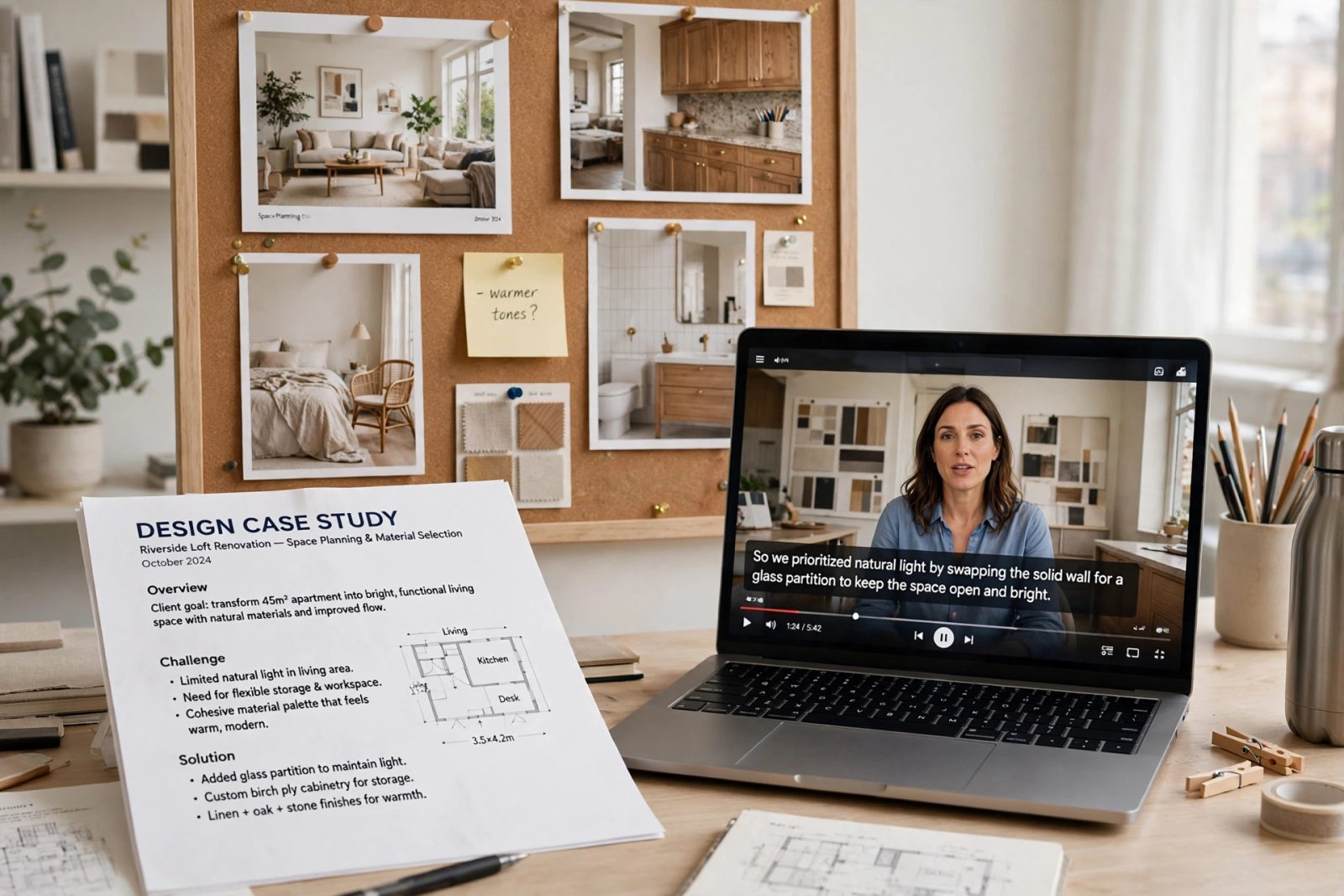
Pictory turns words into video, and its designer job is the case study. A designer writes up every project, a blog post, a portfolio page, a client email explaining the choices, and Pictory builds a captioned video from that text, matching stock footage to the script, adding an ElevenLabs voiceover in several languages, and offering Veo 3.1 generated clips inside the same project. For a designer, that means the project story they already wrote becomes a video a client will actually watch, instead of a page they will skim. It also handles the formats a designer needs, 16:9 for the website, 9:16 for Reels and Shorts, and automatic subtitles for viewers who watch on mute.
Price: the Starter plan costs $29 a month billed monthly. A Black Friday offer of $14.50 a month on monthly billing, or $12.50 a month billed annually, was live on 18 November 2026, and the regular annual rate is about $25 a month. Starter includes 24,000 credits, up to 360 minutes a year, unlimited videos, 1080p export, 1 brand kit, unlimited access to more than 5 million royalty-free videos from Getty Images and Storyblocks, multilingual ElevenLabs voices, and stock avatars. The Professional plan costs $59 a month billed monthly, with a Black Friday offer of $29.50 a month monthly or $17.50 a month annual live on 18 November 2026, and adds cloned avatars, voice clones, 5 brand kits and 72,000 credits. The Teams plan costs $199 a month billed monthly, with a Black Friday offer of $99.50 a month monthly or $59.50 a month annual live on 18 November 2026, and adds 3 or more users and 216,000 credits. The free trial lasts 14 days, with 300 credits, up to 10 minutes, 3 videos, and a Pictory watermark.
Caveat: the Black Friday prices above are temporary offers, so this guide quotes the regular $29 a month Starter price as the headline figure and notes the offer separately. The annual regular rate of about $25 a month comes from the page header and an October 2026 check, since the page today shows only the offer price for annual billing.
Best for: a designer who already writes up every project and wants that case study turned into a captioned video with a voiceover, without filming or opening a timeline. Limit: it builds from stock footage and generated clips, so it cannot show your actual finished room unless you upload your own photos into the project, and the credit pool is shared across every AI feature, so heavy generation drains it fast.
7. CapCut: best for before-and-after Reels with captions
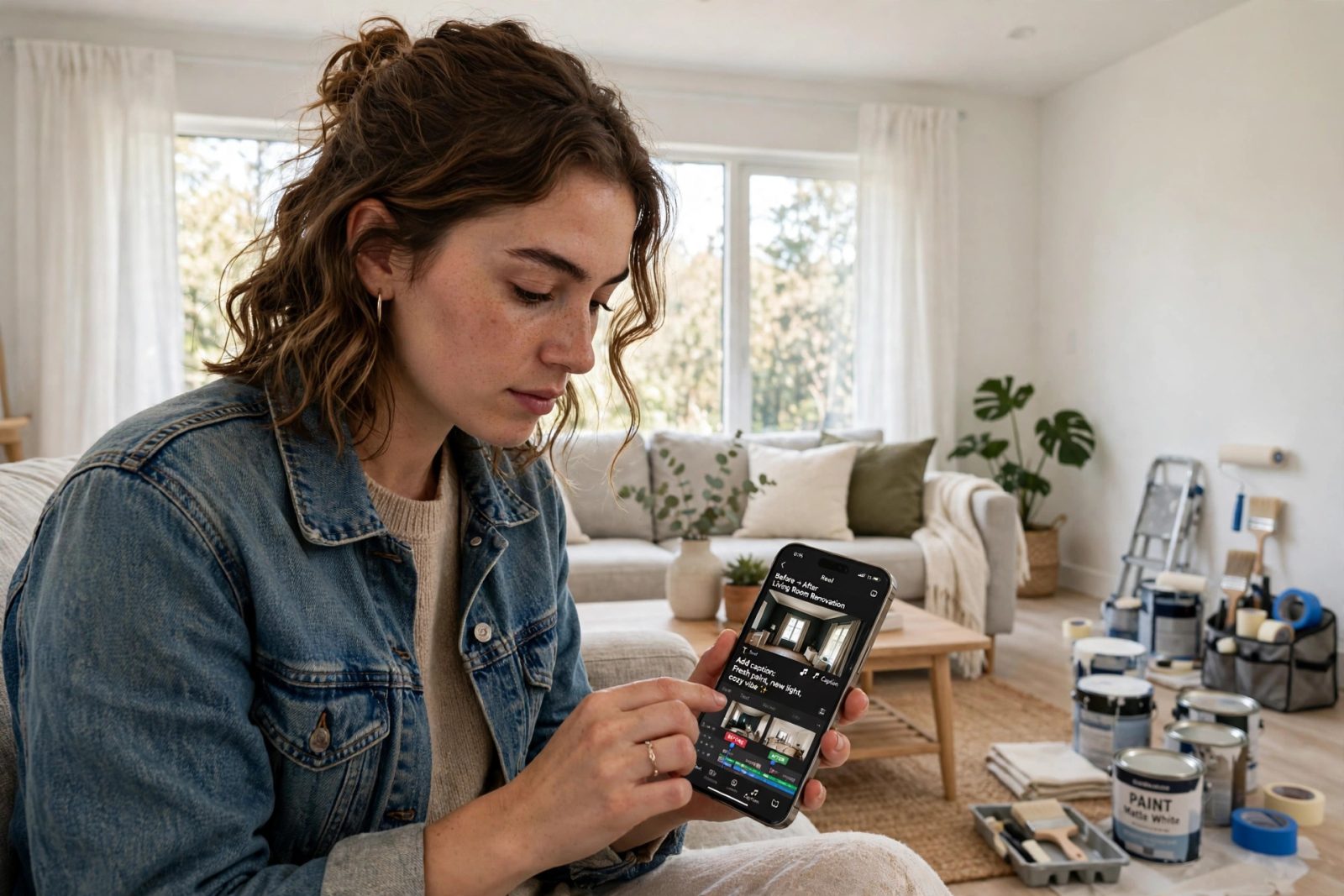
CapCut is the editor most designers already have on a phone, and it is built for short vertical video: trending templates, auto captions, effects and sounds that match what is performing on Reels and TikTok right now. For an interior designer, its two most useful features are auto captions in more than 20 languages, including bilingual captions and translation, because a reveal filmed in one country is often watched in another, and auto beat sync, which cuts clips to the music automatically. The Pro plan adds 1,200 AI credits a month, all premium templates, 1 TB of storage and Seedance video generation, and one Pro account unlocks Pro on phone, desktop and web. A 7-day free trial of Pro needs no credit card, and the free plan exports with no watermark, so a before-and-after Reel can be cut at the project and posted before the designer leaves the house.
Price: the Pro plan costs $19.99 a month as shown on the official pricing page. Pro includes 1,200 monthly AI credits, 1 TB of cloud storage, all premium templates and Pro features, AI video generation, and 4K export at 60 frames per second. The annual price is $179.99 a year, about $15 a month. The Teams plan costs $12.49 a month per seat and adds a Brand Kit plus Pro features for every seat. The Ultra plan costs $79 a month with 8,645 AI credits for heavy AI generation work. The free plan costs $0 and covers basic editing tools and free templates, and a video cut from your own footage can export with no watermark on Free.
Caveat: CapCut’s own page warns that displayed prices are for reference only and the final price appears after sign-in, and prices can vary by region, device and current promotions. A cheaper $9.99 a month Standard tier exists in the mobile app only and is not sold on the website, so this guide does not quote it as a web price.
Best for: a designer who films at the project, edits the same day, and needs finished vertical before-and-after Reels with captions and beat-synced cuts for Reels, TikTok and Shorts before leaving the house. Limit: it is a single-account editor, not a video generator, so it cannot create the room footage itself, only edit what you already filmed or generated elsewhere, and the AI credits are a monthly pool that runs out if you generate a lot of video. For creators who never appear on camera, our guide on how to make faceless YouTube videos with AI covers the same workflow for YouTube.
A worked example: one designer, one project, 12 videos
Take a mid-size interior designer who finishes one residential project a month and posts 12 videos: 4 room reveal walkthroughs, 2 before-and-after Reels, 2 client walkthrough explainers, 2 design tip videos, 1 portfolio showcase, and 1 social promo. Here is how the month runs on the starter stack and on the full stack.
On the starter stack, Kling AI Standard at $8.80 a month makes the hero room-reveal clips from the designer’s own finished photos, a curtain moving, a slow push across the living room, and CapCut Free finishes the 2 before-and-after Reels with captions at the project and exports them with no watermark. Total: $8.80 a month, about $0.73 per video. The client walkthroughs are filmed on a phone, the design tips are recorded as talking-head clips, and the portfolio showcase is a simple slideshow, which is slower but costs nothing.
On the full stack, Kling Standard makes the 4 room reveals, Runway Standard adds the cinematic walkthroughs with proper camera moves, Luma Plus supplies the natural drift shots through the finished rooms, HeyGen Creator narrates the 2 client walkthroughs and translates them for international clients, InVideo Starter writes the design tips and the social promo from one sentence each, Pictory Starter turns the written case study into the portfolio showcase, and CapCut Pro finishes the 2 before-and-after Reels with captions and beat-synced cuts. The cost builds up like this: $8.80 for Kling, $23.80 after adding Runway, $53.80 after adding Luma, $82.80 after adding HeyGen, $102.80 after adding InVideo, $131.80 after adding Pictory, and $151.79 after adding CapCut. Total: $151.79 a month, about $12.65 per video across the 12-video month.
On annual billing, the same seven cheapest plans cost $117.60 a month: Kling $6.60, Runway $12, Luma $25, HeyGen $24, InVideo $10, Pictory $25 and CapCut about $15. That is about $9.80 per video across the same 12-video month. Pictory’s annual figure is the regular rate of about $25 a month, not the temporary Black Friday offer of $12.50.
Which stack should an interior designer choose
A solo designer or a small studio finishing one project a month should start with the starter stack: Kling AI Standard plus CapCut Free, $8.80 a month. Make the hero reveals from your own finished photos, film the before-and-afters yourself, and let CapCut finish them at the project. Add Runway Standard at $15 a month when the room photos deserve proper cinematic camera moves, because a slow dolly across a styled room is the clip that wins the next client. A designer with international clients should add HeyGen Creator and Pictory Starter next, because a narrated walkthrough in the client’s language and a case study video that needs no filming are the two videos that pay for themselves fastest. Luma and InVideo come last, when the walkthroughs need the most natural camera work and the monthly posting volume justifies a prompt-to-video tool.
Similar comparisons cover other niches: the best AI video tools for hotels, the best AI video tools for restaurants and the best AI video tools for event planners. Whatever stack you choose, our AI video quality tips will help the exports stay sharp on every screen.
Frequently asked questions
Can an interior designer use AI video tools without filming anything?
Yes, for reveals, promos and explainers, but not for the room itself. Runway, Kling and Luma can make a finished clip from your own photo, and InVideo and Pictory can build a video from text alone, which covers teasers, style tips and portfolio showcases. A before-and-after has to show your actual project, so film that yourself and use CapCut to finish it. A client who books on an AI-generated room will complain on handover day.
Do AI-generated interior videos hurt client trust?
Only when they mislead. A slow camera move across your own finished photo is honest. A video that shows furniture, finishes or a layout your project does not have is a bad review waiting to happen. Use AI for the camera move, the atmosphere and the edit, and your own photos for the room, the finishes and the styling.
Which tool is best for turning a room photo into a moving walkthrough?
Runway, because it gives the most precise control over the camera move. Kling is the better pick when the clip needs natural movement inside the room, a curtain or a plant, and Luma is the better pick when the camera itself has to glide through the space without warping the walls. Our separate guide to the best AI video tools for real estate agents covers a similar walkthrough workflow for property listings.
What does an interior design video stack cost per month?
The starter stack in this guide is $8.80 a month, about $0.73 per video across 12 videos. The full stack of all seven cheapest paid plans is $151.79 a month on monthly billing, or $117.60 a month on annual billing. Start with the starter stack and add one tool at a time as the videos earn their keep.
Conclusion
An interior designer does not need a film crew. They need 12 honest videos a month: reveals that show the real room, before-and-afters that prove the transformation, walkthroughs that explain the choices, and tips that bring the next client. The best AI video tools for interior designers in this guide cover those jobs for $8.80 a month to start, or $151.79 a month for the full stack, with real prices checked on 18 November 2026. Start with Kling and CapCut, add Runway when the photos deserve a proper camera move, and add HeyGen and Pictory when your clients speak more than one language and your case studies deserve a video. Film your own room, let AI move the camera, and never let a generated clip pretend to be a space your client will walk into.